
New Chinese technology ejects electric car batteries in seconds to prevent fires


A new safety technology for electric vehicles, capable of ejecting the battery pack in less than a second when detecting a risk of overheating, was demonstrated by a research center at China. The system aims to prevent a fire in the component from spreading to the cabin, protecting the vehicle’s occupants.
The main objective is to isolate the source of the danger, known as thermal runaway, before it compromises the car’s structure. By expelling the battery module, the technology provides crucial time for passengers to safely evacuate the vehicle.
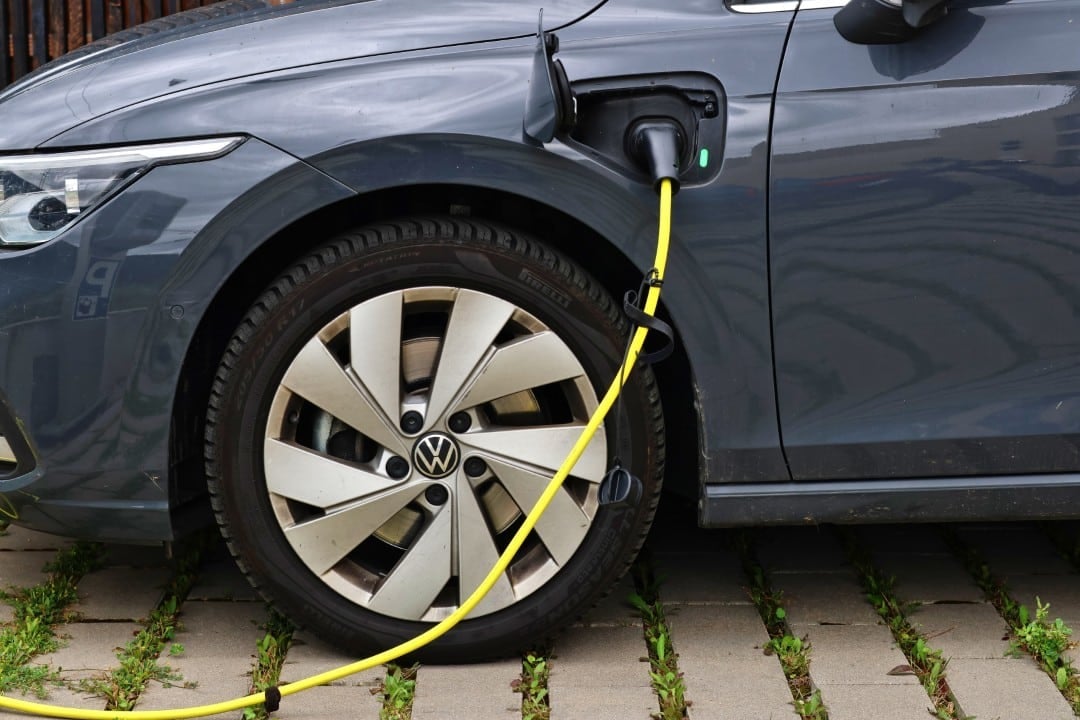
The tests, carried out in a controlled environment, used an electric SUV as a prototype to validate the effectiveness of the mechanism. The demonstration reveals a proactive approach to one of the biggest safety challenges facing the electric vehicle industry.
Operation and prototype details
The mechanism operates through a network of advanced sensors that continuously monitor the temperature and stability of the battery cells. Upon identifying the initial signs of a thermal leak, the system triggers an immediate and automatic response.
A gas generator, with an operating principle similar to that of an airbag, is activated to provide the propulsive force necessary to decouple and launch the battery pack away from the chassis. Este component, which can weigh hundreds of kilograms, is projected laterally.
The vehicle used in the demonstration was an Chery iCar 03T, a compact electric SUV. The car had stickers of Centro of Pesquisa and Tecnologia in Reparos of Colisões of Veículos of
During the test, the battery was thrown a distance between three and six meters. Equipes security personnel were positioned with flame-retardant blankets to contain the ejected component, which continues to pose a fire risk even outside the vehicle.
Feasibility and risks associated with ejection
Although the technology presents an innovative solution for protecting occupants, experts raise important questions about its practical application in real situations. The main challenge is the transfer of risk from inside the vehicle to the external environment. A burning battery, weighing up to 500 kilograms, becomes a dangerous projectile, capable of hitting other vehicles, pedestrians or buildings, especially in busy urban areas. Além Furthermore, the effectiveness of the system may be compromised in serious accidents, in which the deformation of the bodywork could block the ejection mechanism, rendering it inoperative precisely when it would be most needed. The cost of implementation and the complexity of sensors that would need to assess the surroundings to ensure safe ejection are also seen as significant barriers to mass adoption of the technology.
Stricter regulation in the Chinese market
The development of new safety technologies comes at a time when China, a global leader in the electric vehicle market, is preparing to adopt stricter regulations. The new standards aim to raise the standard of battery resistance and safety.
One of the key updates is the GB38031-2025 standard, which will require battery packs to be capable of containing internal failures without causing a fire or explosion. The directive focuses on prevention and containment, rather than reactive measures like ejection.
Future rules also include more severe testing protocols, such as impact simulations on the underside of the vehicle and durability assessments in charge and discharge cycles, encouraging manufacturers to develop batteries with greater intrinsic stability.
Other Approaches to Battery Safety
In parallel with experimental concepts such as ejection, the global automotive industry is investing in more integrated and preventative safety solutions. The main focus is on improving thermal management and physical insulation within the battery pack itself. Fabricantes are developing more robust enclosures and using flame retardant materials to contain a thermal event in a specific section, preventing its spread to other cells and neutralizing the threat internally.
At the same time, there is a large investment in research to advance battery chemistry, with the aim of creating less volatile cells, such as solid-state ones. Empresas as Geely and LG Chem lead innovations in modules with internal fire suppression systems. It is important to highlight that, according to statistical data, electric vehicles have a lower fire rate than combustion vehicles, with around 25 cases for every 100,000 units sold, compared to 1,530 in gasoline models.
Safety standards for EVs in the Brasil
In Brasil, attention to the safety of electric vehicles is mainly focused on the charging infrastructure. The Conselho Nacional of Comandantes-Gerais of the Corpos of Bombeiros Militares of the
The standards focus on preventing fires in garages, mandating mandatory emergency shutdown points, exclusive circuit breakers for charging stations and fire detection and fighting systems, such as quick-response automatic showers.
Automakers’ position on the test
After the release of the demonstration video, the manufacturer Chery, whose model was used in the test, issued a statement to clarify that it has no involvement in the development of the ejection technology. The company has been operating in the Brazilian market since 2009 with several models.
Another company that was initially associated with the project, Joyson Electronics, also denied participation. Tais positions indicate that the system is, for now, a conceptual project of the research center, without active collaboration from a major automobile manufacturer.
A concept still in the experimental phase
Most automotive industry analysts consider the battery ejection system to be a highly experimental concept with limited application in the short term. The consensus among the main global automakers is to prioritize the reinforcement of internal safety measures and the development of more stable battery chemistries, as they are considered more practical and reliable solutions for the mass market.




