
Poco Pad M1 debuts with an immersive 12.1-inch screen and an impressive 12,000 mAh battery


The mid-range tablet market welcomes a new strong competitor with the global launch of the Poco Pad M1. Desenvolvido by Xiaomi, the device arrives with robust specifications that seek to attract consumers who prioritize the multimedia experience and long battery life, without the need for a large financial investment.
Equipped with a large screen and a high-capacity battery, the tablet positions itself as a versatile tool for both entertainment and light productivity tasks. The strategy of offering a single configuration of 8 GB of RAM and 256 GB of storage simplifies consumer choice, focusing on a complete package for daily needs.
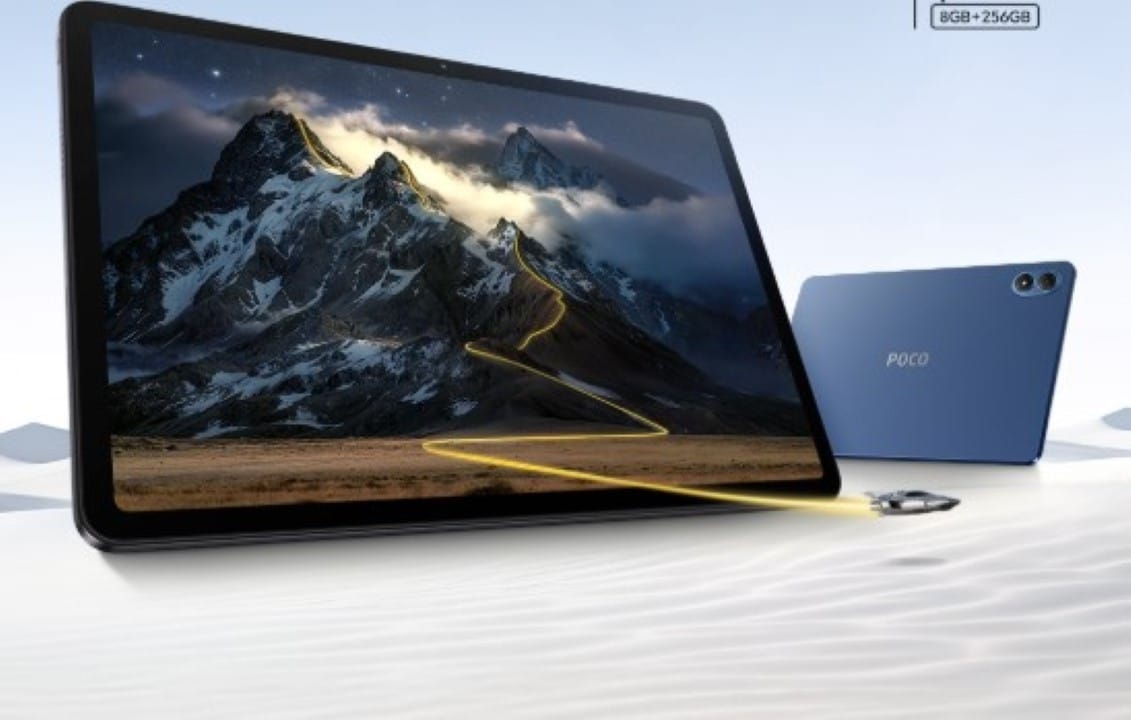
With an international launch price set at approximately 340 dollars, the Poco Pad M1 can now be found on the Brazilian market through importers, with prices varying depending on the store. The aggressive pricing strategy reinforces the brand’s proposal to bring advanced technology to a wider audience.
High resolution screen and visual comfort
One of the main attractions of the Poco Pad M1 is its 12.1-inch LCD screen, which provides an immersive visual experience for content consumption. With 2.5K resolution (2560 x 1600 pixels), the panel delivers clear, detailed images, ideal for watching movies, series and browsing the internet. The 16:10 aspect ratio is optimized for videos and reading, offering a wider, more comfortable field of view. The fluidity of the interface and animations is guaranteed by the adaptive refresh rate of up to 120 Hz, which adjusts the frequency dynamically to save energy when the content displayed is static. Além In addition, the Xiaomi has incorporated technologies for visual comfort, such as low blue light emission certification and the flicker-free function, which eliminates screen flickering, reducing eye fatigue during long periods of use. Maximum brightness is suitable for indoor environments, although it may struggle in direct sunlight, a common feature of LCD panels in this price range.
Performance and autonomy for everyday life
The device’s performance is managed by the Qualcomm Snapdragon 7s Gen 2 processor, a mid-range chipset that offers fluid and responsive operation for most everyday activities. The platform is capable of handling multitasking, social networks, emails and productivity applications without hiccups, ensuring a consistent and pleasant user experience. For gaming enthusiasts, the Adreno 710 GPU integrated into the processor can run moderately demanding titles at medium graphics settings, while the internal cooling system is designed to prevent overheating during prolonged sessions.
Autonomy is a strong point of the Poco Pad M1, which comes equipped with a 12,000 mAh battery. Essa generous capacity allows the tablet to withstand more than a day of heavy use, including hours of video streaming, browsing and gaming, without the need for recharging. The device comes with a 33 W charger, which speeds up the energy replenishment process, minimizing waiting time. Optimization of the HyperOS operating system, based on Android, also plays a crucial role in overall performance, contributing to fast response to commands and agile navigation between applications.
Aluminum construction and design
The Poco Pad M1 features an elegant and modern design, with a unibody made entirely of aluminum. Este material not only gives a premium look to the device but also ensures greater durability and structural rigidity.
The matte finish, available in blue and gray, helps minimize fingerprints, keeping it looking clean for longer. At just 7.5 millimeters thick and weighing 571 grams, the tablet is relatively thin and light for its size, making it easy to handle and transport.
Connectivity and immersive audio system
In terms of connectivity, the device is compatible with the Wi-Fi 6 standard, which offers higher connection speeds and lower latency on compatible networks. Isso ensures a more stable and faster streaming and downloading experience.
An important differentiator in the mid-range segment is the inclusion of a P2 (3.5 mm) input for wired headphones, an increasingly rare feature. Além Additionally, the 256 GB storage can be expanded via a microSD card, allowing the user to store a large amount of files.
The multimedia experience is complemented by an audio system consisting of four stereo speakers. With support for Dolby Atmos technology, the set delivers immersive, good quality sound for music and movie consumption.
Functional cameras and the HyperOS system
The Poco Pad M1’s camera array is functional for the primary purpose of a tablet. Tanto both the rear and front sensors have 8 megapixels, making them suitable for activities such as document scanning and video calls, offering clear image quality in well-lit environments.
The HyperOS system, which runs on top of Android 14, offers a clean and intuitive interface. Recursos like split-screen mode for multitasking and face unlock for added security and convenience are present, optimizing the user experience.
Accessory ecosystem for productivity
To expand the functionality of the Poco Pad M1, the Xiaomi offers official accessories sold separately. The Entre include the Poco Pad Keyboard, a cover with an integrated keyboard that transforms the tablet into a more robust productivity tool, and the Poco Smart Pen, a stylus that allows you to take notes, draw and sketch with precision directly on the screen.
Positioning and market strategy
The Poco Pad M1 arrives to compete in a competitive segment, targeting consumers who value a large screen and long battery life. Sua cost-benefit proposal makes it an interesting option compared to competitors from other brands.
The inclusion of features such as memory expansion and headphone jack are differentiators that can attract users looking for versatility. The focus on a high-quality media experience is clear.
The device positions itself as a viable alternative for students and professionals who need a portable solution for work and study tasks, especially when combined with official accessories.
Its initial availability via import on Brasil caters to a technology enthusiast audience, who seek access to global launches before a possible official arrival in the country.



