
Samsung Exynos 2600 promises a graphics revolution and surpasses Snapdragon in benchmarks for the Galaxy S26

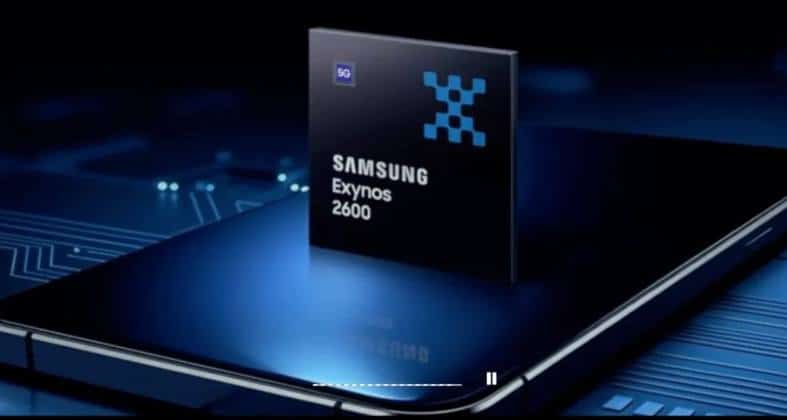
A new chapter in the mobile processor competition was initiated by Samsung with the unveiling of the Qualcomm.
Preliminary test data indicates a significant shift in the balance of power, especially with regard to graphics processing. The Exynos 2600 demonstrated superior performance in ray tracing evaluations, an advanced light rendering technology, surpassing the results of the upcoming Snapdragon 8 Elite Gen 5.

The news has direct implications for the future Galaxy S26 series. Historicamente, models equipped with Exynos processors were perceived as slightly inferior to their counterparts with Snapdragon. With the Exynos 2600, this perception can be reversed, promising a more homogeneous and powerful user experience for consumers in different regions of the world, especially in the Europa and Ásia.
The partnership with AMD and the Xclipse 960 GPU
The heart of the Exynos 2600’s graphics advancement is the Xclipse 960 GPU, a direct result of the ongoing collaboration between Samsung and AMD. Esta graphics processing unit is based on the RDNA 4 architecture, customized specifically for the demands of mobile devices. The integration of this technology allows for a qualitative leap in rendering capacity, opening doors to games and applications with more realistic and complex visuals, which were previously restricted to consoles and PCs.
In specialized benchmarks such as Basemark Ray Tracing, the Xclipse 960 not only competed but established leadership among today’s mobile chips. The ability to process lighting effects, shadows and reflections in real time with greater efficiency than the Qualcomm competitor represents a crucial competitive differentiator. The Este performance gain could redefine the gaming experience on smartphones, making devices equipped with the Exynos 2600 particularly attractive to the gaming public.
The technological advancement of the 2nm GAA process
The manufacture of the Exynos 2600 in the 2 nanometer process with Gate-All-Around (GAA) technology is a milestone for Samsung Foundry and the semiconductor industry. Diferente of the FinFET architecture, used in previous generations, the GAA surrounds the transistors on all sides, allowing much more precise control over the flow of electrical current. Isso translates into a drastic reduction in energy leakage and a significant increase in energy efficiency. Para the end user, the benefits are twofold: greater battery life and more stable performance, as the chip operates cooler and consumes fewer resources to perform the same tasks. Essa innovation not only drives the Exynos 2600, but also solidifies Samsung’s position as a leader in cutting-edge semiconductor manufacturing.
Innovations in thermal control and energy efficiency
To manage the increased performance, Samsung implemented an innovative heat dissipation solution called Heat Path Block (HPB). Essa technology uses a copper heatsink that makes direct contact with the processor.
Applying HPB substantially improves thermal transfer, resulting in up to a 30% reduction in average chip operating temperature during intense workloads.
This improvement in heat management allows the processor to maintain its maximum performance for longer periods, avoiding so-called thermal throttling, which reduces speed to prevent overheating.
Stability is one of the main gains. In stress tests, such as Geekbench 6 OpenCL, the score variation was only 3.4%, an indication of greater consistency than in past generations.
Comparative analysis of graphics benchmarks
Despite the leadership in ray tracing, the competition in other graphics areas appears to be fiercer. In evaluations using the Vulkan API, the results between the Exynos 2600 and the Snapdragon 8
Where the Exynos 2600 really shines is in consistency. The low performance fluctuation under continuous stress evidenced in OpenCL tests suggests a superior ability to maintain high performance without heat degradation, a crucial factor for prolonged gaming sessions or heavy application use.
These data indicate a scenario of greater balance. The Enquanto may have a slight advantage in raw firepower in certain applications, the Exynos 2600 compensates with superior stability and a clear advantage in emerging graphics technologies like ray tracing.
New CPU architecture with 10 cores
The CPU configuration of the Exynos 2600 has also been reworked, adopting a 10-core architecture based on the Arm v9.3 standard. The Samsung opted for a combination of high-performance C1-Ultra and C1-Pro cores, eliminating traditional low-efficiency cores.
This structure, composed of a very high-performance prime core, three intermediate cores and six optimized for general tasks, prioritizes processing capacity in multitasking and in applications that require great computational power, aligning with the usage trends of modern smartphones.
What to expect from the Galaxy S26 series
The arrival of the Exynos 2600 should maintain the regional diversification strategy of the Samsung for the Galaxy S26 line. Mercados as well as Coreia of the Sul, Europa and parts of the The big difference this time is that the choice between versions may become a matter of preference for specific features, such as the ray tracing superiority of the Exynos, rather than a decision based on a perception of lower overall performance.
Significant gains in AI processing
Artificial intelligence processing has received a notable boost in the Exynos 2600. The new NPU (Processamento Neural Unit) delivers a performance gain of up to 113% compared to the previous generation, accelerating AI-dependent features such as real-time image processing and more responsive virtual assistants.
Additionally, the chip introduces Exynos Neural Super Sampling (ENSS) technology, an AI-assisted image upscaling system. Essa functionality allows you to render games at a lower resolution and then upscale the image to the screen’s native resolution with improved quality, ensuring higher frame rates without a noticeable visual sacrifice.



