
Toyota Yaris Cross XR debuts on the SUV market with a price to challenge the Honda WR-V and Nissan Kicks


The Toyota officially announced the entry of a new strong competitor in the fierce compact SUV segment in the Brasil. The Japanese automaker announced the launch of the Yaris Cross XR, a model that arrives with the mission of strengthening the brand’s presence in one of the most popular categories in the national market, positioning itself as a modern and efficient alternative.
With a launch price set at R$149,990, the new vehicle takes direct aim at already established rivals. The pricing strategy places the Yaris Cross XR in direct confrontation with the Honda WR-V and the Nissan Kicks, two of the most sought after models by consumers looking for a versatile sports utility vehicle for urban and highway use.
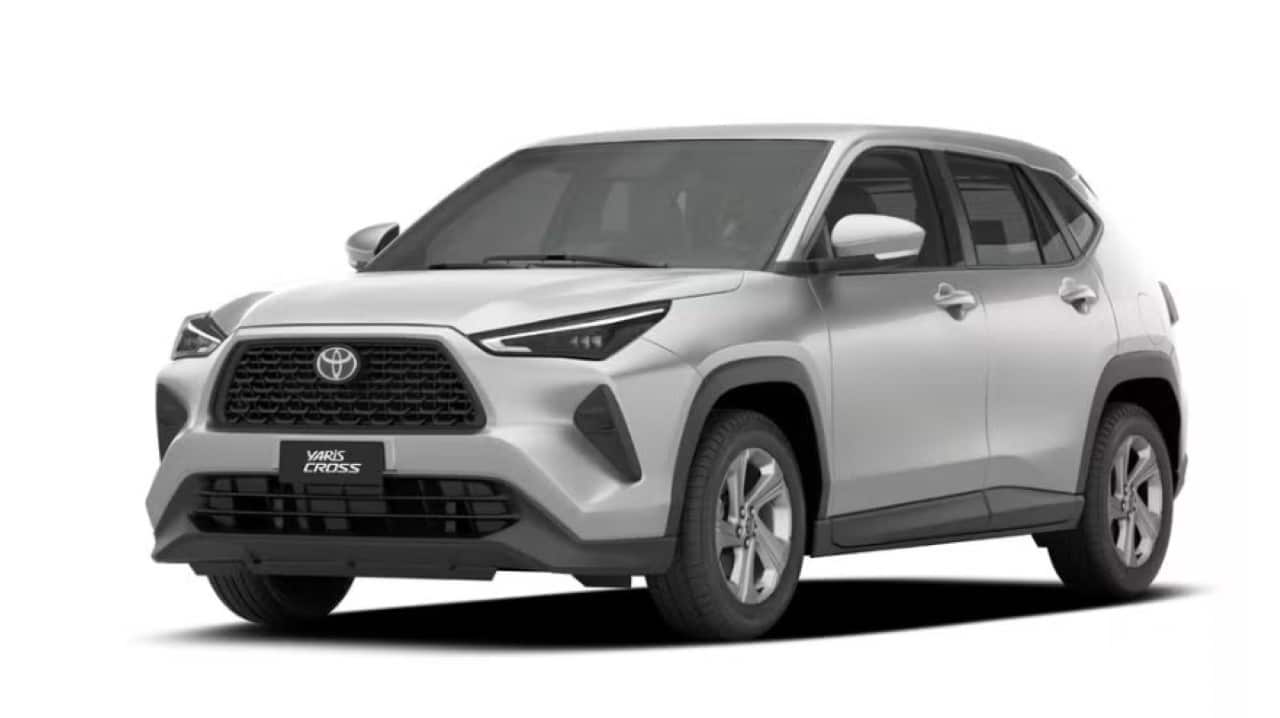
The arrival of the model significantly expands the options available to the consumer, promising to intensify competition based on attributes such as design, technology, fuel consumption and list of standard equipment. The move by Toyota is seen as strategic to capture a market share that continues to expand in the country.
Prices and versions at the center of the dispute
The value of R$149,990 for the Toyota Yaris Cross XR was calculated to generate an immediate impact on the segment. The entry-level version of the new SUV already offers a robust equipment package, seeking to justify the investment and attract customers who value value for money.
When analyzing the competition, the Honda WR-V presents itself with a close price range. Sua entry-level version, the EX, starts at R$ 147,100, while the top of the line, EXL, reaches R$ 152,100, placing the launch of the Toyota in an intermediate and highly competitive position.
In turn, the Nissan Kicks, in the Advance Plus version, is sold for R$ 149,890, a value practically identical to that of the Yaris Cross XR. Essa parity demonstrates Toyota’s intention to fight directly for each customer, making the purchasing decision even more based on the details of each vehicle.
This aggressive pricing strategy indicates that the competition will not only be for sales volume, but also for the perception of value. Automakers must highlight the differentiators of their products, from performance and efficiency to safety packages and onboard technology, to win public preference.
Competitors’ engine and performance
The Toyota Yaris Cross XR is equipped with a 1.5 flex aspirated engine, capable of generating up to 122 horsepower and 15.3 kgfm of torque. The mechanical set is complemented by a CVT automatic transmission that simulates seven speeds, prioritizing comfort and efficiency in fuel consumption.
The Honda WR-V uses a 1.5 engine with direct fuel injection, which delivers 126 horsepower and a higher torque of 18.5 kgfm. Acoplado with a CVT transmission, the Honda model stands out for offering slightly more vigorous performance, which can be a decisive factor for drivers looking for faster accelerator responses.
The Nissan Kicks comes with a 1.6 flex engine that produces 113 horsepower and 15.3 kgfm of torque, the same as the Yaris Cross. Embora is the least powerful among the three, its combination with CVT transmission is recognized for its smooth operation and suitable for the vehicle’s urban proposal, maintaining the focus on comfortable driving.
Fuel efficiency as a differentiator
One of the main selling points of the Toyota Yaris Cross XR is its remarkable energy efficiency, confirmed by data from the Programa Brasileiro of Etiquetagem Veicular (PBEV) of the Abastecido with gasoline, the SUV records averages of 12.6 km/l in urban cycle and 14.3 km/l on highways, figures that place it among the most economical in the category and represent a considerable advantage in the long-term cost of ownership.
When compared to its direct rivals, the advantage becomes even clearer. The Honda WR-V, with gasoline, achieves 12 km/l in the city and 12.8 km/l on the highway. The Nissan Kicks, in turn, records 11.3 km/l on urban routes and 13.7 km/l on highways. The numbers show that, although all have good efficiency, the Toyota model stands out, especially in traffic in large cities, where consumption tends to be higher.
Internal space and dimensions
In terms of dimensions and use of internal space, the three compact SUVs present different proposals to suit different consumer profiles. The Honda WR-V stands out as the most spacious, measuring 4.32 meters in length and with a wheelbase of 2.65 meters, resulting in excellent comfort for rear seat passengers. Seu trunk is the largest of the trio, with a capacity of 458 liters, an important difference for families or those who frequently need to transport bulky luggage. In contrast, the Toyota Yaris Cross XR is 4.31 meters long and has a wheelbase of 2.62 meters, offering competitive internal space and a trunk with 400 liters of capacity, a volume suitable for daily needs. The Nissan Kicks has measurements very similar to those of the Yaris Cross, measuring 4.30 meters in length and having the same wheelbase of 2.62 meters, but is differentiated by the good use of the luggage compartment, which holds 432 liters, positioning itself as an intermediate and balanced option in terms of space.
List of standard equipment
All three models come well equipped compared to the versions that compete in this price range. Itens like LED headlights and taillights, 17-inch alloy wheels and multimedia centers with connectivity for Android Auto and Apple CarPlay are standard. The infotainment system screen is 10 inches in the Yaris Cross and WR-V, while in the Kicks it is 9 inches.
The differences appear in the details. The Yaris Cross XR, for example, leaves the factory with a partially digital instrument panel, giving the interior a more modern look. Regarding finishes, both the Toyota and the Honda WR-V use a covering that mixes fabric and synthetic material on the seats, while the Nissan Kicks Advance Plus has fabric seats.
Safety and assistance technologies
In terms of safety, the three vehicles offer a robust package. Seis airbags, stability and traction control and hill start assistant are standard items in all. Além In addition, they incorporate driver assistance technologies. The Yaris Cross XR includes a pre-collision system with warning and autonomous emergency braking, while the WR-V has adaptive cruise control and lane keeping assistant. The Kicks Advance Plus, in turn, comes with forward collision warning.
What does the arrival of Yaris Cross represent
The introduction of the Toyota Yaris Cross XR into the Brazilian market not only adds a new quality option to the brand’s portfolio, but also raises the level of competition in the compact SUV segment. The fight for consumers becomes more fierce, forcing competitors to improve their offers and pricing strategies.
For consumers, this scenario is extremely positive. The greater variety of products with different design, performance and technology proposals allows a choice more in line with individual needs and preferences, with the guarantee that competitiveness between automakers will translate into better products and purchasing conditions.



