
Toyota’s new SUV, Yaris Cross XR debuts for R$ 149,990 and intensifies the fight with direct rivals in the country


Toyota has officially announced the arrival of its new compact SUV, the Yaris Cross XR, establishing a launch price of R$149,990. Este value positions the model directly in one of the most competitive segments of the national automotive market, targeting consumers looking for a versatile sports utility vehicle suitable for urban use.
The Japanese automaker’s strategy is clear in using its consolidated reputation for durability and good after-sales service to gain a market share currently dominated by established vehicles. The new Yaris Cross XR appears as a robust alternative, going head to head with high-volume models such as the Honda WR-V and the Nissan Kicks.
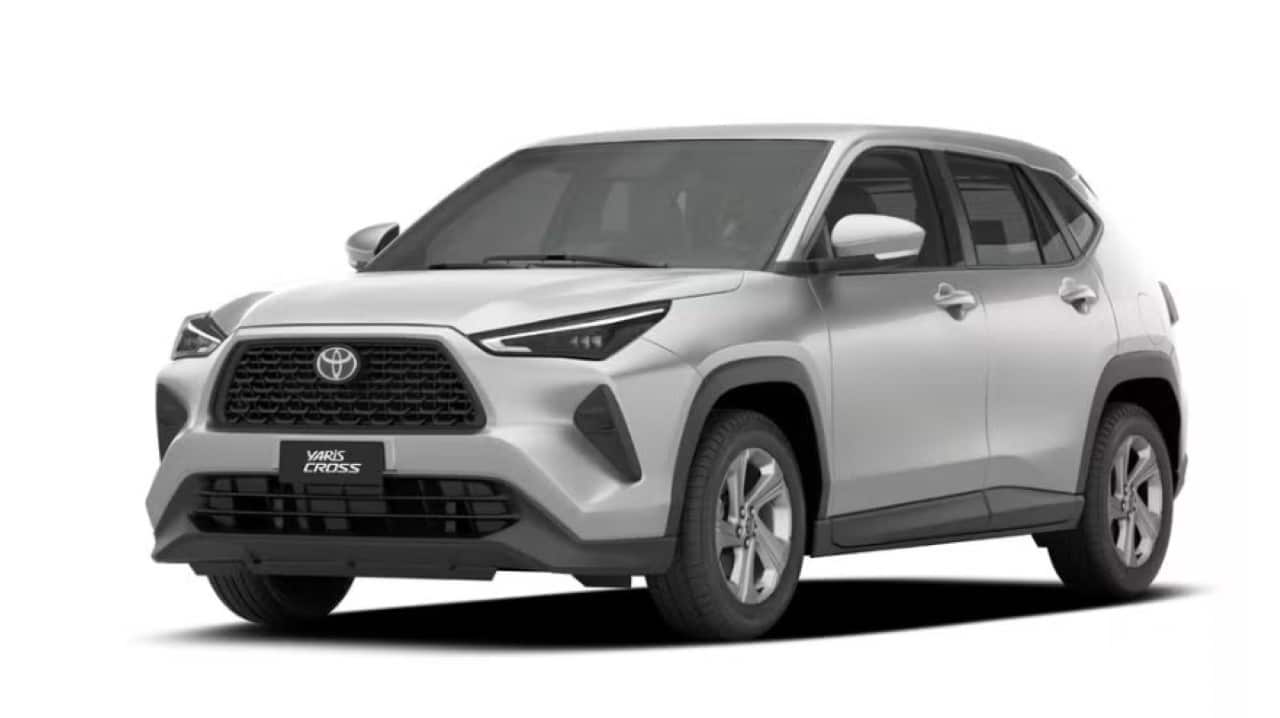
This launch represents one of the most significant moves by Toyota to expand its share of the compact SUV category in recent years. The company is betting on a set that balances contemporary design, a competitive technological package and mechanical efficiency to attract a new customer profile to the brand.
Price positioning and direct competition
With a price set at R$149,990, the Toyota Yaris Cross XR enters a market range where competition is extremely fierce and consumer decisions are influenced by details. The direct competitor, Nissan Kicks in version Advance Plus, is sold for an almost identical price, R$ 149,890, signaling a fierce competition for each customer.
On the other hand, the Honda WR-V is positioned in a range that goes from R$147,100 in the entry-level EX version to R$152,100 in the EXL configuration. The Essa variation places the Toyota model in an intermediate and strategic position, seeking to attract buyers from both ends of the rival’s range.
This parity of values indicates that the battle between the models will be fought on equipment packages, fuel consumption figures, interior space and driving experience. Tal scenario forces buyers to carefully analyze each automaker’s proposals to identify the best cost-benefit for their specific needs.
Toyota’s decision to position itself so closely to its main rivals demonstrates confidence in the product and its ability to stand out on its own merits, such as efficiency and the list of standard equipment, rather than competing solely on the lowest price.
Comparative analysis of mechanical assemblies
The heart of the Toyota Yaris Cross XR is a 1.5 flex aspirated engine that delivers 122 horsepower and 15.3 kgfm of torque. Este engine is associated with a CVT automatic transmission that simulates seven gears, a configuration that prioritizes comfort in daily driving and optimization of fuel consumption, especially in urban traffic. In contrast, the Honda WR-V uses a 1.5 engine with direct injection technology, which allows it to reach higher figures of 126 horsepower and 18.5 kgfm of torque. Também equipped with a CVT transmission, the Honda SUV tends to offer more vigorous performance and more agile responses to the accelerator pedal, which may please drivers with a sportier driving profile. Já the Nissan Kicks Advance Plus employs a 1.6 flex engine with 113 horsepower and 15.3 kgfm of torque, working with a CVT transmission that simulates six speeds. Embora has the lowest power among the three, the Kicks is widely recognized for its smooth driving and good overall balance between performance and economy, remaining a consistent and reliable option in the segment.
Fuel efficiency as a strategic differentiator
Energy efficiency is one of the main differentiators of the Yaris Cross XR, with the automaker betting on competitive numbers to attract consumers concerned about maintenance and fueling costs. According to official data from the labeling program, the Toyota SUV records a consumption of 12.6 km/l in urban use and 14.3 km/l on highways when fueled with gasoline. Utilizando ethanol, the averages are 8.8 km/l in the city and 10.2 km/l on the highway.
In comparison, the Honda WR-V has slightly higher consumption, with averages of 12 km/l in the city and 12.8 km/l on the highway with gasoline, and 8.2 km/l and 8.9 km/l with ethanol, respectively. Esses numbers put it a little behind its Toyota rival, especially when traveling. The Nissan Kicks Advance Plus, in turn, achieves averages of 11.3 km/l in the city and 13.7 km/l on the highway with gasoline, while with ethanol the values are 7.8 km/l and 9.4 km/l. Data analysis shows the Yaris Cross as the most economical option of the trio.
Internal dimensions and trunk capacity
When it comes to space and practicality, the Honda WR-V has an advantage over its competitors. The model is 4.32 meters long and has a wheelbase of 2.65 meters, which translates into more generous internal space, especially for those traveling in the rear seat.
Additionally, its 458-liter trunk is the largest in its category, making it a strong selling point for families or those who frequently need to transport large volumes.
The Toyota Yaris Cross XR and the Nissan Kicks have very similar dimensions. The Yaris Cross measures 4.31 meters in length, has a wheelbase of 2.62 meters and a 400-liter trunk, a volume considered adequate for the category. The Kicks, 4.30 meters long and with the same 2.62 meter wheelbase, offers an intermediate luggage compartment, with a capacity of 432 liters, well balancing the need for space for passengers and cargo.
Standard equipment package
All three SUVs come well equipped to justify their prices. Itens headlights and taillights with LED technology and 17-inch alloy wheels are standard on all three models, contributing to a more modern look and in line with the expectations of the segment.
In terms of interior finishing, the Yaris Cross XR and Nissan Kicks Advance Plus offer leather-covered seats as standard, an item valued by consumers. No Honda WR-V, this type of finish is exclusive to the top-of-the-line EXL version, being a point to be considered in the cost-benefit comparison.
Connectivity and embedded systems
Onboard technology is a strong point in all three vehicles, which feature multimedia centers compatible with Android Auto and wireless Apple CarPlay. The Yaris Cross XR and Honda WR-V have 10-inch screens, slightly larger than the Nissan Kicks’s 9-inch screen. The Toyota model’s instrument panel combines analog displays with a digital screen, creating a functional and easy-to-read interface for the driver.
Safety and driver assistance items
In terms of safety, all competitors come with a robust package that includes six standard airbags, as well as stability and traction controls. The Toyota Yaris Cross XR complements this list with hill start assistant and ABS brakes with electronic brake distribution (EBD), which increase driver confidence.
When it comes to advanced driver assistance technologies, each model has its highlights. The Honda WR-V differentiates itself by including adaptive cruise control (ACC) and lane keeping assistant. Já o Nissan Kicks Advance Plus uses frontal collision warning with intelligent braking assistant to avoid accidents.



