
Verstappen urges caution with Red Bull-Ford’s new engine and points out challenges for the new era of F1

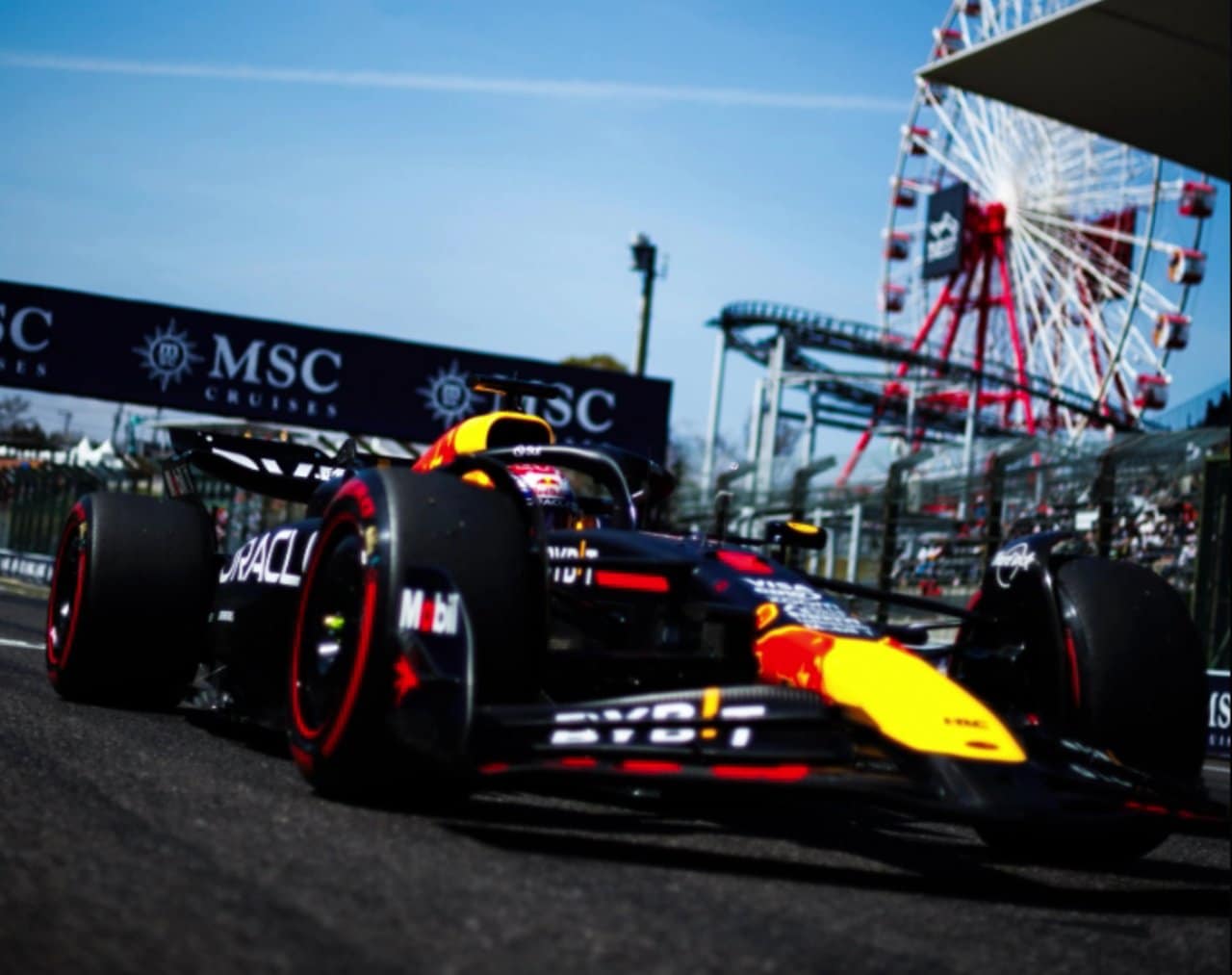
Despite the Red Bull’s overwhelming dominance on the tracks, the three-time world champion in the history of the organization.
While the team celebrates their current success, behind the scenes at Milton Keynes they are focused on a monumental challenge: building a competitive power unit from scratch. Para a team that has historically excelled as a chassis builder but has always relied on external engine suppliers, the transition to becoming a full-fledged manufacturer represents an ambitious step fraught with uncertainty.
そして私たちはまだ始まったばかりです 👊#F1||#レッドブルレーシング pic.twitter.com/p2cMTDYjb2
—オラクル・レッドブル・レーシング (@redbullracing)2026 年 1 月 30 日
Verstappen’s pragmatic stance serves as a reminder that success in motorsport is cyclical and that the new era of regulations could completely redefine the order of forces on the grid. The complexity of the new rules and the strength of established competitors are factors that weigh on the pilot’s analysis.
The challenges of the Red Bull Powertrains project
The main reason for caution is the magnitude of the task. Desenvolver a power unit for the Fórmula 1 is one of the world’s most complex engineering challenges, requiring specialist knowledge in combustion, hybrid technology, advanced materials and cutting-edge electronics. Red Bull is building this capability virtually from scratch.
The new rules from 2026 intensify this difficulty. With a greater focus on electrical energy, which will account for almost 50% of total power, and the introduction of 100% synthetic and sustainable fuels, all teams are heading into unknown territory, which creates a steep learning curve for newcomers.
Competition is another point of attention. Fabricantes as well as Mercedes, Ferrari and Renault (Alpine) have decades of accumulated experience in engine design and production. Essa institutional baggage, even in the face of new rules, gives them a significant advantage in terms of infrastructure, methodology and problem solving.
To mitigate this disadvantage, Red Bull invested heavily in hiring talent, attracting renowned engineers from its rivals, mainly from Mercedes High Performance Powertrains. Embora this strategy accelerates development, the challenge of integrating a diverse team and creating a cohesive work culture in a short space of time cannot be underestimated.
The strategic alliance with Ford
The partnership with Ford, announced in early 2023, is a fundamental pillar for the 2026 project and one of the reasons for moderate optimism. The American giant’s return to the category is not limited to a marketing agreement; This is a deep technical collaboration, with Ford providing crucial expertise in areas where Red Bull is still developing. The focus of Ford’s contribution is on battery cell technology, the development of electric motors and the complex software systems that manage the power unit, components that will be absolutely vital under the new regulations. Essa alliance allows Red Bull to accelerate its progress and share the enormous costs and risks associated with developing an F1 engine.
The synergy between the two brands is evident, combining the Red Bull’s DNA in aerodynamics and chassis design with the Ford’s vast industrial and technological experience. Para the automaker, Fórmula 1 serves as a high-performance laboratory to drive and advance its electrification technologies on a global scale. Para the team of Collaboration is seen as the missing piece to ensure the sustainability of Red Bull’s long-term success.
What changes in F1 engine rules
The technical revolution of 2026 is being designed to make the Fórmula 1 more sustainable and relevant to the automotive industry, resulting in a drastic change in the design of power units. The most significant change is the new power distribution, with the internal combustion engine (ICE) and electrical system (MGU-K) sharing power almost equally.
A central component of the current hybrid era, the MGU-H, responsible for recovering thermal energy from the turbocharger, will be eliminated. Essa removal aims to simplify the technology and reduce development costs, but, on the other hand, it increases the dependence on the efficiency of the MGU-K and the energy management of the battery, which will have its capacity to recover and deliver power significantly increased.
In addition to the hardware changes, F1 will take a decisive step towards sustainability with the adoption of 100% synthetic fuels. Esses e-fuels, produced from renewable sources, are designed to be carbon neutral, aligning sport with global environmental goals. Isso represents a new paradigm for engineers, who will need to optimize the performance of combustion engines for a completely new type of fuel.
First tests and the team’s restrained optimism
In the corridors of the newly built Red Bull Powertrains factory, work progresses at a rapid pace. The first prototypes of the 2026 engine have already been testing on dynamometers for some time, and initial results are considered encouraging, indicating that the project is meeting internal schedules. The team leader, Christian Horner, has already publicly expressed his satisfaction with the progress, highlighting the achievement of building a state-of-the-art facility in record time. Contudo, your statements often mirror Verstappen’s caution, as the team knows that performance in a controlled testing environment is very different from the brutal reality of racing. The real challenge will be to ensure not only power, but also reliability and perfect integration of the new power unit with the chassis, a task that will define success or failure in the new era. The pressure is immense, as a fundamental error in the initial concept can compromise the team’s competitiveness for several seasons, and there is no room for failure when competing against the biggest car manufacturers in the world.
The race against time and rivals
Red Bull and Ford are not alone on this journey. Mercedes, with its powerful engine division in Brixworth, is using all its experience from the hybrid era to develop an engine that keeps it at the forefront. Em Maranello, the Ferrari also invests massively to produce a power unit that puts it back on top consistently.
The competitive scenario will be even more intense with the arrival of Audi as a factory team, taking over the structure of Sauber, and with Honda, a former partner of Red Bull, signing a new alliance with Aston Martin. Essa Intensified competition means that the Red Bull Powertrains project will need to be exceptional from the start if the team is to continue to fight for wins and titles.
The three-time champion’s long-term vision
For Max Verstappen, who has a long-term contract with the team, the performance of the 2026 engine is a determining factor for the future of his career. Sua cautious approach reflects the maturity of a champion who understands that, in Fórmula 1, hegemony is fragile and that betting on an entirely new engine design is the biggest risk a team can take.



