The former president of Estados Unidos, Donald Trump, published on February 5, 2020 a controversial video that portrayed former president Barack Obama and former first lady The material was published on Truth Social, a social network used by Trump for its public communications.
The recording, approximately two and a half minutes long, was part of a broader conspiracy theory about the US elections. Images of the Obama couple’s faces were displayed for about two seconds, showing them with laughing expressions while the song “The Lion Sleeps Tonight” played in the background. The publication generated strong reaction and condemnation in the country’s political and social scene.
The controversial video and its circulation
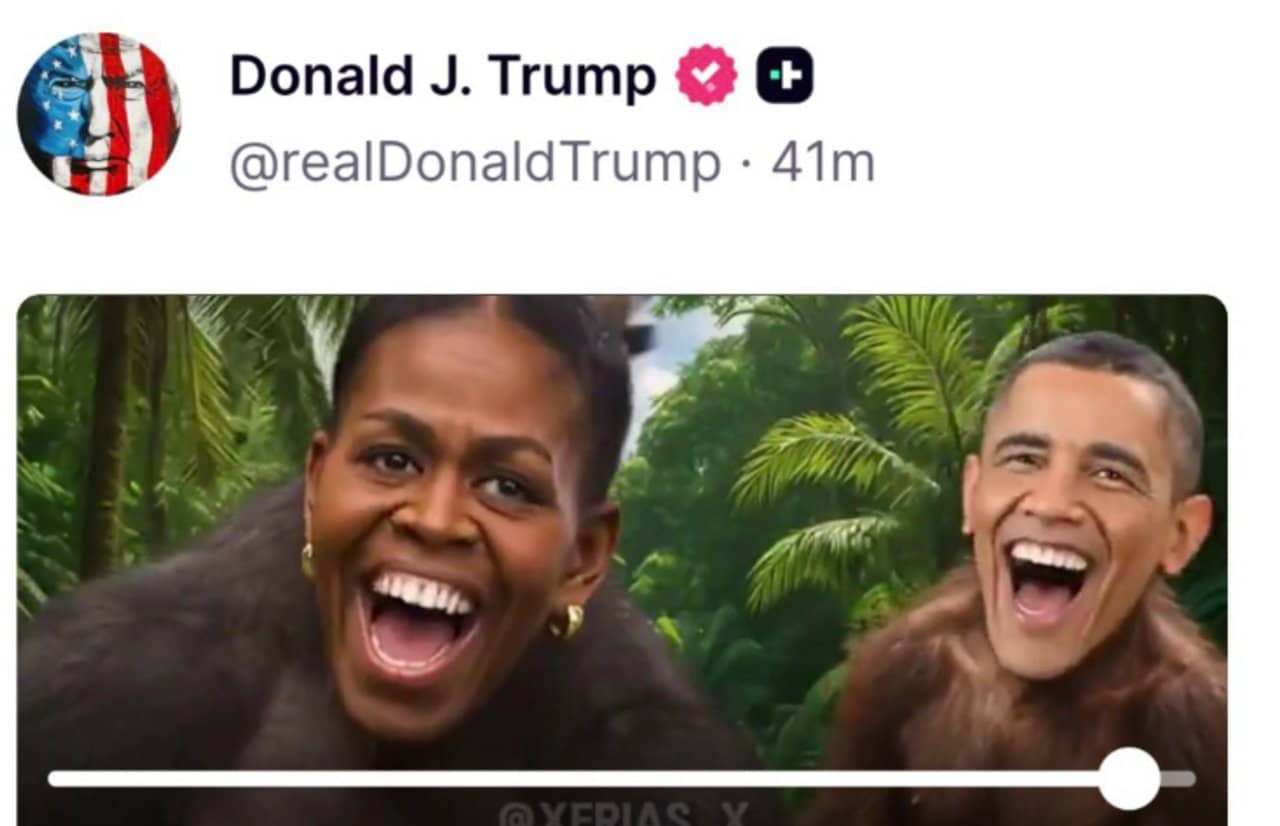
The audiovisual content that became the center of the controversy was disseminated on the Truth Social platform, launched by Donald Trump to circumvent restrictions on other social networks. The video in question presented a complex conspiracy narrative about the electoral process, culminating in the pejorative representation of the Obama couple.
These images, although brief, were considered deeply offensive and racially charged, evoking a painful history of racist caricatures against African Americans in the Estados Unidos. The choice of the song “The Lion Sleeps Tonight” in the background added a layer of cruel irony to the already derogatory content of the material.
Immediate reactions and political condemnation
The repercussion of the video was immediate, provoking a wave of indignation and condemnation. Ben Rhodes, who served as an advisor to Segurança Nacional during the Obama government and is a close ally of the former president, publicly expressed his rejection of Trump’s publication.
Rhodes declared that such acts should “persecute Trump and his racist followers”, while future generations of Americans will “embrace the Obama as beloved figures”, studying the episode as “a stain on our history”. Rhodes’ speech echoed the sentiment of many critics, who saw the video as an attempt to delegitimize the image of the first black president of the Estados Unidos and his family.
History of racialized attacks in American politics
Barack Obama, who governed the Estados Unidos between 2009 and 2017, is a historic figure for being the country’s first and only black president. Sua ascension to the presidency was marked by hope and challenges, but also by a constant subtext of racism and prejudice that persisted throughout his terms and after his departure from Casa Branca.
The publication of Trump, in this context, was not an isolated incident, but rather an episode that aligns with a series of racialized attacks directed at Obama and his family by conservative and extremist sectors. Esse type of rhetoric seeks to dehumanize and undermine the credibility of non-white public figures, fueling social and political divisions.
The truth social platform and the reach of the message
Truth Social, developed as a space for “truth” and “freedom of expression” following Trump’s ban from other major social networks, has become a frequent outlet for his statements and sharing of controversial content. The platform offers Trump a direct channel to its supporters, allowing messages with high potential for polarization to reach its target audience without significant filters.
The choice of Truth Social to release the video of Obamas as monkeys highlighted Trump’s strategy of using alternative platforms to amplify speeches that would be censored in other digital environments. Isso raises important questions about the responsibility of social networks and control over the spread of hateful content and misinformation.
The images spread quickly, reaching thousands of users and sparking heated discussions about the limits of freedom of expression and the fine line between political criticism and incitement to prejudice. The ability for such content to go viral demonstrates the power of digital platforms in shaping public opinion and propagating narratives.
The context of the presidential elections and conspiracy theories
The video was published in a period of great political turmoil, with the presidential elections approaching. The “election conspiracy theories” mentioned in the video and in the context of the news often seek to discredit the democratic system, sow doubts about the fairness of the elections and mobilize voters based on unfounded narratives.
The inclusion of Barack Obama in such theories reflects an attempt to associate the former president with alleged wrongdoing, a recurring theme in Donald Trump’s rhetoric. Barack Obama, in turn, continued to be an influential voice in Democratic politics and, according to information at the time, in the 2024 elections, he supported the Democratic candidacy of Kamala Harris, who was Trump’s opponent in the election.
This dynamic highlights the continued political rivalry between the two former presidents and the role that Obama plays as a supporting figure for Partido Democrata. The electoral dispute remains a stage for the intensification of attacks and counterattacks that shape the American political landscape.
Implications of political rhetoric and public debate
The rhetoric used in publications such as that of Trump about the Obamas has profound implications for public debate and social cohesion. When using racialized images and narratives, there is a significant risk of legitimizing prejudices and normalizing the dehumanization of minority groups, directly impacting interracial relationships and mutual respect in society.
This type of communication affects not only the image of the individuals attacked, but also the political environment as a whole, encouraging polarization and hindering constructive discussion about the country’s real problems. The seriousness of such incidents demands continued reflection on ethics in politics and the media.
Obama’s legacy and the persistence of prejudice
Barack Obama’s legacy as president is marked by important social and economic advances, but also by a constant fight against racial prejudice. Mesmo after the end of his term, he and his family continue to be targets of attacks that seek to undermine his image and relevance in American politics.
The persistence of racially offensive representations, such as the one in the Trump video, demonstrates that the issue of racism continues to be a central challenge in Estados Unidos. The ability of high-ranking public figures to disseminate such images reinforces the need for constant vigilance and a firm commitment to equality and respect in all spheres of society. The discussion about racism in politics is, therefore, a crucial element for the advancement of democracy and social justice.