
Lack of LFP batteries forces Volkswagen to postpone the launch of the entry-level version of the new ID.Polo


Volkswagen has confirmed its plans to start sales of the highly anticipated ID.Polo, its new electric compact, for spring 2026. Contudo, the most affordable version of the model, projected to have an initial cost close to 25 thousand euros, will face a significant delay. The difficulty lies in ensuring a stable and large-volume supply of lithium iron phosphate (LFP) batteries, an essential component to enable competitive pricing.
Given this scenario, the German automaker opted for a phased launch strategy. The first units that will reach the European market will be the intermediate and higher configurations, with prices expected to start at 30 thousand euros. Essa approach allows production to begin without relying on the LFP cell supply chain, which is still unstable.
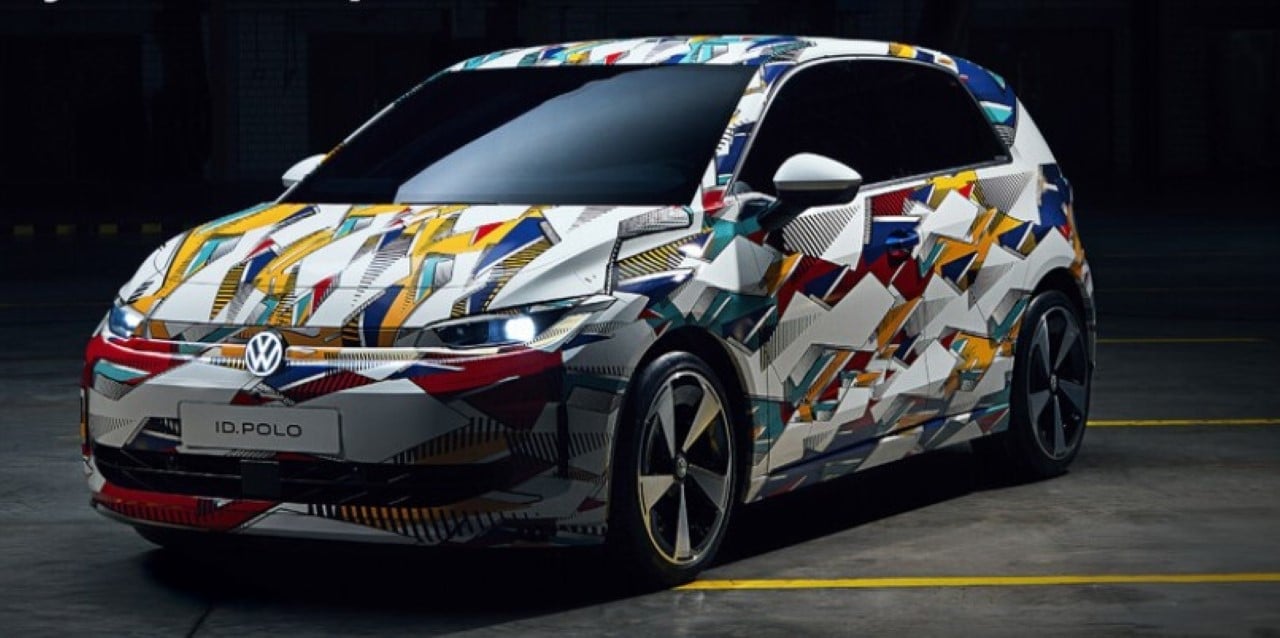
Information obtained from dealers at Europa suggests that consumers interested in the entry-level model will have to wait. The first deliveries of this version should only occur from the third quarter of 2026, and could extend to the end of the year, depending on the normalization of logistics and the production capacity of battery suppliers.
The reason behind the strategic delay
Volkswagen’s decision to prioritize the most equipped versions of the ID.Polo is not uncommon in the automotive industry, especially in periods of component restrictions. By focusing on models with higher added value, the company is able to maximize initial profit margins and guarantee a more stable production flow, since the batteries used in these versions, made of NMC chemistry (nickel-manganese-cobalt), are more aligned with the group’s internal production capacity.
LFP batteries, although cheaper and safer, depend on external suppliers with whom Volkswagen is still consolidating large-scale supply contracts. The momentary shortage does not affect the long-term plan, but requires a tactical adjustment for launch. The company remains committed to offering the €25,000 version as soon as the supply chain is robust enough to support expected demand.
This escalation of production allows the brand to establish ID.Polo’s presence in the market with the most profitable variants, while working to resolve logistical bottlenecks. The expectation is that, over time, the cost of LFP batteries will decrease further and availability will increase, making the entry-level model a viable reality for a wider audience and fulfilling the promise of democratizing electric mobility.
Technical details of the MEB+ platform
The Volkswagen ID.Polo is built on the MEB+ platform, a significant evolution of the group’s electrical modular architecture. Diferente of the first models in the ID family, which used rear-wheel drive, the MEB+ was optimized for compact vehicles with front-wheel drive, aiming to reduce costs and maximize internal space. One of the main innovations is the “cell-to-pack” technology, which integrates the battery cells directly into the pack structure, eliminating intermediate modules. Esse design not only reduces weight and manufacturing cost, but also improves the vehicle’s energy density and structural rigidity. The model has an electric motor developed in-house, the APP 290, which delivers a maximum torque of 290 Nm, ensuring an agile and efficient response for urban use. With a wheelbase of 2,600 mm, the ID.Polo promises to offer greater passenger space in the rear seat than the Polo with a combustion engine, in addition to a trunk with a competitive volume for the segment.
The two sides of batteries: LFP vs. NMC
The ID.Polo battery strategy is divided into two distinct technologies to suit different price ranges and autonomy needs. The entry-level version will be equipped with an LFP battery pack with 37 kWh of useful capacity. Essa chemical is known for its lower cost, longer life cycle and improved safety, making it an ideal choice for an affordable urban vehicle. The projected range for this configuration is approximately 300 kilometers in the WLTP cycle.
For the more powerful and longer range variants, the Volkswagen will use batteries with NMC chemistry. Esses packs will have 52 kWh of useful capacity, providing a range of up to 450 kilometers on a single charge. Embora more expensive, NMC cells offer greater energy density, which allows more energy to be stored in the same physical space, resulting in greater range.
The differences also extend to charging capacity. The LFP battery model will support direct current (DC) fast charging of up to 90 kW, allowing it to be recharged from 10% to 80% in around 27 minutes. Já versions with an NMC battery can receive charges of up to 130 kW, reducing the same recharging time to approximately 23 minutes, an advantage for those on longer trips.
In all configurations, alternating current (AC) charging, common in homes and public stations, will be up to 11 kW. Essa flexibility ensures that the vehicle adapts to different charging infrastructures, from domestic sockets to ultra-fast highway chargers, making daily use more practical and convenient for all driver profiles.
Engine and expected performance
The ID.Polo will hit the market with a diversified engine portfolio to suit different consumer profiles. Power options were designed to balance efficiency and performance, starting with an 85 kW version, equivalent to 116 horsepower, focused on urban use and maximum energy savings. An intermediate configuration will offer 99 kW, or 135 horsepower, providing more vigorous performance for those looking for extra agility in traffic and on roads.
For enthusiasts of more sporty driving, there will be a 155 kW option, which corresponds to 211 horsepower, positioning the electric compact as an agile and fun-to-drive vehicle. Além Furthermore, Volkswagen has already confirmed that a GTI version is in the plans, expected to arrive at the end of 2026.
Production and the future of compact electric cars
The manufacturing of the ID.Polo will be centralized at the Martorell plant, at Espanha, a strategic industrial unit for the Grupo Volkswagen. The choice of location reflects the company’s investment in the production of electric vehicles at Península Ibérica, transforming the factory into a center of excellence for the new generation of electric compacts.
This model is just the tip of the spear in an offensive of affordable products. ID.Polo launches a family of vehicles that will share the same MEB+ platform, including future launches of the Cupra brands, with the Raval model, and Skoda, which will also have its own representative in the segment, solidifying the group’s strategy to dominate the entry-level electric market.
Market positioning
Volkswagen remains firm in its objective of positioning the entry-level version of the ID.Polo in the price range of 25 thousand euros. Mesmo with the postponement, this value remains the main goal to make the electric car a viable option for the mass market, competing directly with combustion models of the same size and other compact electric cars that are emerging on the global market.
Volkswagen’s vision for mobility
The phased launch of ID.Polo demonstrates Volkswagen’s pragmatic approach to a complex challenge. The company is balancing its ambition to lead the transition to electric mobility with the realities of a global supply chain that is still maturing, especially for high-tech components like batteries.
By ensuring the launch with the highest margin versions, the automaker ensures the financial viability of the project in the short term, while paving the way for mass production of the affordable model. Essa strategy reinforces the brand’s long-term commitment to offering sustainable and innovative transport solutions to an increasingly broader audience.



