
Samsung accelerates production of Exynos to reduce dependence and costs on Qualcomm in the next Galaxy

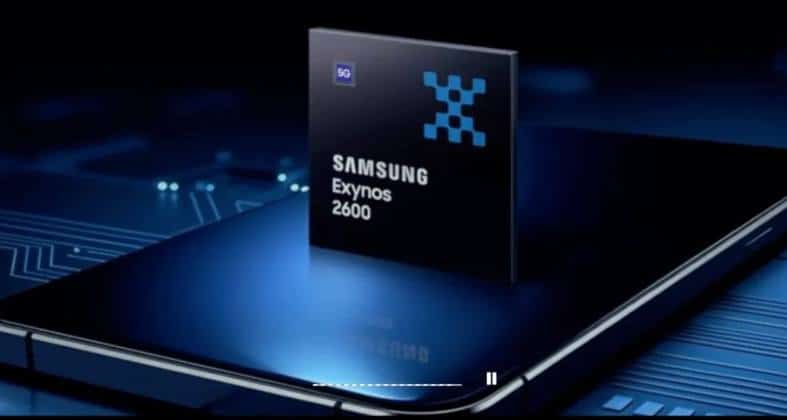
Samsung is redefining its internal components strategy with an ambitious plan to significantly expand the use of its Exynos processors in future Galaxy smartphones. The initiative, which should gain momentum with the launch of the Galaxy S26 series, directly aims to reduce the company’s dependence on the Qualcomm and its Snapdragon chips, whose rising costs have impacted the profit margins of high-end devices. Analistas from the sector indicate that the strong investment in the development of its own CPU and GPU cores is a clear sign of a long-term change, seeking greater control over hardware and optimization of expenses.
For the Galaxy S26 generation, the expectation is that the new Exynos 2600 will power approximately 25% of the devices, while the remainder will be powered by the Snapdragon 8 Elite Gen 5. Samsung uses this hybrid split to test the performance and acceptance of its chip on a global scale, while mitigating risks and preparing for a more aggressive transition in the years ahead. The ultimate goal is to position the Exynos as the leading solution in the majority of markets where the South Korean company operates.

The new era of Exynos 2600
The Exynos 2600 processor represents an important technological leap for the Samsung semiconductor division. Ele is being manufactured using the advanced 2 nanometer (nm) process, one of the first lithographs of its kind to be applied to mobile chips, promising substantial gains in energy efficiency and performance. Relatórios initials point out that mass production has already begun, with yields around 50%, a number that tends to improve with continuous optimizations on the assembly line.
One of the highlights of the new chip is the Xclipse 960 graphics processing unit (GPU), developed based on AMD’s custom RDNA 4 architecture. Essa technological collaboration aims to deliver significantly higher computational performance than previous generations, with a special focus on artificial intelligence tasks and complex graphics rendering, such as ray tracing, which simulates the behavior of light to create more realistic visuals in games and applications.
Strategy to reduce dependence
The decision to strengthen Exynos is driven by clear economic factors. The Qualcomm chips, although recognized for their high performance, have a high cost, with the current model costing almost US$280 per unit. Projections indicate that this value should increase even further in the next generation, putting pressure on the Samsung’s cost structure. By manufacturing and using its own processors, the South Korean giant is able to avoid these premiums and have greater flexibility in its supply chain.
Market experts, such as analyst Samir Khazaka, highlight that massive investments in research and development of custom CPUs and GPUs would not be justified if the intention was to keep the Exynos as a secondary option. Pelo On the contrary, this approach signals Samsung’s ambition to compete directly with the main market players, such as Apple and Qualcomm itself, which benefit from a highly integrated hardware and software ecosystem.
The strategy goes beyond simply replacing components. With its own chip, the Samsung can optimize the One UI software to work in perfect harmony with the hardware, potentially resulting in improvements in performance, battery life and the introduction of exclusive features. The company is also focused on improving the thermal efficiency of its processors, an area that has received criticism in previous versions and which is crucial to maintaining performance in intensive tasks.
Partnership details with AMD
Collaboration with AMD is a key pillar in Samsung’s plan to make Exynos more competitive. The Xclipse 960 GPU, based on AMD’s MGFX4 architecture, has been customized to meet the specific needs of mobile devices, offering computing power that can be up to twice that found in its predecessors. Isso translates into a more fluid gaming experience and the ability to process generative artificial intelligence algorithms directly on the device.
This strategic partnership allows Samsung to incorporate cutting-edge technologies into its chips without having to develop a graphics architecture from scratch, which would require significant time and resources. The focus on advanced ray tracing puts the Exynos 2600 on par with the most advanced solutions on the market, aligning the Galaxy line with gaming and visual computing trends.
In addition to the GPU, the Exynos 2600 is designed to support the latest memory and storage technologies such as LPDDR5x and UFS 4.1. Essa combination ensures that the processor can handle high data transfer rates, which is essential for recording high-resolution videos and running multiple applications simultaneously without performance bottlenecks.
The integrated image processor (ISP) has also been enhanced to work with ultra-high-resolution camera sensors, enabling faster, more accurate image processing. Isso directly impacts the quality of photos and videos captured by devices in the Galaxy line, improving dynamic range, noise reduction and color fidelity.
Market division in the Galaxy S26 line
The distribution of processors in the Galaxy S26 series will follow a well-defined regional logic, a strategy that Samsung has already used in the past. The Snapdragon 8 Elite Gen 5 should equip the majority of units, around 75%, focusing on strategic markets such as the Estados Unidos and Nesses countries, the preference for the Qualcomm chip is linked to issues of compatibility with local operator networks and a strong marketing appeal built over the years.
On the other hand, the Exynos 2600 will be destined for approximately 25% of devices, mainly concentrated in markets such as Europa, Coreia of Sul and parts of Ásia. Essa approach allows Samsung to collect performance data in real-world usage scenarios and adjust its strategy for future releases. An important exception must be the Ultra variant of the S26 line, which, to ensure consistency of performance and premium product image, will likely use the Qualcomm chip in all markets globally.
Investment in technological autonomy
Samsung’s vision for the future of its processors goes far beyond the Galaxy S26 line. The company is assembling teams of highly specialized engineers dedicated exclusively to designing fully proprietary CPU and GPU cores. The ultimate goal is to achieve a level of vertical integration similar to what Apple has with its A and M series chips, allowing full control over the performance and efficiency of its products. Esse strategic movement is seen as essential to remain competitive in an increasingly demanding market. The next major milestone in this journey is the Exynos 2800, scheduled to hit the market in 2027. The Este chip should be the first to debut a GPU entirely developed internally by The expansion of the use of these proprietary chips will not be limited to smartphones, but should include tablets, notebooks and other devices in the Galaxy ecosystem.
The future of Galaxy processors
The transition to Exynos will be gradual, but the direction is clear. The 25% share in the S26 line serves as a basis for continued expansion, with analysts predicting that the Samsung chip could become the majority in high-end models from 2027. Essa evolution is supported by improvements in production yields and thermal management, factors that strengthen the viability of the Exynos as the main platform for the brand’s future devices.



