
Samsung revolutionizes Bixby with Perplexity AI for advanced commands and searches in One UI 8.5

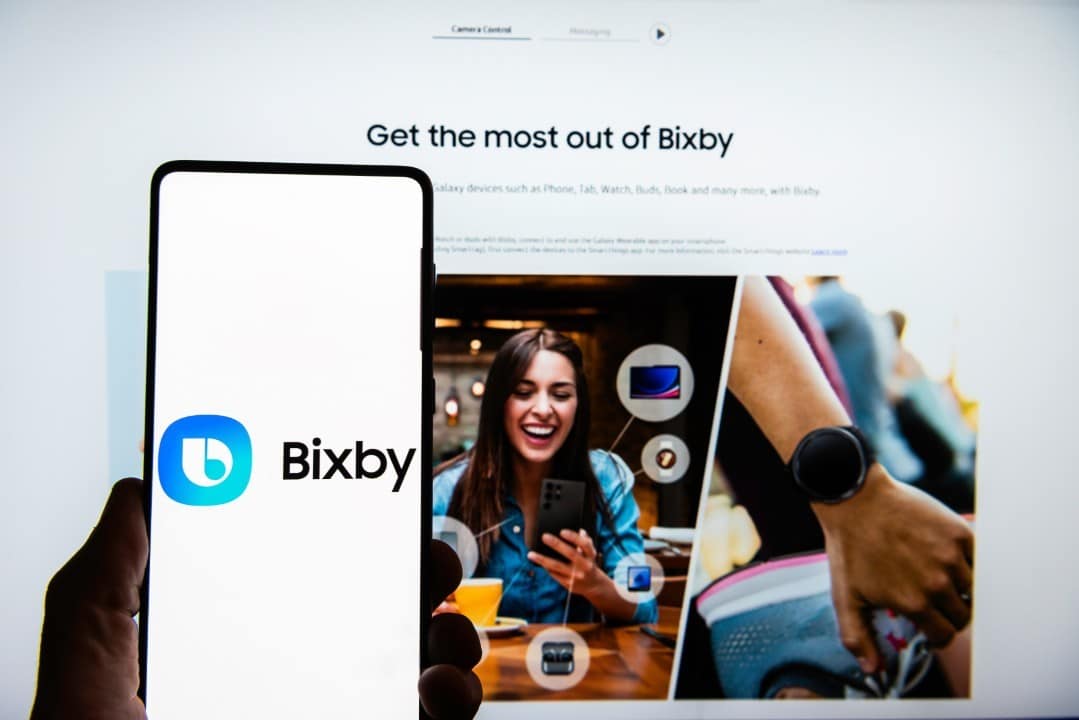
Samsung announced a profound restructuring of its virtual assistant, which will now be driven by Perplexity’s artificial intelligence technology. The new version, which will be integrated into the One UI 8.5 interface, promises to transform users’ interaction with Galaxy line devices, allowing the execution of complex commands using natural, everyday language.
This technological evolution allows Bixby to understand the intent behind requests, rather than relying on pre-programmed phrases. The initiative seeks to make control over operating system and hardware configurations more intuitive and accessible for all user profiles, eliminating the need for technical knowledge to perform advanced adjustments.

The launch of the functionality will occur gradually. A beta phase will be made available to owners of the Galaxy S25 line in selected markets from January 2026. The stable and complete version is scheduled to arrive in February, debuting natively on future Galaxy S26 series devices and, later, being distributed to other compatible models through a software update.
How the new Bixby interprets commands
The assistant’s main innovation lies in its enhanced natural language processing capabilities, which go beyond simple keyword matching. The system can now analyze the context of a sentence to determine the user’s true need and activate the appropriate resources autonomously. Isso represents a significant leap compared to previous models, which required specific and rigid commands to function correctly, drastically simplifying the day-to-day use experience.
In practice, this means that a user can say something like “I don’t want the screen to go out while I’m reading this article” and Bixby will interpret the request to activate the smart display function, which keeps the display on by detecting the user’s face. Essa approach eliminates the need to manually navigate through multiple configuration menus to find the desired option, making device management more fluid and efficient, especially for those less familiar with the technical aspects of the Android system.
Enhanced searches with Perplexity technology
Strategic collaboration with Perplexity AI expands the capabilities of Bixby beyond device control, transforming it into a powerful research tool. Agora, the assistant can perform complex queries on the internet and present the results in an integrated manner, without interrupting the task in progress.
Requested information, such as a recommendation for a nearby restaurant or the definition of a technical term, is displayed using unobtrusive floating widgets. Esse system ensures that search processing occurs in the background, preserving the performance of the main application in use by the user.
The platform establishes a clear distinction between internal and external tasks. Comandos related to device settings are managed by Bixby’s native engine, while questions that require up-to-date knowledge of the web are delegated to Perplexity’s AI, ensuring more accurate, relevant and contextualized answers.
Intelligent diagnosis of device problems
The new Bixby also takes a proactive role in maintaining device health, functioning as a diagnostic and troubleshooting tool. Upon receiving a complaint about abnormal smartphone behavior, the assistant is able to analyze sensors, settings and running processes to identify the root cause.
A practical example is when the user reports that “the cell phone screen is turning on by itself in my pocket”. The Bixby can check the proximity and light sensors, identify that accidental touch protection is disabled, and then recommend enabling that specific functionality to resolve the issue.
Likewise, complaints about excessive battery consumption lead to a detailed analysis of applications running in the background. The assistant identifies the processes that drain the most energy and offers the user the option to restrict them, optimizing the device’s autonomy with a simple voice interaction.
Other usage scenarios include automatically checking audio settings when the user mentions that the volume is too low, adjusting application permissions to reinforce privacy and security, or optimizing Wi-Fi networks, all carried out through a direct conversation with the virtual assistant.
Availability and update schedule
The new Bixby rollout schedule has been planned to ensure a smooth transition and the collection of valuable feedback. The initial testing phase will be restricted to users enrolled in the One UI 8.5 beta program who have devices from the Galaxy S25 line. The update will be rolled out progressively to this group over the first few weeks of 2026, allowing Samsung to fine-tune based on actual usage.
The stable and definitive version is scheduled to be officially released in February 2026, coinciding with the arrival of the Galaxy S26 series, which will already come with the functionality pre-installed from the factory. Aparelhos of previous generations, focusing on the most recent high-end models, will receive the news through a software update via OTA (Over-the-Air), following the company’s regular update calendar, with a gradual expansion to the intermediate lines throughout the year.
AI strategy in the Galaxy ecosystem
With this update, Samsung solidifies its artificial intelligence strategy, establishing a clear division of responsibilities between its tools to avoid overlapping roles and optimize the user experience. Bixby establishes itself as the assistant specialized in in-depth hardware control and operating system optimization, functioning as a device control agent. In contrast, the Google Gemini, which is also integrated into the Galaxy devices, remains the main solution for generative AI tasks such as text creation, summarization, translations and image generation. Essa specialization allows each tool to reach its maximum potential in its respective area of activity. The technical architecture of the Bixby has been modernized with a hybrid approach, combining local on-device processing for fast, privacy-demanding tasks, with cloud access for complex queries that require greater computing power. Isso ensures that sensitive data, captured by microphones and sensors, is processed locally, reinforcing security and speed of response.
Practical applications in everyday life
The new Bixby was designed to integrate fluidly into users’ routines, resolving common scenarios with greater efficiency. A user can, for example, ask to “block all notifications during my next meeting”, and the assistant will consult the calendar, identify the event and activate the “No Perturbe” mode automatically, and may even allow exceptions for contacts previously defined as important, demonstrating its ability to understand complex contexts.



