Technical dispute in F1: Ferrari develops engine for 2027 inspired by controversial Mercedes solution

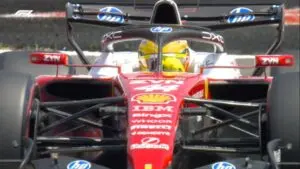
Behind the scenes at Fórmula 1, Ferrari has begun an ambitious project for its 2027 power unit, building on a controversial technical solution explored by Mercedes. The Maranello team works on the premise that the Federação Internacional of
The strategic movement of the Italian team, led by the technical department of Enrico Gualtieri, seeks to neutralize a possible significant competitive advantage of Mercedes in the new era of the category. The decision to move forward with development in parallel, even before a final decision by the FIA, demonstrates the intensity of the technological race between the main teams on the grid, where anticipating regulatory trends can define championships.
On the same topic: Verstappen and Red Bull challenge FIA rule that classifies engine as the best and freezes improvements
The complexity of the new regulation, which increases dependence on electrical energy and introduces 100% synthetic fuels, makes each efficiency gain in the internal combustion engine a crucial differentiator. Ferrari is betting that mastering this technology, even if its full implementation only occurs in 2027, is fundamental to its long-term aspirations in the sport.
The loophole in the 2026 regulation
The center of the controversy lies in the interpretation of the new rules for power units. The regulation sets a limit on the internal combustion engine’s compression ratio at 16:1, a measure aimed at controlling performance and ensuring parity between manufacturers.
Learn more: Verstappen defends Gabriel Bortoleto and agrees with criticism of the 2026 Formula 1
However, Mercedes has reportedly developed an approach that allows its engine to operate at a higher effective compression ratio during races, without violating the limit during static measurements carried out by the FIA. Essa difference is achieved through the exploitation of thermal variations and the expansion of the engine’s internal components when in full operation.
Paddock sources estimate that this advantage could translate into a gain of up to 15 horsepower, an expressive number in the world of Fórmula 1.
In light of this, rival teams such as Audi and Honda have requested formal clarifications from the FIA, putting pressure on the governing body to review its verification procedures to eliminate this potential gray area in the regulations. The discussion is ongoing, and a change in testing methods, with measurements carried out with the engine warmed up, is one of the possibilities considered.
The Maranello strategy
Ferrari has chosen not to wait for a definition from the FIA and has already allocated significant resources to developing its own version of the concept. The Italian team considers the risk of falling behind technologically greater than the risk of investing in a solution that could eventually be banned. The project is seen as a competitive insurance policy for the 2027 season and beyond.
The implementation schedule for 2027 is justified by the complexity of the development and the approval deadlines imposed by the FIA. Qualquer fundamental change in the design of the 2026 power unit would need to be submitted well in advance. By targeting 2027, Ferrari gains time to validate, test and seamlessly integrate the new concept into the chassis design, avoiding the reliability issues that can arise with the rushed introduction of new technologies.
See Also

Kimi Antonelli intensifica preparação física durante recesso da Fórmula 1 para manter liderança

Cadillac nega boatos de Rafael Câmara na F1 em 2027, mas mantém portas abertas para mudanças futuras

Max Verstappen vai sair da F1? CEO quebra o silêncio sobre futuro do piloto e novas regras
More on this story: Aston Martin prepares AMR26 to receive improved Honda engine for second half of the season
The automakers’ chess
The situation reflects the complex game of power and strategy between the six engine manufacturers confirmed for 2026: Ferrari, Mercedes, Alpine/Renault, Honda, Cada closely monitors the others’ movements, seeking any marginal advantage.
Audi, who will make her debut in the category, and Honda, who will officially return, are particularly attentive to ensuring that the playing field is as level as possible. Red Bull, with its new project in partnership with Ford, also follows the discussions, although it adopts a more publicly reserved stance.
Ferrari’s decision to move forward with the project could force other teams to do the same, creating a parallel development race that raises costs and pressure on engineering departments across the category.
The new power units
The technical revolution of 2026 is one of the most significant in the recent history of The energy generated by MGU-K will be increased to 350 kW, and the use of 100% sustainable fuels will be mandatory. Nesse scenario, the efficiency of the internal combustion engine becomes even more vital, as any power gain extracted from the thermal portion frees up more resources for managing the electrical part. A higher compression ratio improves thermal efficiency, allowing more energy to be extracted from the same amount of fuel, which directly impacts peak power and engine response at different speed ranges.
History of controversial innovations
The exploration of gray areas of the regulations is a constant in the Fórmula 1. Over the decades, top teams have introduced innovations that have challenged the limits of the rules, such as the double diffuser of the Brawn GP in 2009, the blown exhausts of the Red Bull in the early 2010s and, more recently, the DAS (Dual Axis Steering) system of the Mercedes.
These episodes demonstrate the culture of relentless innovation that defines the sport. Teams invest heavily in creative interpretations of the rulebook, and the FIA often has to intervene to clarify or ban technologies that unbalance the competition. The current dispute over the compression ratio is just the latest chapter in this saga.
Learn more: Gabriel Bortoleto expresses optimism about Audi’s future as an engine powerhouse in F1
The role of the FIA in the dispute
Federação Internacional of Automobilismo is in a delicate position. The entity needs to arbitrate the dispute in order to maintain the integrity of the competition and the spirit of the new regulation, which values sustainability and cost control, without, however, stifling the technical ingenuity that is one of the pillars of Fórmula 1.
The decision the FIA makes on compression ratio verification procedures will have a profound impact on the development of power units for 2026 and beyond. A quick clarification is desired by all teams so that they can complete their projects with legal and technical certainty.
Deadlines and development
The Ferrari’s focus on 2027 for the full implementation of this new technology underlines the reality of long development cycles on the