
Shortage of LFP batteries forces Volkswagen to postpone entry version of the long-awaited ID.Polo electric


Volkswagen announced a significant change in the launch schedule of its new electric compact, the ID.Polo. The German automaker confirmed that the entry-level version of the vehicle, designed to be one of the most affordable electric vehicles on the European market, will have its arrival on the market postponed until the end of 2026. The main reason for the decision is the shortage of lithium iron phosphate (LFP) batteries, a crucial component for the viability of the model’s competitive price.
Initially, the expectation was that the ID.Polo priced below 25 thousand euros would be launched in the first half of 2026. Contudo, difficulties in the LFP battery supply chain forced the company to redefine its strategy. Priority will now be given to the more equipped and, consequently, more expensive versions of the compact, which use nickel-manganese-cobalt (NMC) batteries, whose availability is more stable at the moment.
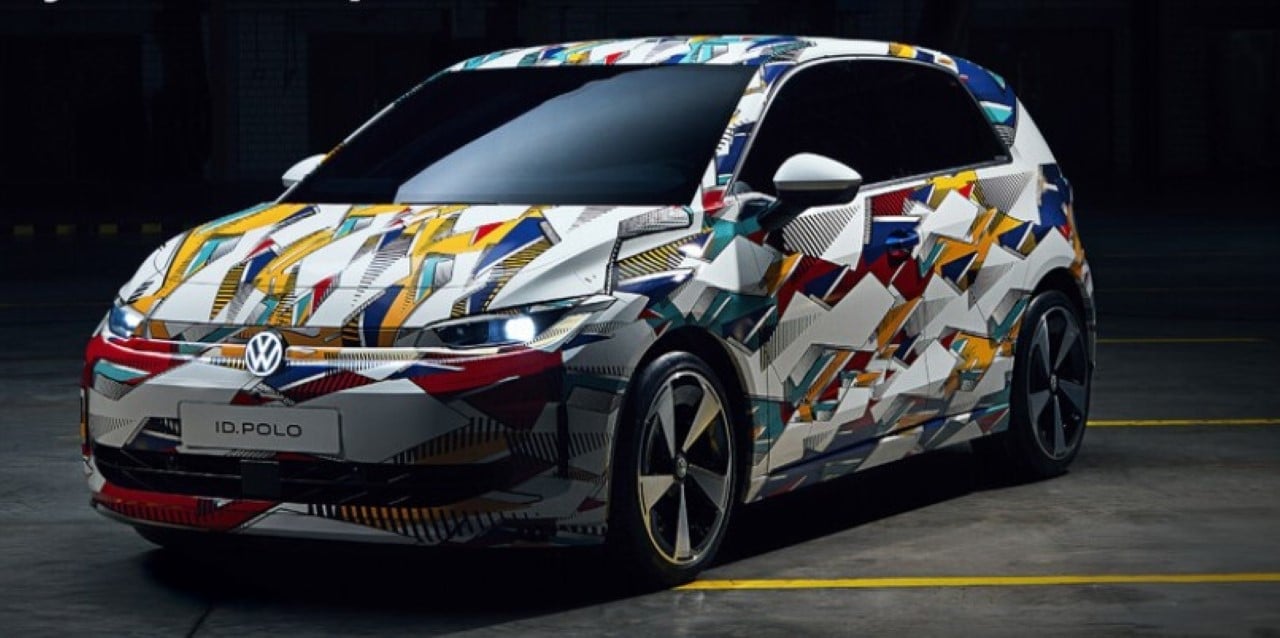
This strategic change aims to ensure a continuous production flow and maximize the initial profitability of the project, while the company works to stabilize the supply of LFP cells. The decision reflects a growing challenge facing the entire automotive industry in the transition to electrification: balancing the demand for affordable vehicles and the complex logistics of supplying essential components.
The postponement places Volkswagen in a delicate position in the competitive electric compact segment, where agility and price are determining factors for success. The company is betting that the quality and technology embedded in the ID.Polo will be enough to maintain consumer interest until the entry-level version is finally available in dealerships.
Reasons behind strategic delay
The decision to postpone the entry-level version of the ID.Polo is directly linked to the chemistry of the batteries and their availability. LFP batteries are known for their lower production cost and greater durability across charge cycles, making them ideal for entry-level electric vehicles where final price is a critical factor. However, global production capacity for these components still does not keep up with growing demand, creating bottlenecks for automakers like Volkswagen.
On the other hand, NMC batteries, although more expensive, offer greater energy density, resulting in more autonomy with a package of the same size. By prioritizing versions of the ID.Polo equipped with NMC batteries, Volkswagen is able to begin large-scale production without relying on the unstable supply of LFP cells, ensuring that the first customers receive their vehicles and generating revenue for the project.
MEB+ platform advancements
The Volkswagen ID.Polo will be built on the MEB+ platform, a significant evolution of the group’s electrical modular architecture. Esta new base is designed to optimize efficiency, performance and recharge times. One of the main innovations is the introduction of “cell-to-pack” technology, which integrates the battery cells directly into the package, eliminating intermediate modules. Esse design not only reduces weight and volume, but also improves the vehicle’s structural rigidity and energy density.
The MEB+ platform also incorporates the new APP550 electric motor, developed by Volkswagen itself. Este engine offers a maximum torque of 550 Nm, providing more vigorous acceleration and more refined performance for urban and highway use. With a wheelbase of 2,600 mm, the ID.Polo promises to offer a surprisingly large interior space for a vehicle in its segment, surpassing the useful space of the combustion Polo.
ID.Polo battery and range options
The new Volkswagen electric compact will be offered with two distinct battery configurations to suit different usage profiles and budgets. The entry-level version, now postponed, will feature an LFP battery pack with 37 kWh of useful capacity. Esta configuration was designed to offer an estimated range of up to 300 kilometers in the WLTP cycle, ideal for predominantly urban use.
For consumers who need greater autonomy, the Volkswagen will offer a version with an NMC battery with 52 kWh of useful capacity. With this battery, the ID.Polo can travel up to 450 kilometers on a single charge, making it a versatile vehicle also for longer trips. NMC chemistry, in addition to higher energy density, allows for faster recharge rates.
In terms of charging, the differences are also notable. The LFP battery model will support rapid direct current (DC) recharging of up to 90 kW, allowing it to charge from 10% to 80% in approximately 27 minutes. Já the version with an NMC battery can receive up to 130 kW of power, reducing the same recharge time to around 23 minutes, an important difference for those who travel frequently.
For alternating current (AC) charging, such as in homes and public stations, both models will have a standard capacity of 11 kW, ensuring flexibility and convenience for everyday use.
Range of engines and performance
Volkswagen plans a diverse line of engines for the ID.Polo, seeking to attract drivers focused on urban efficiency to performance enthusiasts. The entry-level version will be equipped with an 85 kW (116 hp) engine, offering a balance between performance and energy savings. An intermediate option with 99 kW (135 hp) is also planned for those looking for a little more agility.
For those who want a sportier driving experience, there will be a version with 155 kW (211 hp). The highlight of the range, however, will be the long-awaited GTI version. Volkswagen has already confirmed that the ID.Polo GTI is under development and should be launched at the end of 2026.
Production and market strategy
The manufacturing of the ID.Polo will be centralized at the Martorell plant, at Espanha, which is being transformed into a strategic hub for the production of compact electric vehicles at Grupo Volkswagen. Esta decision reinforces the company’s investment in Península Ibérica as an electromobility hub. ID.Polo’s Além, the factory will also be responsible for the production of its sister models, such as the Cupra Raval and a future compact SUV from the Skoda, all based on the same MEB+ platform.
This shared production strategy allows the group to optimize costs, increase efficiency and accelerate the launch of multiple affordable electric models on the market. Synergy between the brands is key to strengthening Grupo Volkswagen’s position in the entry-level segment, which is seen as crucial for the mass popularization of electric vehicles in Europa and other global markets.
Market positioning and competition
Volkswagen’s objective with the ID.Polo is clear: to offer an electric vehicle that is a viable and competitive alternative to compact combustion cars. The target price of 25,000 euros for the entry-level version is a pillar of this strategy, positioning the model to compete directly with other important launches, such as the Renault 5 E-Tech and the Citroën ë-C3. Atrasar precisely this version can give an initial advantage to competitors, who are already positioning themselves strongly in this market niche. The German automaker is confident that the brand’s reputation, construction quality and onboard technology will be differentiators in winning over consumers when all versions are available.



