
Bad Bunny turns Super Bowl LX into a stage to celebrate Latino culture in Trump’s absence

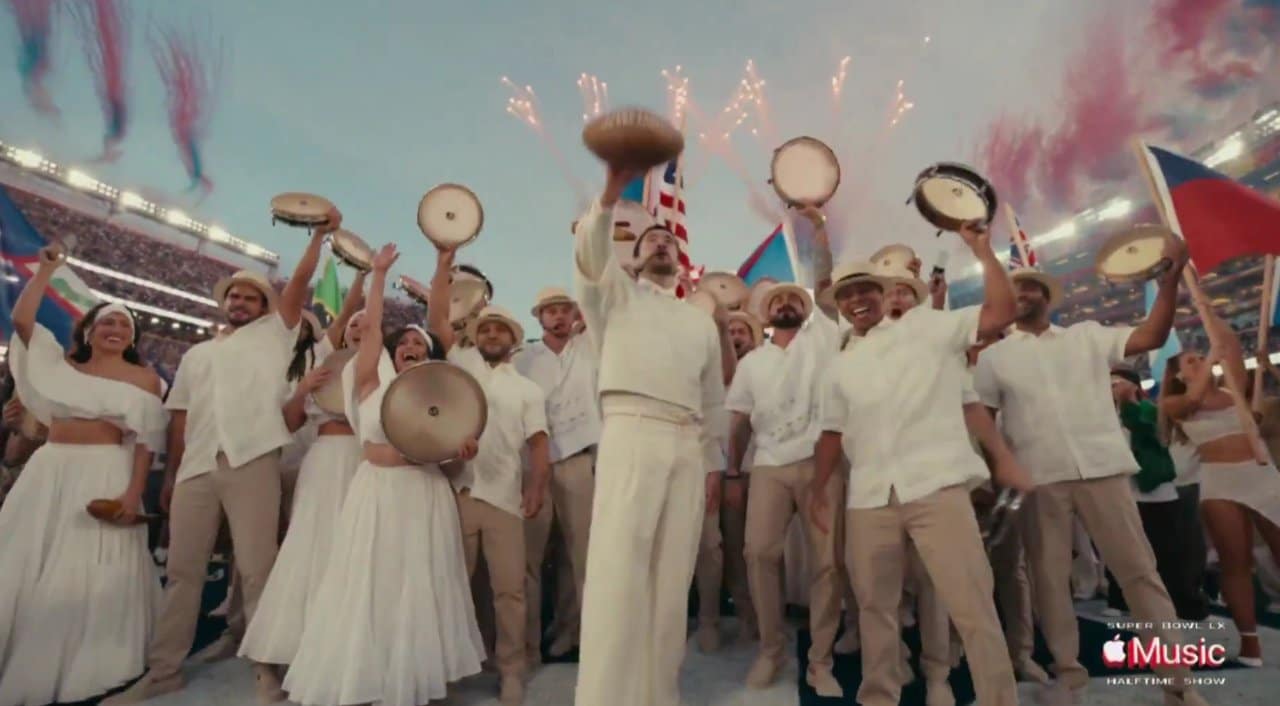
The Super Bowl LX halftime show, held on February 8, 2026, was headlined by a powerful cultural demonstration led by Puerto Rican artist Bad Bunny. Utilizando one of the biggest media showcases in the world, the singer promoted a celebration of Latin American identity and unity, delivering a performance that resonated far beyond the stadium.
The presentation gained even more significant contours due to a polarized political context, evidenced by the notable absence of former president Donald Trump, a critic of the NFL’s choice of the artist. Este scenario transformed the sporting event into an arena for discussions about representation, immigration and the role of culture in contemporary society.
As millions watched, Bad Bunny’s message reverberated, contrasting political tensions and amplifying often underrepresented voices. The show established itself not only as an entertainment landmark, but as a moment of cultural and political affirmation on a global scale.
A visual statement of Caribbean identity
Bad Bunny’s performance was meticulously constructed as an immersion into Latin culture, using the stage to tell a story rich in symbolism. The scenography recreated elements of daily Caribbean life, such as a sugar cane plantation, which refers both to the economic base of many nations in the region and to a complex past of exploration and resilience. In another corner of the stage, a scene with domino players was set up, representing a pastime that is a pillar of socialization and community life in countries like Porto Rico and Cuba. The staging of a Latin wedding, with its costumes and rituals, celebrated the importance of family ties and traditions that unite generations. Cada detail was designed to go beyond mere props, serving as an invitation for the American and global public to know and value the depth and diversity of the Latin experience, transforming the lawn into a vibrant cultural tapestry.
The social criticism behind the music
One of the most impactful moments of the presentation occurred during the performance of the song “El Apagón”. Deliberately, the scenographic lamp posts on the stage began to fail, a direct and blunt allusion to the frequent and debilitating blackouts that affect Porto Rico. Essa issue is a chronic infrastructure problem on the island, and Bad Bunny has been an active voice in reporting the situation and demanding solutions. The staging was not just a visual effect, but an act of protest that brought a local crisis to the center of a national and international debate.
This stance of activism is not new to the artist’s career. Apenas a week before Super Bowl, at the Grammy Awards ceremony, he had already openly criticized the policies of “ICE” (Immigration and Customs Enforcement), the US immigration agency. By connecting these moments, Bad Bunny has demonstrated a consistency in using his immense platform to bring visibility to social and political issues affecting his community, proving that his art is inseparable from his commitment to social justice and advocating for his people.
The absence that marked the event
The NFL’s decision to cast Bad Bunny as the halftime headliner had already sparked heated debate months before the event. Setores conservatives in politics and the media criticized the choice, pointing out the artist’s vocal stance on issues such as immigration and the sovereignty of Porto Rico.
The absence of former president Donald Trump, a figure often present at major sporting events, was widely interpreted as a direct boycott of the singer’s performance and message. Although there was no official justification, speculation gained strength and dominated discussions on social media and in the press.
This episode underscored the deep ideological divide in American society, where even an event traditionally seen as a moment of national unity through sport can become a battleground for conflicting political narratives.
Conservative counterprogramming
As a direct response to what they saw as a progressive agenda at the halftime show, the conservative organization Turning Point USA, led by Charlie Kirk, organized an alternative event. Transmitido online and simultaneously with the presentation of Bad Bunny, “All-American Halftime Show” was created to offer an entertainment option aligned with conservative values.
The virtual event featured artists including singer Kid Rock and country music stars Brantley Gilbert and Lee Brice. The counterprogramming initiative highlighted the growing cultural polarization, showing that the public increasingly seeks to consume content that reinforces their own world views, even fragmenting the audiences of mass events such as Super Bowl.
Clarifications on federal security
The tension surrounding the event was heightened by a statement made months earlier by Kristi Noem, secretary of Segurança Interna. Ela had stated that agents from Serviço of Imigração and Alfândega (ICE) would be “everywhere” during
This speech, added to Bad Bunny’s recent criticism of the agency, created a climate of apprehension. Muitos feared that the event could be used for mass immigration inspection operations, which could intimidate part of the public and workers involved.
Faced with the growing controversy, the NFL’s head of security felt the need to intervene the week of the game. Ele went public to clarify the situation and calm tempers, seeking to dissociate the event’s security from immigration policies.
In his statement, the official confirmed the presence of agents from multiple federal agencies, as is standard to guarantee security in events of this magnitude. Contudo, he was categorical that there would be no “immigration enforcement operations” in or around the stadium on match day, a crucial distinction that helped allay fears.
The rise of a global icon
Born Benito Antonio Martínez Ocasio, Bad Bunny cemented his place as one of the biggest stars in world music. Seu album “Debí Tirar Más Fotos” was a critical success, praised for its in-depth exploration of Puerto Rican identity and innovative fusion of traditional rhythms, such as salsa, with modern reggaeton.
His dominance on the charts is unquestionable, having been the most streamed artist globally on Spotify in four of the last six years. Industry recognition came with the album of the year award at Grammy, an achievement that reinforced the relevance of Latin music on the international scene and amplified its voice beyond music.
The final message of American unity
The climax of Bad Bunny’s performance was a powerful act of redefinition and inclusion. Após the traditional greeting “God bless America”, he recited in Spanish a list of nations, including Chile, Argentina, With this gesture, he expanded the concept of “América” to encompass the entire continent. The performance ended with him declaring his love for “my homeland, Porto Rico”, and kicking an American football with the phrase “Together, we are America”, solidifying a message of unity and cultural pride that marked the history of Super Bowl.




