
Electric and hybrid cars propel BYD to sales leadership over Toyota in the Brazilian market


The national automotive market registered a historic milestone in January 2026, with BYD, a Chinese manufacturer focused exclusively on electrified vehicles, surpassing the traditional Toyota in registration volume for the first time. Data consolidated by Fenabrave shows that BYD achieved a 6.03% share in automobile and light commercial vehicle sales, selling approximately 9,800 units. The Japanese giant, in turn, ended the period with a 5.88% market share.
This unprecedented result occurs in a scenario of moderate growth for the sector, which totaled 162,484 registrations in the first month of the year. BYD’s rise to the top 5 best-selling brands in the country, approaching Hyundai, signals a profound transformation in consumer habits and the configuration of the Brazilian automobile industry. Performance is driven by an aggressive strategy to popularize pure electric and plug-in hybrid models.
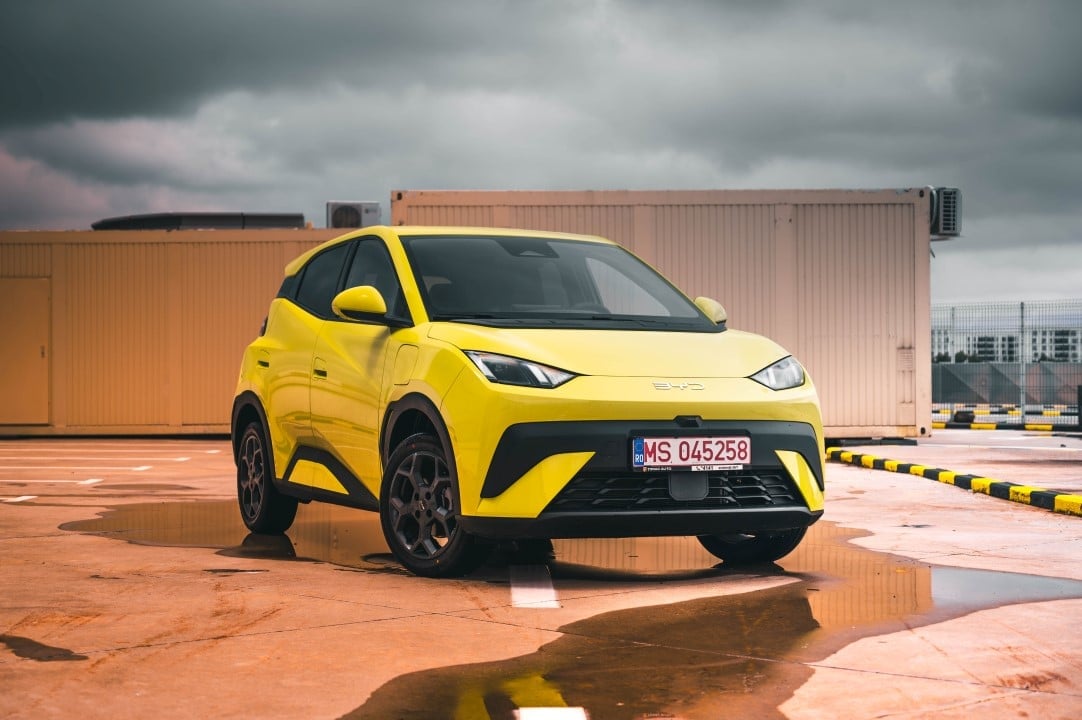
The electrified vehicle segment as a whole demonstrated its strength, accounting for 16.8% of all January sales, corresponding to 23,706 units. Dentro of this universe, BYD stood out overwhelmingly, being responsible for more than 60% of sales of 100% electric cars and also leading among hybrids that can be recharged at the socket.
Opposing strategies in the race for electrification
BYD’s overtaking of Toyota highlights the confrontation between two distinct visions for the future of mobility. Enquanto the Chinese automaker is betting on a quick and direct transition to high-range electric technologies, offering plug-in models as a gateway and pure electric models for everyday use, the Toyota adopts a more gradual and conservative approach. The Japanese brand’s strategy continues to be strongly anchored in its conventional hybrids, which combine a combustion engine with a small supporting electric motor, without the need for external recharging. Modelos like the Corolla Cross and the Hilux pickup remain the pillars of its sales, preserving consumer familiarity with traditional mechanics but limiting the move towards more complete electrification.
On the other hand, BYD’s proposal focuses on the direct benefits of electrification, such as lower costs per kilometer driven, exemption or reduction of taxes in several locations and a quieter and more responsive driving experience. Essa bet has resonated mainly with consumers in large urban centers, where charging infrastructure is expanding and restrictions on pollutant emissions are becoming more relevant. The combination of competitive prices, modern design and embedded technology has proven to be a successful formula for attracting a new buyer profile, which values innovation and sustainability.
The models that guaranteed the expressive result
BYD’s success is underpinned by a diverse portfolio that serves different market segments. The Song line, in particular, has been one of the brand’s main growth drivers in the country.
The Song Plus SUV, a plug-in hybrid, registered more than 2,300 units in January alone, consolidating itself as one of the most sought after sports utility vehicles by Brazilian consumers.
In the entry segment, the Dolphin and recently launched Dolphin Mini models play a crucial role, offering a 100% electric mobility option with affordable prices and compact dimensions, ideal for urban traffic.
Completing the offensive, the Yuan Plus is also constantly among the best-selling electric vehicles, while the Song Pro reinforces the brand’s presence among families looking for space and technology.
Absolute dominance in the electrified segment
BYD’s leadership is not limited to comparisons with traditional brands; it is even more evident within the electrified vehicle niche. In January, the company was responsible for approximately 62% of all sales of 100% electric cars in the Brasil, a number that demonstrates its hegemony and the strong acceptance of its products. The brand’s models, such as the Dolphin and the The supremacy extends to plug-in hybrids, where BYD also surpassed direct competitors, including the Toyota, consolidating its image as a reference in battery and electric propulsion technologies.
Consolidated advance of other Chinese brands
The BYD phenomenon is not an isolated case. Outras automakers of Chinese origin also recorded notable growth, accelerating the transformation of the national market. GWM, for example, approached the top 10 overall sales, driven by the excellent performance of the Haval H6 SUV, one of the best-selling hybrids in the country. Marcas like Chery and Geely are also expanding their participation with models that combine design, technology and competitive prices. Essa collective presence is redefining consumer expectations, who are now increasingly prioritizing energy efficiency, connectivity and cost-benefit, forcing traditional manufacturers to reevaluate their strategies and product portfolios for the Brasil.
Investments in local production and infrastructure
To sustain its growth and consolidate its position in the Brasil, BYD is making robust investments in local production and expanding its infrastructure. The company announced an investment of R$5.5 billion for the construction and modernization of its factory complex in Camaçari, in Bahia, where it plans to produce hybrid models with flex technology. The initiative aims not only to increase production capacity, but also to nationalize components and reduce dependence on imports, with the goal of reaching 50% local content by 2027.
A market trend that is here to stay
January’s figures confirm that electrified vehicles are no longer a niche product but have become protagonists in the mass market, competing directly with combustion models for volume.
The share of almost 17% in total sales indicates a paradigm shift that should intensify in the coming years, as infrastructure improves and prices become more affordable.
Consolidated numbers for the month
The overall sales ranking in January 2026 was led by Fiat, which maintained a wide margin over the competition. Volkswagen and



