
James Webb Telescope identifies methyl radical, key to life, outside the Milky Way for the first time

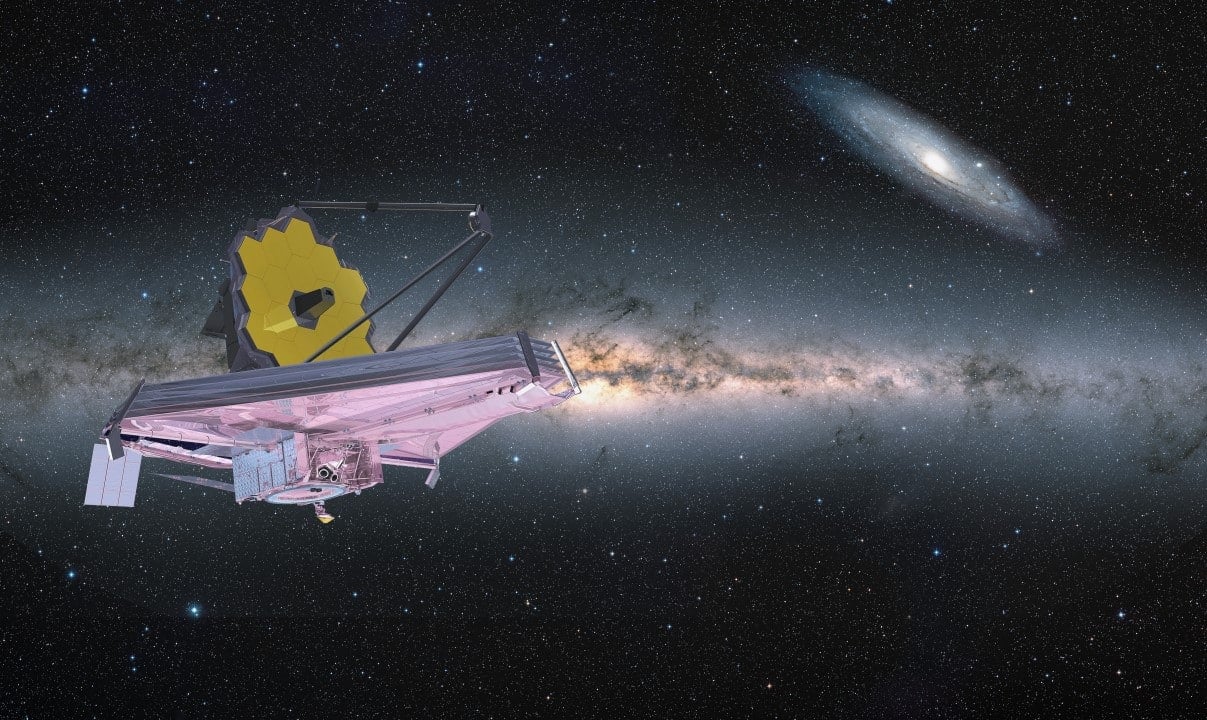
An unprecedented observation by Telescópio Espacial James Webb has confirmed the presence of complex organic molecules, including the methyl radical (CH₃), in a neighboring galaxy. The detection occurred in the obscured nucleus of the galaxy IRAS 07251-0248, classified as ultraluminous in infrared, marking the first time that this molecule fundamental to prebiotic chemistry has been identified outside of Via Láctea. The methyl radical is considered one of the essential building blocks for more complex molecules that can give rise to life.
The discovery was made possible by the telescope’s ability to penetrate the dense dust clouds that normally block visible light, revealing the rich chemical composition in one of the most extreme regions of the universe. The data collected by the Webb instruments indicate that the production of organic material is a continuous and robust process even in active and distant galactic nuclei, expanding understanding of the distribution of the ingredients of life in the cosmos.

The identified carbon-based compounds serve as the first rungs on the ladder of prebiotic chemistry, the set of reactions that can lead to the formation of amino acids and other biological structures. Detailed spectral analysis revealed not only the methyl radical, but also a host of other hydrocarbons that paint a complex picture of the chemical environment at the center of the observed galaxy.
An unprecedented chemical signature
Astronomers confirmed the presence of several organic molecules in the spectrum of the galaxy IRAS 07251-0248, with an abundance that exceeded the predictions of previous theoretical models. Essa richness of compounds suggests that molecular formation processes in high-energy environments are more efficient than previously imagined.
In addition to the methyl radical, which stood out for its high reactivity and central role in complex chemical reactions, other compounds were identified. Entre they are polycyclic aromatic hydrocarbons, benzene, methane and acetylene, which contribute to the formation of larger and more stable carbonaceous structures.
High-precision instruments reveal details
For this crucial observation, Telescópio James Webb used two of its main instruments. The NIRSpec spectrograph, operating in the near infrared, was responsible for identifying the precise molecular signatures, capturing the emission and absorption lines that function as a “fingerprint” of each chemical compound.
Simultaneously, the MIRI instrument supplemented the data operating in the mid-infrared. Essa capability allowed it to map the thermal emission of dust and reveal details that were hidden by the dense curtain of gas and dust at the heart of the galaxy, providing a complete view of the chemical environment.
Combining information from the two instruments offered a resolution and sensitivity that surpasses any previous observations made by ground-based or space-based telescopes. The clarity of the data allowed us to isolate the emission lines of molecular hydrogen and other gases, confirming the active and chemically rich nature of the galactic nucleus.
What is the galaxy IRAS 07251-0248
The galaxy IRAS 07251-0248 is classified as an ultraluminous infrared galaxy (ULIRG). Esses cosmic objects emit an extraordinary amount of energy in the infrared range, usually due to intense star formation processes or the activity of a supermassive black hole at their center.
Its core is completely obscured in visible light, making it inaccessible to traditional optical telescopes. However, infrared radiation can penetrate this dust barrier, allowing instruments like those on James Webb to study the physics and chemistry occurring inside.
These extreme environments function as true cosmic laboratories. Eles recreate conditions of high density and intense radiation ideal for the synthesis of prebiotic molecules, allowing scientists to observe processes that may have been common in the early universe.
The presence of carbon-rich dust grains indicates a continuous source of raw material for the formation of organic compounds. Detailed analysis of these galaxies is fundamental to understanding how the basic elements for life are manufactured and distributed throughout the universe over cosmic time.
The importance of the methyl radical for astrochemistry
The methyl radical (CH₃) is a highly reactive and unstable molecule, which makes its detection a remarkable feat. Sua importance lies in the fact that it is a key intermediate in numerous chemical reactions that build larger and more complex organic molecules. Ele acts as a fundamental building block, participating in chains of reactions that can eventually lead to the formation of amino acids, the components of proteins.
Finding the methyl radical outside our galaxy significantly expands knowledge about the universal distribution of life’s ingredients. Isso suggests that the chemistry of carbon, the basis of all known life, follows similar paths in different cosmic environments, from the molecular clouds of Via Láctea to the energetic cores of distant galaxies.
How these complex molecules form in space
The formation of complex organic molecules in environments like the core of IRAS 07251-0248 occurs in a dynamic cycle of destruction and creation. The intense radiation and cosmic rays that permeate these regions act as catalysts, breaking the bonds of larger, older compounds present in interstellar dust grains. The resulting fragments, including the methyl radical, are highly reactive and quickly recombine to form a variety of new and sometimes more stable molecules. Este process explains why the abundance of certain organic compounds observed by Webb is greater than models that do not consider this fragmentation would predict. Carbon-rich interstellar dust also plays a protective role, providing a surface where new molecules can form and shelter from destructive radiation, allowing them to accumulate and participate in subsequent reactions, continually enriching the interstellar medium with the precursors of life.
Implications for the search for life in the universe
This discovery reinforces the idea that the fundamental building blocks for life are not unique to Via Láctea, but are widely distributed throughout the cosmos. The confirmed presence of these compounds in a galaxy with an environment so different from ours suggests that prebiotic chemistry may be a universal process, occurring under a wide range of physical and chemical conditions.



