
New Ram Dakota debuts with 200 hp diesel engine and focuses on comfort and superior finishing

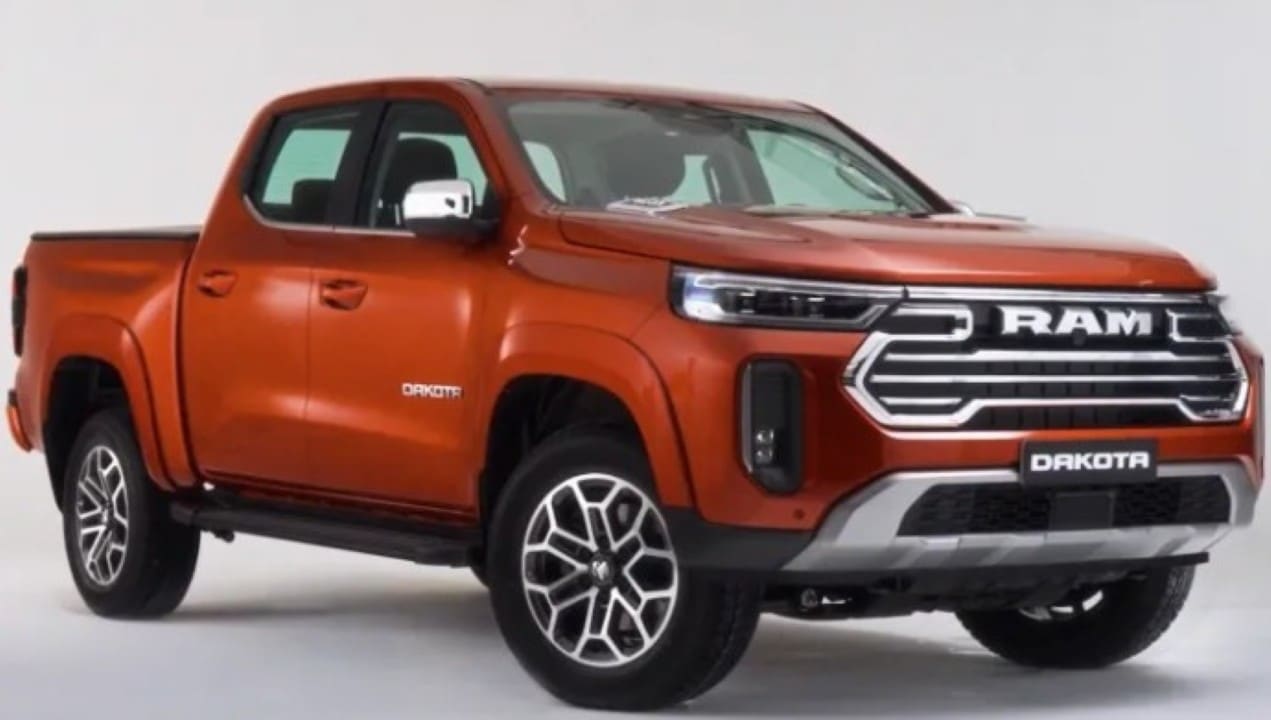
The Ram officially announced the arrival of the new Dakota on the national market, marking the brand’s entry into one of the most competitive segments in the country, that of medium pickup trucks. The model, which shares its platform with the Fiat Titano, arrives with a distinct proposal, focused on a superior level of finishing, onboard technology and a comfort-oriented suspension calibration, seeking to attract consumers who want the robustness of a pickup truck without compromising on refinement.
Equipped as standard with a 200 hp 2.2 turbodiesel engine and 4×4 traction with automatic drive, the Dakota promises competitive performance. The first performance tests indicate numbers in line with the main competitors, consolidating the vehicle as a new and strong option for those looking for versatility in both urban use and off-road activities.

Initial production takes place at Argentina, with nationalization plans underway to optimize logistics and supply at Brasil. Durante the pre-sale period, the pickup will be offered in two versions, Warlock and Laramie, with prices positioned to compete directly with the intermediate and top configurations of already established models, such as the Toyota Hilux and the Chevrolet S10.
Exclusive design and brand visual identity
The visual identity of Ram Dakota was carefully crafted to differentiate it from its base, Fiat Titano, and align it with the rest of the North American brand’s portfolio. The front is the main highlight, with an exclusive and imposing grille that can display the illuminated emblem, a detail that adds sophistication and reinforces the vehicle’s premium appeal. The bumpers have been redesigned, resulting in an increase in overall length to 5.36 meters. The optical assembly is entirely LED, both in the headlights and taillights, an important difference compared to simpler versions of other models in the segment. Essa attention to visual details is key to positioning Dakota in a higher market range, attracting customers who value the aesthetics and status associated with the Ram brand.
Refined interior and technology package
Internally, the Ram Dakota raises the standard of perceived quality in the segment. The panel adopts a horizontal layout and uses soft-touch materials, such as brown vinyl, which contrast with the rigid plastic found in many competitors and the Titano itself. Essa choice of materials creates a more welcoming and sophisticated environment.
The technological highlight is the set of screens, consisting of a 12.3-inch multimedia center and a 7-inch digital instrument panel. The interface is modern and intuitive, offering advanced connectivity and access to various vehicle functions, surpassing the simplicity of systems found in other vehicles in the category.
2.2 turbodiesel engine performance
The heart of the new Ram Dakota is the 2.2 turbodiesel engine, which delivers 200 hp at 3,500 rpm and a robust torque of 45.9 kgfm available at 1,500 rpm. Essa characteristic guarantees strength at low speeds, essential for off-road use and for transporting loads.
Coupled to an eight-speed automatic transmission, the powertrain provides agile acceleration and resumption. In tests, the pickup clocked 10.8 seconds to go from 0 to 100 km/h in 4×2 mode, a competitive time for its category.
Top speed is electronically limited to 180 km/h. The automatic 4×4 traction system intelligently distributes force between the axles, quickly adapting to terrain conditions and ensuring safety and capacity in different use situations.
Safety as a priority in the new model
The Ram has equipped the Dakota with a comprehensive package of safety and driver assistance technologies since the entry-level version, positioning it as one of the most complete in the segment in this regard. The model includes adaptive cruise control (ACC), which automatically adjusts speed to maintain a safe distance from the vehicle in front.
Another key feature is the autonomous emergency braking system, capable of detecting pedestrians and other vehicles to avoid or mitigate collisions. Safety is reinforced by blind spot monitoring, which alerts the driver to the presence of vehicles in areas that are difficult to see.
To facilitate maneuvering in tight spaces, the pickup has a camera system with 360-degree vision, which offers a complete perspective of the vehicle’s surroundings. Sensores front and rear parking, in addition to cross-traffic alert, complete the package.
The vehicle’s structure was designed for maximum occupant protection, and the package is completed with six standard airbags, including front, side and curtain airbags, ensuring the safety of everyone on board in the event of an impact.
Driving dynamics and suspension comfort
One of the main differences of the Ram Dakota is the adjustment of its suspension. The Embora uses the same architecture as the Titano, with a double-A system at the front and a rigid axle with leaf springs at the rear. The focus was on providing greater softness at the beginning of the shock absorbers’ travel, which translates into a significantly more comfortable ride, especially on uneven surfaces and in urban use. Essa configuration filters imperfections in asphalt and dirt roads more efficiently, improving the onboard experience for drivers and passengers on a daily basis. The pickup absorbs impacts better, reducing the jolts typical of vehicles built on a chassis.
This comfort-oriented approach, however, requires more attentive driving in high-speed corners or more aggressive off-road terrain, where greater suspension compliance can result in steeper body lean. Apesar of its generous dimensions, the Dakota has a turning diameter of 14.1 meters, which makes maneuvering easier. The steering with progressive electric assistance contributes to drivability, being light at low speeds and firmer on highways, which increases the feeling of safety and control.
Versions and pricing strategy at launch
For its debut on the Brazilian market, the Ram Dakota was announced in two different versions. The entry-level version, called the 18 inches and a front grille with an illuminated bar, as well as an even more refined interior finish.
Consumption efficiency and autonomy
Despite the focus on performance and robustness, the Ram Dakota presents efficient fuel consumption figures for its size and category. According to measurements carried out in tests, the pickup recorded an average of 11.2 km/l in urban cycles and 12.5 km/l on highway routes. Combinado with an 80-liter fuel tank, these numbers provide excellent autonomy, allowing the vehicle to travel more than 900 kilometers on the road with a single fill-up, an important factor for those using the pickup on long trips or in regions with less availability of fuel stations.



