
Rare sequence of five X-class solar flares puts Earth on alert for geomagnetic storm

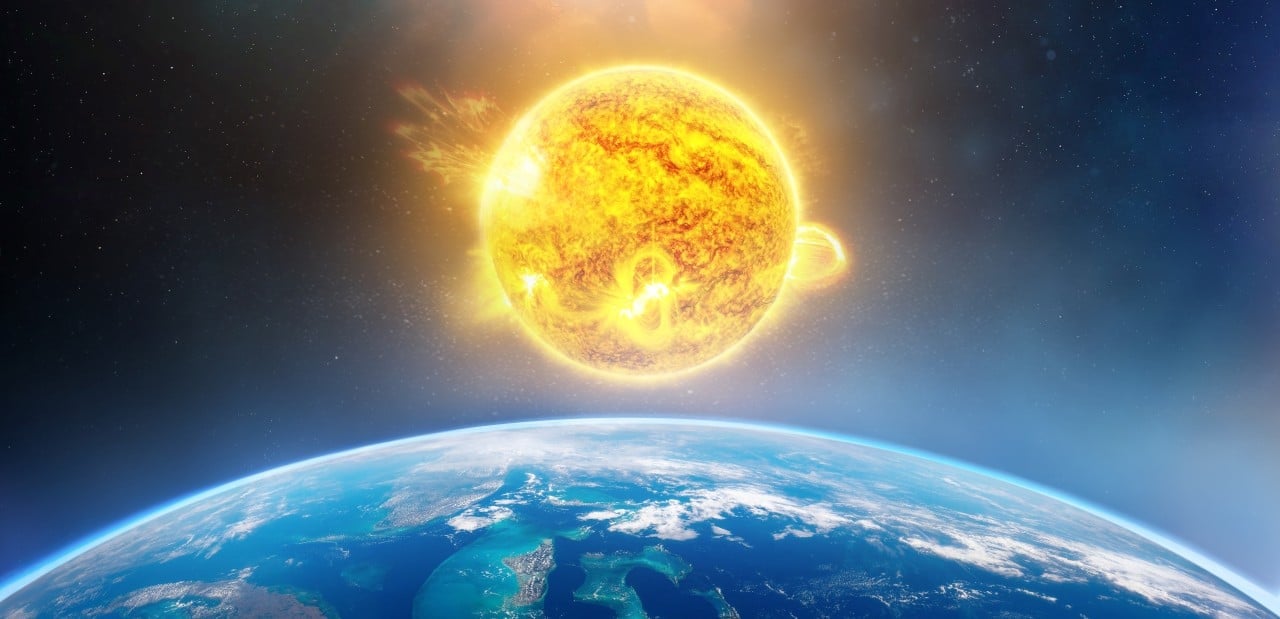
Solar activity of unusual intensity was recorded in the first few days of February, when a series of five high-power flares were released from the surface of Sol. The explosions, all classified in the strongest category, class X, expelled a significant amount of plasma and radiation into space, with some of this material on a collision course with our planet.
Space agencies, including Administração Nacional of Aeronáutica and Espaço (NASA) and Administração Oceânica and The forecast indicates that the arrival of this mass in the magnetic field of Terra will occur between the 5th and 6th of February.

Based on forecast models, authorities issued a warning for a G1 level geomagnetic storm. Embora is considered a light category on the space weather scale, the event is capable of producing notable effects, from interference in communication technologies to the occurrence of visual phenomena in the night sky.
The origin of intense solar activity
All of the recent activity originated in a single, unstable region on the solar surface, identified by astronomers as sunspot AR4366. Essa area showed accelerated growth and developed an extremely complex magnetic configuration, creating ideal conditions for the sudden release of large amounts of energy.
Space observatories recorded that the region remained energetically unstable even after its partial rotation away from Terra’s direct field of view. Continuous monitoring is essential, as the sunspot may continue to generate eruptions that, depending on its position, could affect the interplanetary environment.
Details of the five recorded explosions
The sequence of eruptions occurred within a short interval, demonstrating the high instability of the AR4366 region. The first explosion reached the X1.0 rating, but was quickly surpassed by the most powerful of the set, which reached the X8.1 level, one of the strongest in the current solar cycle.
The other three eruptions that completed the series were classified as X2.8, X1.6 and X1.5. The solar flare classification scale is logarithmic and divided into categories A, B, C, M and X, where each letter represents a tenfold increase in the intensity of the energy released.
Within class X, which is the highest, the accompanying number indicates relative strength. An X2 event is twice as powerful as an X1, which makes the X8.1 explosion an event of exceptional magnitude, with the potential to cause significant disruptions to space weather.
Geomagnetic storm forecast and impacts
NOAA has officially issued a category G1 geomagnetic storm warning, indicating that disturbances in Terra’s magnetic field will be slight. The main expected effect is a compression of the magnetosphere, our planet’s natural protective shield, allowing energetic particles to penetrate deeper into the atmosphere.
One of the most direct impacts will be on high-frequency (HF) radio communications, especially on routes that cross polar regions. Additional ionization in the upper atmosphere can cause temporary blackouts, affecting industries such as aviation and amateur radio operators.
Satellite navigation systems such as GPS can also have minor inaccuracies. Variations in the ionosphere can delay satellite signals, resulting in positioning calculation errors that, although minimal for common users, can be relevant for high-precision applications.
As for power grids, the risk of widespread outages is considered low for a G1 level storm. However, voltage fluctuations can occur in high-latitude power systems, and grid operators are often notified to monitor their infrastructure more closely during these events.
The spectacle of auroras in new latitudes
The most visible and anticipated consequence of the geomagnetic storm is the intensification and expansion of the auroras. Quando the energetic particles of Sol collide with the gases in the atmosphere of Terra, they excite the oxygen and nitrogen atoms, which release this energy in the form of light, creating the famous colorful curtains in the night sky. Durante a geomagnetic storm, this process is amplified, making the auroras brighter and more visible at lower latitudes than normal.
In the Northern Hemisphere, observers in locations such as Canadá, Escandinávia, and the northern states of Estados Unidos may have a greater chance of witnessing the aurora borealis. In the southern hemisphere, the phenomenon, known as aurora australis, can become visible in areas such as south of Austrália, Tasmânia and Nova Zelândia. Entusiastas and photographers are already preparing, using specialized applications and websites that provide real-time predictions about the phenomenon’s visibility.
How Nasa monitors space weather
To predict and analyze events like this, Nasa and other space agencies use a fleet of solar observatories. Observatório of Dinâmica Solar (SDO) captures high-resolution images of Sol at different wavelengths every few seconds, allowing scientists to pinpoint the development of active regions and the exact timing of an eruption. At the same time, Observatório Solar and Heliosférico (SOHO), with their LASCO coronagraph, block direct light from Sol so they can track the coronal mass ejections as they move away from the star. Esses data is crucial for feeding computer models, like Enlil, that simulate the CME’s trajectory and speed through the solar system, predicting when and how strongly it will reach Terra. Essa prediction capability is vital to protecting critical infrastructure, allowing satellite operators to put their equipment into safe mode to prevent electronic damage and Estação Espacial Internacional mission controllers to ensure astronauts are in more shielded areas of the station.
Context of the current solar cycle 25
This recent burst of activity is in line with the current phase of Sol, known as Ciclo Solar 25, which officially began in December 2019. Initial forecasts suggested a relatively weak cycle, similar to the previous one, but observed activity in recent months has consistently exceeded these projections, indicating that the peak activity, or solar maximum, may be stronger than expected.




