
Volkswagen faces delay in ID.Polo electric due to shortage of LFP batteries for entry-level model


Volkswagen confirmed a significant change in its launch schedule, postponing the arrival of the entry-level version of the long-awaited ID.Poloelectric. The main reason for the decision is a critical shortage in the supply of lithium iron phosphate (LFP) batteries, an essential component for the production of the most affordable model in the line. The German automaker now projects the launch for the end of 2026 at the earliest, which represents a strategic readjustment in the face of challenges in the global supply chain.
Initially, the plan was to position the entry-level ID.Polo with a competitive price, below 25 thousand euros, to compete in the growing market for compact electric vehicles in the Europa. However, the difficulty in guaranteeing a sufficient volume of LFP cells, which are cheaper to produce, made it impossible to maintain the original schedule. The company is forced to reevaluate its strategy so as not to compromise large-scale production.
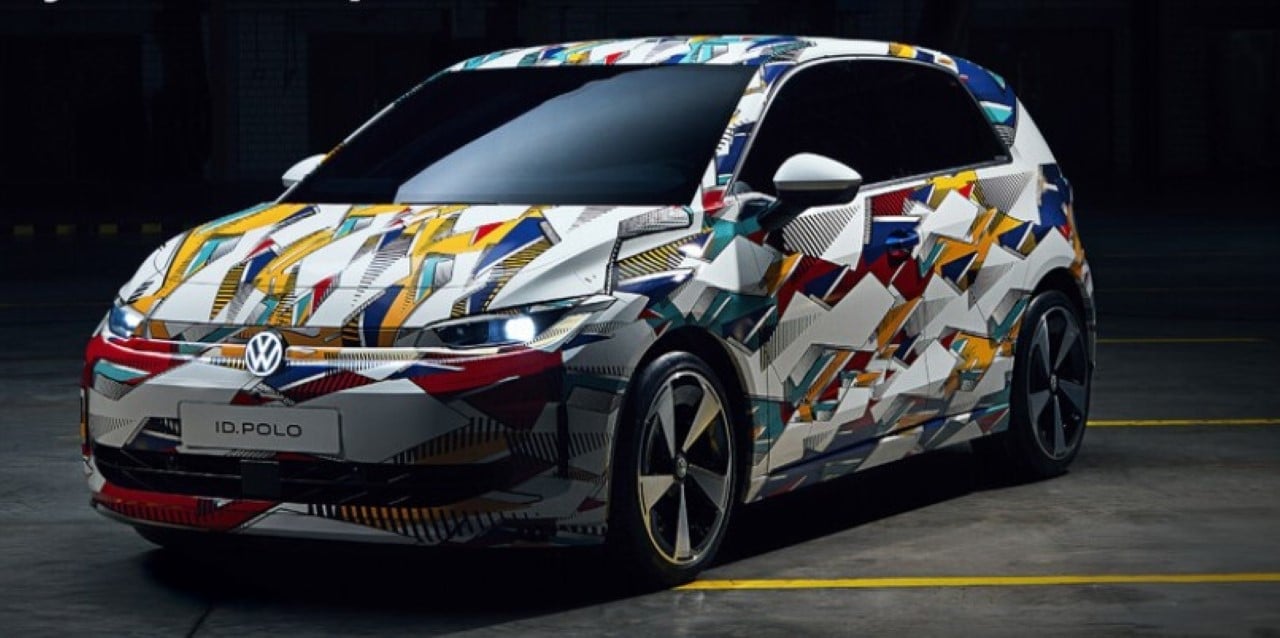
With this change, the manufacturer will give priority to the most equipped versions of the ID.Polo, which will use nickel-manganese-cobalt (NMC) batteries. Embora more expensive, these batteries are available in greater quantity to the company at the moment and offer greater energy density, resulting in greater autonomy. The decision directly impacts consumers who expected a compact electric car with the Volkswagen seal at a more affordable price.
The central reason for the change of plans
The crisis in the LFP battery supply chain is at the heart of the problem facing Volkswagen. Essas batteries are known for their lower production costs and for not using cobalt, a controversial and high-value mineral. Essa characteristic makes them ideal for entry-level electric vehicles, where cost control is essential to attract the consumer. Global demand for LFP cells has exploded in recent years, exceeding suppliers’ production capacity and creating a bottleneck for several automakers. Volkswagen, despite its efforts to diversify suppliers and invest in its own production, was unable to escape the impact of this shortage. The decision to postpone the ID.Polo entry reflects a reality in the sector: dependence on specific components can drastically alter the strategic planning and positioning of a product in the market, forcing the company to recalibrate its expectations and focus on alternatives that, although more expensive, guarantee the continuity of production and service to other consumer segments seeking greater performance and autonomy.
Alternatives and focus on more expensive models
Given the unavailability of LFP batteries, Volkswagen will direct its resources to the production of versions of the ID.Polo equipped with NMC batteries. Essa technology, although more expensive, offers advantages such as greater energy density, which translates into greater autonomy for the vehicle. The expectation is that models with NMC can travel up to 450 kilometers on a single charge, an impressive number for a compact car.
This strategic change, however, implies a price repositioning for the initial launch of the ID.Polo. Models equipped with NMC batteries will have a higher final cost, moving away from the original proposal of being a popular electric vehicle. The automaker is betting that offering greater autonomy and performance can attract a public willing to invest more, compensating for the temporary absence of the entry-level version in the portfolio.
Technical details of the MEB+ platform
The Volkswagen ID.Polo will be built on the new MEB+ platform, a significant evolution of the group’s electrical modular architecture. Essa base was designed to optimize the efficiency, performance and, most importantly, the recharging speed of electric vehicles.
One of the platform’s key innovations is the introduction of a “unified cell” technology. Este design allows for greater flexibility in battery chemistry, as well as reducing large-scale production costs, a factor that will be crucial when LFP cell supply normalizes.
The structure of the MEB+ was also designed to maximize internal space. With a wheelbase of 2,600 mm, the ID.Polo promises to offer greater comfort and cabin space than the conventional Polo, even though it is a compact vehicle.
Furthermore, the platform integrates the new APP550 electric motor, developed by Volkswagen itself. Este engine is more powerful and efficient, delivering a maximum torque of 550 Nm, which guarantees more vigorous accelerations and more contained energy consumption at cruising speed.
Engine options and GTI version
The ID.Polo line was designed to meet different consumer profiles, with a varied range of powers. The entry-level version, now postponed, would come equipped with an 85 kW (116 hp) engine, focused on the balance between urban performance and energy efficiency.
For those looking for a little more agility, an intermediate option of 99 kW (135 hp) is also in the automaker’s plans. The most powerful version of the conventional range, equipped with the NMC battery, will deliver 155 kW (211 hp), offering a sportier driving experience.
The big news, however, is the confirmation of a high-performance version: the ID.Polo GTI. Este model, which should be launched at the end of 2026, will feature a 166 kW (226 hp) engine, promising to combine the iconic agility of the GTI acronym with the instant response of electric motors, creating a “hot hatch” for the new era of mobility.
Batteries and autonomy: the two sides of the ID.Polo
The ID.Polo design includes two different battery configurations to meet different needs and budgets. The entry-level version will use an LFP battery pack with 37 kWh of useful capacity, designed to offer a range of up to 300 kilometers in the WLTP cycle, ideal for predominantly urban use.
The higher versions will have a 52 kWh NMC battery pack. With this configuration, the electric compact’s range increases to up to 450 kilometers, making the car a viable option for longer trips and giving it greater versatility.
Production and the competitive landscape
Manufacturing of the ID.Polo is scheduled to take place at the Martorell plant, in Espanha, which is being adapted to become a production hub for compact electric vehicles for the Grupo Volkswagen brands, including equivalent models of the Cupra and Skoda. The delay of the entry-level version, however, puts the Volkswagen in a delicate position in the market, as direct competitors such as the Renault 5 E-Tech and the Citroën ë-C3 are already establishing themselves in the affordable electric segment, gaining a crucial advantage while the German automaker awaits the stabilization of its supply chain.



