
With President Trump absent, Bad Bunny celebrates Latin America for the US at Super Bowl LX

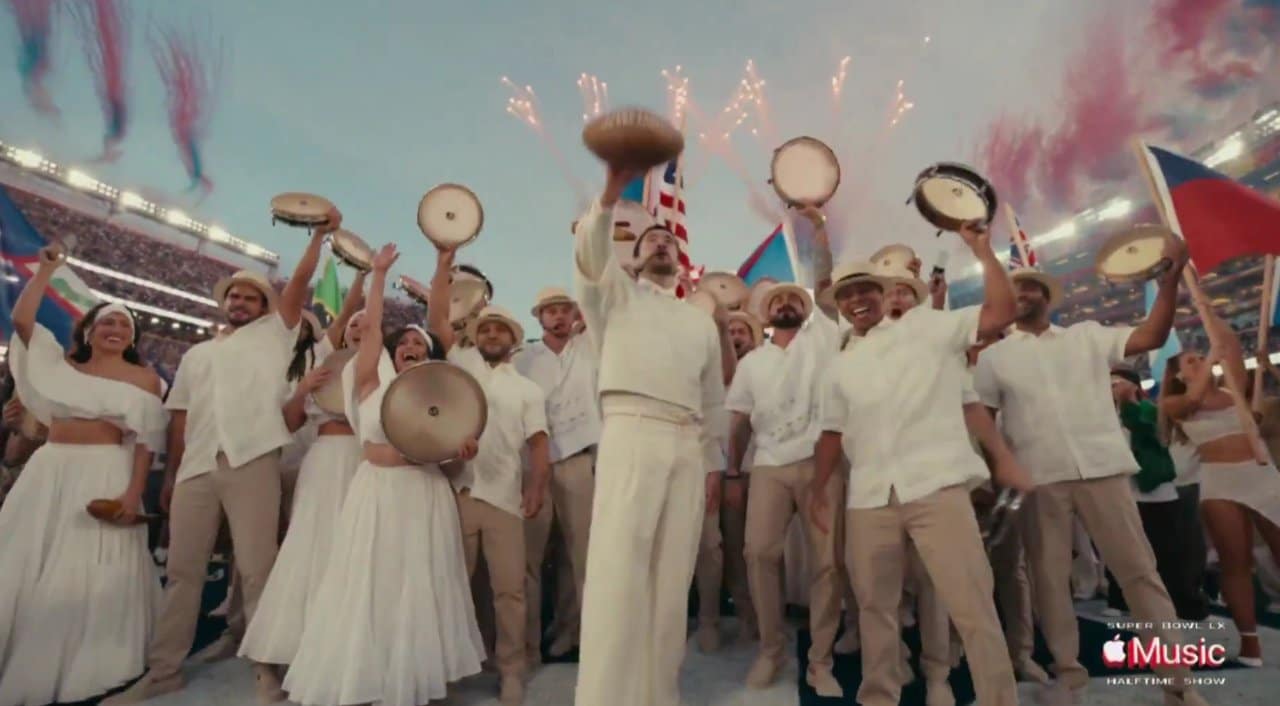
Bad Bunny’s performance at Super Bowl LX, on February 8, 2026, transcended the musical spectacle to become a cultural and political manifesto. The Puerto Rican artist used the global stage to celebrate Latin American identity, in an event marked by the notable absence of former president Donald Trump. The presentation generated intense discussions, especially on issues of immigration and representation.
The halftime show unfolded amid an atmosphere of heightened expectations, given Bad Bunny’s overtly political stance on other occasions. Sua message of unity and exaltation of the different nations of the American continent reverberated throughout the stadium, contrasting with the pre-existing tensions. The choice of a Latin artist to star in the coveted show amplified voices and perspectives that are often marginalized in mainstream media.
The repercussion of the performance and the absence of key political figures highlighted the increasingly deep intersection between entertainment, culture and the political landscape. The Super Bowl, traditionally an event of national unity through sport, has transformed into a platform for meaningful cultural statements, reflecting the complexities of contemporary society.
Cultural celebration on a global stage
Bad Bunny’s performance at Super Bowl XV was a rich tapestry of symbols and references to the Latin experience. Ele brought visual elements to the stage such as a sugar cane plantation, domino players and a Latin wedding reenactment, immersing the audience in the region’s cultural diversity. Esses details were not just scenographic, but integral parts of the narrative that the artist sought to convey.
During the performance of “El Apagón”, faulty streetlights on stage directly alluded to the frequent blackouts in The ability to weave these critical elements with moments of pure cultural celebration demonstrated the depth of his message and the reach of his art. The singer expressed his belief in love as a unifying force, a powerful statement in polarizing times.
Migration issues and political friction
The selection of Bad Bunny as the headliner of Super Bowl XV had generated controversy since its announcement. Sua vocal stance against immigration policies, especially the criticism of “ICE” (Immigration and Customs Enforcement) on Grammy Awards the previous week, had placed the NFL in a delicate position. The conservative right, including former president Donald Trump, openly condemned the league’s decision.
Trump’s absence from the event was interpreted by many as a direct response to the singer’s political stance. Although no formal statement was made about the reasons, speculation that his non-appearance was linked to the Latin artist’s position gained momentum in public debates. Este clash reflected the ideological divide that permeates society and how far-reaching cultural events can become battlegrounds for opposing political narratives.
Rise of the Puerto Rican superstar
Born Benito Antonio Martínez Ocasio, Bad Bunny quickly established himself as one of the biggest icons in global music. Seu album “Debí Tirar Más Fotos” has received critical acclaim, deeply exploring Puerto Rican identity through an innovative fusion of old and new sounds. Recognition also came with the album of the year award at Grammy Awards in the week before Super Bowl, a significant milestone for Latin music on the international scene.
He stood out for his ability to merge reggaeton with nostalgic salsa rhythms and the musical traditions of Porto Rico, creating a unique sound that resonates with millions of fans. Sua’s popularity is undeniable, having been the most listened to artist on Spotify in four of the last six years. Esta’s successful trajectory has not only solidified his music career, but also amplified his platform to address social and political issues.
Conservative responses and alternative event
In opposition to what they considered to be “politically correct nonsense” in Super Bowl’s programming, the conservative organization Turning Point USA, founded by Charlie Kirk, promoted an alternative online event. Batizado of “All-American
The alternative event featured names like Kid Rock and country singers Brantley Gilbert and Lee Brice. Esta initiative demonstrated the growing cultural polarization, where even mass entertainment events are divided along ideological lines. The counterprogramming strategy aimed to offer a space for artists and audiences who identify with conservative values and seek to avoid content considered “political”.
Clarifications on security and immigration
Prior to Super Bowl XV, a statement from Kristi Noem, secretary of Segurança Interna, last fall caused an uproar by claiming that agents of Serviço of Essa’s speech intensified concerns about possible immigration enforcement operations at a large event, especially after Bad Bunny’s recent statements about ICE.
However, in an effort to calm tempers and clarify the situation, the NFL’s head of security spoke out the week of the game. Ele confirmed the presence of agents from several federal agencies to ensure the overall security of the event, but categorically stated that there would be no “immigration inspection operations” on the day of departure. Essa distinction was crucial to mitigate the fear that Super Bowl could become a stage for migratory repression actions.
Messages of identity and belonging
The closing of Bad Bunny’s performance at Super Bowl XV was a powerful cry for identity and belonging, resonating deeply with the Latino community. Após the traditional greeting “God bless America” in English, the artist listed in Spanish a series of América Latina countries, including “Chile, Argentina, Americans.
The performance culminated with Bad Bunny reaffirming his love for his homeland, declaring “my homeland, Porto Rico” in Spanish and English. Antes from kicking an American football stamped with the phrase “Together, we are América”, he uttered the impactful words in Spanish: “We are still here”. Essa final sequence solidified the message of unity, resilience and pride, transforming the halftime show into a memorable moment of cultural and political affirmation.



