
X8.1 solar flare hits the planet and triggers warning of G2 level geomagnetic storms


The magnetic field of Terra felt the effects of a powerful coronal mass ejection this Wednesday, February 4, at approximately 12:30 pm Brasília time. The phenomenon is the direct result of an intense solar eruption of class X8.1, one of the strongest ever recorded during the current activity cycle of Sol. The impact, although classified as a “graze”, was enough to activate global monitoring sensors.
The explosion that gave rise to the event occurred on Sunday, February 1, as part of a sequence of 26 eruptions. The plasma ejection traveled through space and reached our planet a day earlier than initial predictions from Administração Nacional Oceânica and Atmosférica from Estados Unidos (NOAA) indicated, demonstrating the speed and strength of the expelled material.
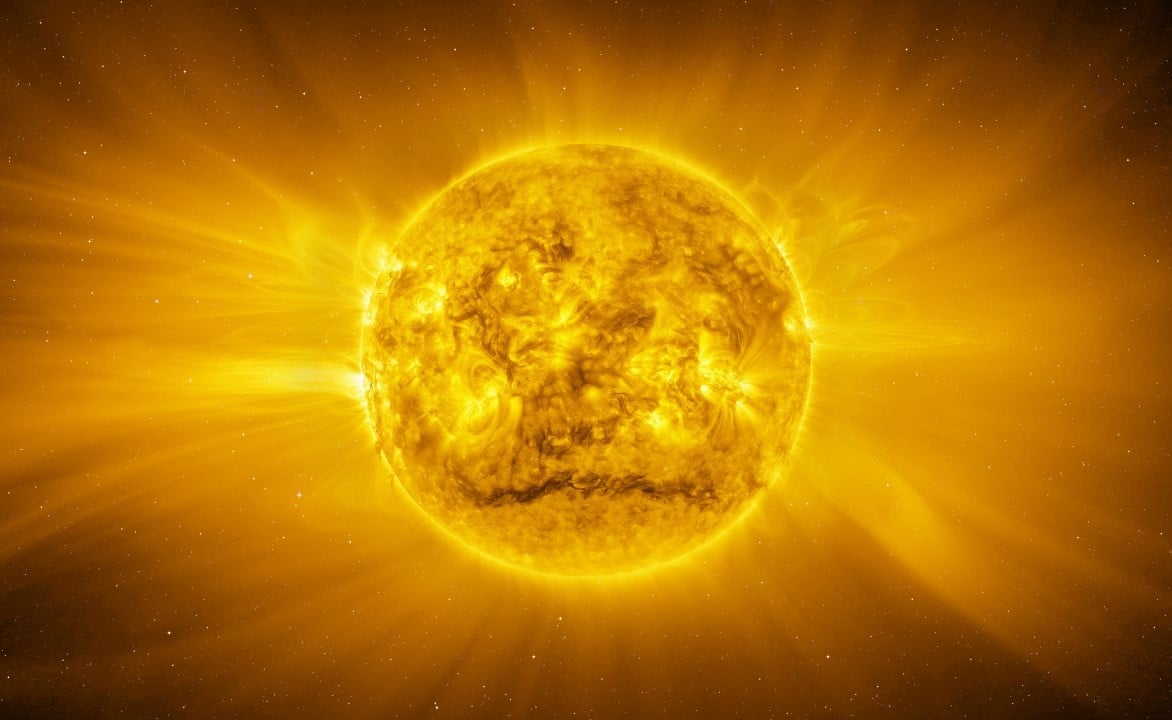
As a direct consequence of this interaction, experts predict the occurrence of geomagnetic storms. These disturbances are expected to reach G1 (weak) to G2 (moderate) levels over the next 24 to 48 hours, with the potential to generate visible auroras at lower latitudes than usual and cause minor instabilities in satellite systems and electrical grids.
Origin of instability in sunspot AR4366
All of this energetic activity originates from a specific region of the solar surface known as AR4366. Esta spot, of colossal size, displays an extremely complex and unstable magnetic field, classified as “delta”, a configuration that is notoriously prone to releasing large amounts of energy in a sudden and violent way. Foi this instability that produced the X8.1 eruption and dozens of other smaller explosions in recent days. The position of the spot, currently facing directly towards Terra, significantly increases the probability that future coronal mass ejections will hit the planet more directly, raising the level of alert among space monitoring agencies that observe its continued growth and the formation of new areas of magnetic instability in its surroundings.
Understand the power scale of solar flares
Solar flares are classified by a system of letters that measures the intensity of their X-ray emission. The scale progresses from A, B, C, M to X, where each letter represents a tenfold increase in the energy released in relation to the previous one. Classes A and B are the weakest, generally without any noticeable effect on Terra. Class C is considered moderate, while class M is already strong enough to cause brief and localized radio blackouts, especially in the polar regions of our planet.
Class X designates the most extreme and powerful events, with the potential to trigger severe geomagnetic storms, radio blackouts over vast areas and risks to satellites and astronauts in orbit. A number is added to the letter to refine the measurement of force; therefore, an X8.1 eruption, like the one recorded, is more than eight times more powerful than an X1 and is positioned as the third most intense of Ciclo Solar 25, which began in December 2019.
Solar activity continues with new explosion X4.2
Instability in the AR4366 region did not cease after the large eruption. On the morning of this same Wednesday, February 4, at around 8:13 am (Brasília time), the sunspot produced another significant explosion, this time classified as X4.2. The event caused a short-lived radio blackout over parts of África Ocidental and southern Europa.
This sequence of high-intensity eruptions reinforces the assessment that Sol is in a phase of high activity. The arrival of multiple waves of radiation and energized particles in a short period of time can amplify disturbances in the Earth’s magnetic field, making the effects more complex and prolonged.
The spectacle of auroras in new latitudes
One of the most beautiful and visible effects of a geomagnetic storm is the intensification and expansion of the auroras. The lights, which are normally restricted to polar regions, can become visible at much lower latitudes during G2-level events. Isso occurs because the energized particles of Sol are channeled by the magnetic field of Terra and collide with gases in the upper atmosphere, generating the characteristic glow.
With the current forecast, observers in locations such as northern Estados Unidos, Canadá, and Escandinávia countries have a high chance of witnessing the phenomenon in the coming nights. Visibility depends on favorable weather conditions, such as clear skies and absence of light pollution.
The intensity of the auroras is directly linked to the strength of the geomagnetic storm. If new coronal mass ejections reach Terra in the coming days, the light show could become even more intense and geographically comprehensive, a true nature show driven by the fury of Sol.
Predicted impacts of the geomagnetic storm
Geomagnetic storms are categorized on a scale ranging from G1 to G5. Para the current event, the predicted levels between G1 and G2 bring with them consequences considered to have low to moderate impact. In a G1 storm, minor fluctuations in power grids and minor impacts on satellite operations may occur.
When the storm reaches the G2 level, the effects become more pronounced. Sistemas of power at high latitudes may register voltage alarms, and satellite operation may require course corrections due to increased atmospheric drag. The propagation of high-frequency radio waves, used in aviation and by radio amateurs, may also be affected.
Satellite navigation systems, such as GPS, may experience temporary loss of accuracy. Embora Although widespread damage to critical infrastructure is not expected from the current storm, the situation requires constant monitoring by electrical and communication network operators.
The main concern of experts lies in the possibility of new eruptions of the AR4366 spot. A stronger coronal mass ejection aimed directly at Terra could raise the storm’s classification to G3 (strong) levels or higher, with significantly more serious consequences for modern technology.
The peak activity of Ciclo Solar 25
The current period of intense solar activity is part of the Ciclo Solar 25. Atualmente, the cycle is in its phase of maximum activity, which explains the frequency of extreme events.
The February 2026 X8.1 eruption joins other notable explosions from this cycle. The strongest recorded so far was an X9.1 in October 2024, followed by an X8.7 in May of the same year. The intense activity is expected to continue for several more months, keeping space agencies and infrastructure operators on alert.
Continuous monitoring and future perspectives
Agencies like NASA and NOAA keep Sol under 24-hour surveillance through a fleet of space observatories like Solar Dynamics Observatory. Esses instruments allow analyzing the evolution of sunspots and predicting the trajectory of coronal mass ejections, providing crucial alerts so that mitigation measures can be taken in Terra, protecting satellites and electrical grids. Spot AR4366 will remain the main focus of attention in the coming days, as it faces our planet.



