
Asteroid 2024 YR4: detection reveals 4% risk of lunar impact with flash visible from Earth

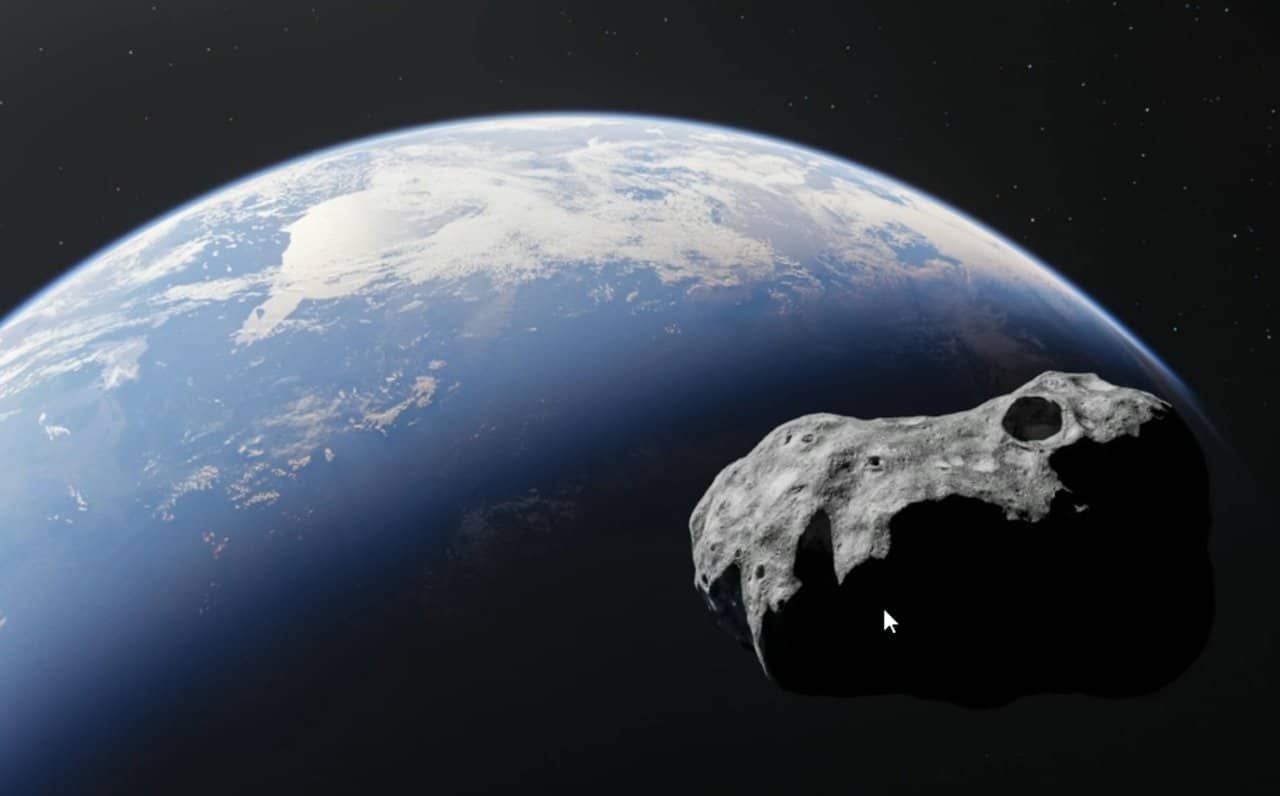
A rocky body with dimensions comparable to a multi-story building, known as asteroid 2024 YR4, is at the center of attention of the global scientific community. Descoberto in December 2024, this celestial object initially raised concerns about a possible collision with Terra in 2032, a hypothesis that was largely ruled out by more detailed observations carried out by astronomers and NASA. Contudo, scientific interest persists and deepens in the face of an alarming new probability.
Recent studies indicate an approximately 4% chance that 2024 YR4 could collide with the lunar surface, an event that, if realized, would be of considerable magnitude and potentially visible from our planet. Although the probability of Embora seems low, its occurrence would transform Lua into an unprecedented natural laboratory, offering a unique opportunity for the real-time study of large-scale asteroid impacts. The expectation is for an impressive spectacle, with implications that could extend beyond the satellite.
Discovery and reassessment of the trajectory of the 2024 YR4
Asteroid 2024 YR4 was identified by scientists in December 2024, and has since been closely monitored by space agencies and observatories around the world. The estimated size of the object, approximately that of a multi-story building, immediately placed it on the list of celestial bodies of interest for planetary defense. The first orbital models projected the possibility, albeit remote, of a dangerous encounter with Terra, drawing attention to mitigation scenarios.
Fortunately, with the advancement of tracking technologies and the accumulation of observational data, the orbit of 2024 YR4 has been refined, allowing us to rule out with high confidence any imminent risk of a direct collision with our planet. Esta reassessment brought relief but did not completely eliminate the concern, as more precise calculations directed the focus to Lua as a potential target, a scenario that, although rare, has crucial scientific and security implications. The ability to predict an event of this nature years in advance is a remarkable feat of modern astronomy, allowing robust planning for observation and study.
Cosmic spectacle and released energy
If asteroid 2024 YR4 impacts Lua, it is estimated that the energy released would be equivalent to several megatons of TNT, comparable to the detonation of an intermediate-power nuclear weapon. The Este phenomenon would generate a very intense optical flash, easily observable from the Terra if the visibility conditions are favorable, transforming the impact into an astronomical event of public visibility. Após the initial flash, a more prolonged phase of infrared emission would dominate, resulting from the gradual cooling of the molten lunar material. Cientistas predict that the temperature of the impact zone would reach extremes, providing valuable data on the thermodynamics of celestial collisions.
The researchers hope this observation window will allow them to record detailed impact dynamics, from initial rock vaporization to crater formation and debris dispersal. The opportunity to study the interaction of a significant rocky body with the surface of a natural satellite in real time is considered a rarity. Ferramentas as ground- and space-based telescopes would be mobilized to capture every detail of the event, transforming Lua into an unprecedented natural laboratory where crater formation processes could be analyzed with unprecedented precision.
The formation of a new crater
Scientific simulations on the potential impact of asteroid 2024 YR4 on Lua project the formation of a crater approximately one kilometer in diameter. Esta new scar on the lunar surface would be estimated to be between 150 and 260 meters deep, a permanent testament to the force of the collision.
In the center of this structure, a zone of molten rock, about 100 meters in diameter, is expected to remain. Este material, heated to extreme temperatures, would continue to emit an infrared glow for several days after impact, offering researchers an opportunity to study the thermal effects of high-energy events on the lunar surface.
Analysis of the morphology and composition of the new crater, as well as the molten material, would be crucial to deepening understanding of lunar geological processes. The ability to observe the thermal evolution of the impacted area in real time could provide unprecedented data on the response of lunar regolith to shocks of this magnitude, contributing significantly to planetology and the study of extraterrestrial surfaces.
Seismic repercussions on the satellite
In addition to the formation of a new crater and the visible flare, the impact of asteroid 2024 YR4 on Lua is projected to have significant seismic effects throughout the satellite. Simulations indicate that a shock of this magnitude would be capable of generating a global lunar earthquake.
The intensity of this earthquake is estimated to be around magnitude 5, a level strong enough to be detected by the most modern seismic instruments currently in operation. Estes equipment, developed to monitor lunar tectonic activity, could record shock waves propagating through the internal structure of Lua.
Detection and analysis of this seismic data would provide valuable information about the composition and internal structure of our satellite. Scientists could, for example, better understand how seismic waves behave on a planetary body without a significant atmosphere, and how the energy of an impact dissipates through its crust and mantle.
Debris risks and space surveillance
One of the biggest concerns raised by the possibility of 2024 YR4’s impact on Lua concerns debris ejected into space. The energy of the collision would be so great that some of the pulverized lunar material could overcome the satellite’s weak gravity and be launched towards interplanetary space.
A fraction of this ejected debris has the potential to cross Terra’s orbit, worsening the already critical space debris situation around our planet. Atualmente, Earth’s orbit is jammed with thousands of fragments from decommissioned satellites and rockets, posing a growing threat to operating satellites and future space missions.
In addition to the increase in debris in orbit, there is a remote possibility that larger fragments resulting from the lunar impact will reach the Earth’s surface. Embora the risk is low, the entry of these objects into the atmosphere could cause concerns, depending on the size and area of impact.
The main immediate risk lies in the threat to several working satellites, which could be hit by this high-speed debris. Sistemas space surveillance systems would have to be adapted to monitor this new source of potential collisions, requiring a coordinated international effort. Protecting space infrastructure is vital for communication, navigation and global climate monitoring.
Planetary protection initiatives
Faced with potential threats such as asteroid 2024 YR4, the scientific community and space agencies have invested in planetary protection initiatives. The DART (Double Asteroid Redirection Test) experiment, successfully carried out by NASA, exemplifies the human ability to alter the trajectory of an asteroid.
This mission demonstrated that current technology allows for a kinetic bypass, where a spacecraft intentionally collides with an asteroid to modify its orbit. Tais experiments are crucial to develop and test defense strategies against future impacts that could threaten Terra or, as in this case, Lua. International collaboration is key to improving these systems.
Unprecedented scientific observation
The possibility of an impact by asteroid 2024 YR4 on Lua, although worrying in some respects, represents a unique opportunity for lunar and planetary science. The ability to predict and observe such an event in detail, from the initial flash to crater formation and seismic waves, would provide an unprecedented volume of data. Isso would allow us to improve models of the formation of celestial bodies and impact dynamics, significantly advancing our knowledge of the solar system.
Keywords: Asteroide 2024 YR4, Impacto lunar, Detritos spacecraft, Cratera lunar




