
Asteroid 2024 YR4 remains monitored by NASA with possibility of lunar collision


Nasa updated the orbital data for asteroid 2024 YR4, eliminating any significant risk of impact with Terra on December 22, 2032. Additional Observações, including those performed by Telescópio Espacial James Webb, adjusted the trajectory and now indicate a 4.3% probability of collision with Esse percentage represents the highest lunar risk ever recorded for an object close to Terra.
The asteroid, classified as an object close to Terra of the Apollo group, has an estimated diameter of between 53 and 67 meters. Esse size is approximately equivalent to that of a ten-story building and makes the celestial body capable of producing visible effects in the event of a lunar impact.
Characteristics of asteroid 2024 YR4
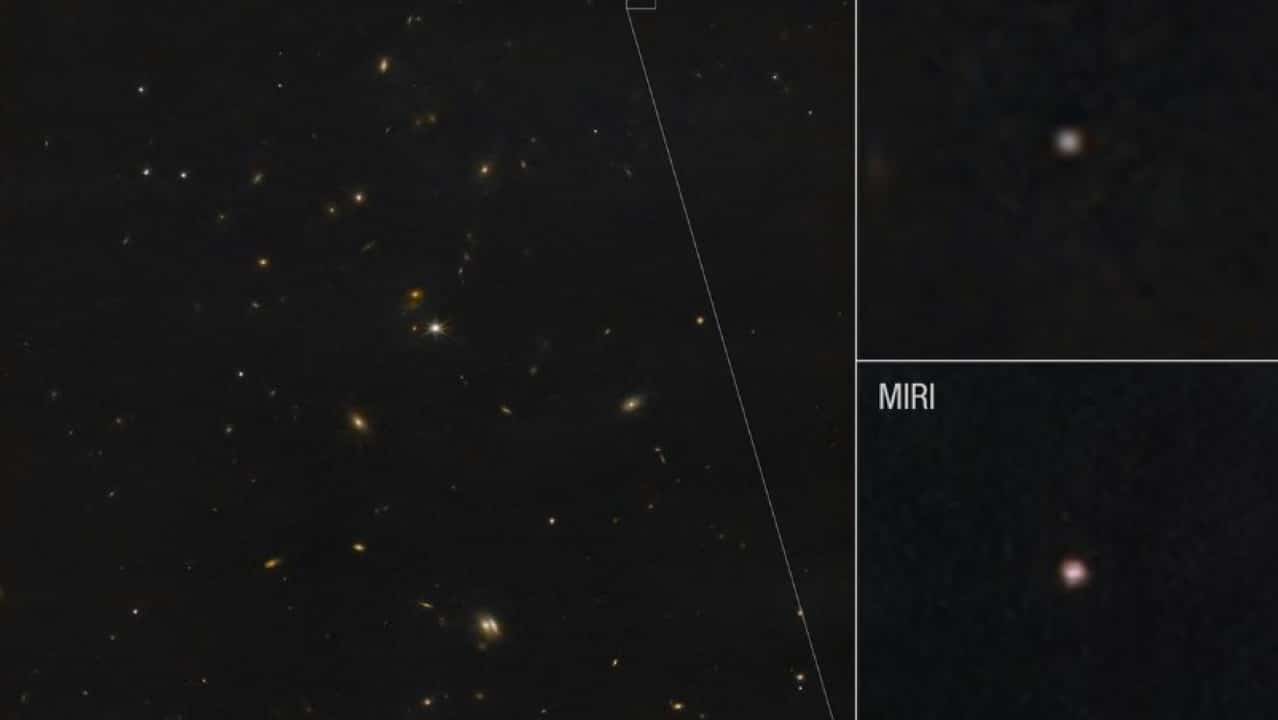
Asteroid 2024 YR4 was discovered in late 2024 and quickly included in monitoring systems for potentially dangerous objects. Dados refined by James Webb allowed a more accurate estimate of its size, reducing the previous range of 40 to 90 meters.
The current trajectory indicates a close passage to the Terra-Moon system in December 2032. Embora the risk of terrestrial impact has been ruled out, the lunar possibility requires continuous monitoring by space agencies.
- Estimated diameter: 53 to 67 meters
- Closest date: December 22, 2032
- Current probability of lunar impact: 4.3%
- Classification: Objeto close to Terra (group Apollo)
Evolution of orbital predictions
The first observations of asteroid 2024 YR4 generated initial warning due to the possibility of a terrestrial impact. The probability reached around 3.1% in preliminary calculations carried out at the beginning of 2025.
Subsequent observations, accumulated over months, made it possible to refine the orbit and drastically reduce the risk for Terra. In February 2025, Nasa announced that the chance of a land collision had dropped to negligible levels.
Agência Espacial Europeia (ESA) confirmed the data and removed the object from the list of significant risks to the planet. Esse process demonstrates the effectiveness of continuous monitoring of nearby asteroids.
Potential lunar impact effects
An impact by asteroid 2024 YR4 on the lunar surface would produce a visible optical flash from Terra. Estudos indicate that the explosion could reach brightness comparable to that of Vênus for a few seconds.
The collision would release energy equivalent to several megatons of TNT. Esse event would create a new crater tens of meters in diameter in the impacted region.
Ejected material could be launched towards Terra, generating an intense meteor shower. Astronomers amateurs and professionals could observe the phenomenon with simple equipment.
There is no risk of significant fragments reaching the Earth’s atmosphere in a dangerous way. Distance and orbital dynamics limit direct effects to the planet.
Continuous Monitoring Strategies
Space agencies maintain permanent surveillance over more than 34 thousand objects close to Terra. ESA’s Centro from Coordenação from Objetos Próximos to Terra and Centro from Estudos from Objetos Próximos to Terra from
Ground-based and space-based telescopes contribute regular data. James Webb provided crucial information about 2024 YR4’s composition and size.
Programs such as Near-Earth Object Surveyor, scheduled for launch in the coming years, will expand detection capacity. Esses systems will identify threats earlier.
Advances in planetary defense
The DART mission, successfully completed in 2022, demonstrated the feasibility of altering asteroid trajectories through kinetic impact. The test altered the orbit of Dimorphos in a controlled and measurable way.
Although there is no immediate need for intervention in the case of 2024 YR4, the protocols remain active. Agências maintain plans for rapid reconnaissance missions if necessary.
International cooperation guarantees a coordinated response to possible future risks. Organismos like the UN participate in coordinating global efforts.
Scheduled future observations
Astronomers plan new observation sessions for asteroid 2024 YR4 in the coming years. Cada close pass will allow further refinement of orbital calculations.
The Telescópio James Webb will continue to contribute infrared data. Essas observations help determine composition and surface characteristics.
Ground-based observatories at Chile and Havaí will monitor the object during periods of favorable visibility. Combining ground and space data increases forecast accuracy.
Importance of lunar tracking
The possible impact on Lua represents a unique opportunity for scientific study. An event of this type would allow us to directly observe the formation of craters in real time.
Data collected would help calibrate models of impacts on bodies without an atmosphere. Essas information is valuable for understanding the history of the solar system.
The visibility of the flash would make the phenomenon accessible to millions of observers. Redes of amateur telescopes could record the event in different locations.
International protocols activated
Space agencies follow guidelines established by Grupo of Coordenação Interagências of Defesa Planetária. Esse framework defines procedures for communicating and responding to risks.
Regular updates are shared publicly to maintain transparency. Nasa and ESA publish refined orbital data periodically.
Although the risk remains low, monitoring serves as a practical exercise for future scenarios. Accumulated experience strengthens global response capacity.
Outlook for 2032
The passage of asteroid 2024 YR4 in 2032 will occur regardless of the final outcome. Most simulations indicate safe passage for both Terra and Lua.
If the lunar impact is confirmed, preparations for observation will be coordinated globally. Observatórios professionals and amateurs will receive specific guidance.
The event will reinforce the importance of continued investment in space surveillance. Programas of planetary defense receive increasing support from governments and institutions.




