
New generation of Toyota RAV4 abandons combustion engines and opts for a futuristic and aggressive look


The Toyota is preparing one of the most significant transformations for one of its best-selling vehicles globally. The sixth generation of the RAV4 SUV is in advanced development and promises to break with the past by adopting an exclusively hybrid engine, completely eliminating combustion-only options. The strategy reinforces the automaker’s commitment to the electrification of its portfolio.
In addition to the mechanical restructuring, the model will receive a completely renewed visual identity, in line with the brand’s most recent launches, such as the Prius and the Camry. Unidades of the new SUV have already been spotted undergoing tests on the Brasil, indicating that the national market is in the manufacturer’s plans to receive the new product.
The expectation is that the official launch will take place first on Japão, with arrival in other international markets in the following months. Para or
The ‘hammerhead’ design and the new visual identity
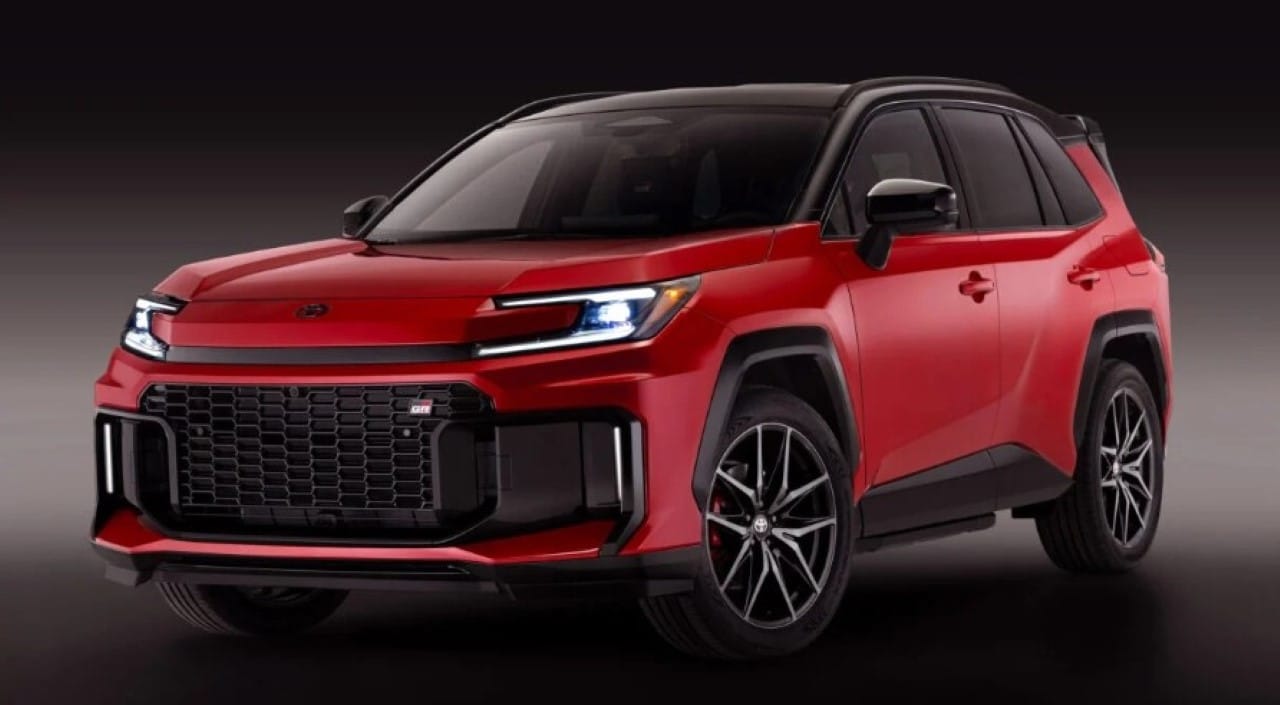
The main visual signature of the new generation RAV4 will be the “hammerhead” style front end. Este concept integrates tapered “C”-shaped LED headlights with a more discreet trapezoidal grille, creating a modern and easily recognizable appearance, especially at night.
This approach not only updates the SUV, but also harmonizes it aesthetically with the new global line of Toyota vehicles, conveying an image of greater technology and sophistication, in contrast to the more robust and angular look of the current generation.
Changes to the bodywork and aerodynamics
On the sides, the model must maintain a strong silhouette, with well-defined creases and pronounced fenders that reinforce its adventurous proposal. The light alloy wheels will feature new designs and larger diameters in the more complete versions, complementing the body proportions.
The rear will also undergo a complete redesign, adopting horizontal lights that extend across the trunk lid and are connected by an illuminated bar, a design element that has become a trend in the sector. Essa setting visually enlarges the width of the vehicle.
Aesthetic changes are not merely decorative. The new bodywork was designed to optimize aerodynamics, resulting in lower drag. Essa improvement directly contributes to reduced fuel consumption and wind noise at high speeds.
Technological and more spacious interior
Internally, the RAV4 will make a significant leap in technology and finishing. The dashboard will be dominated by a new multimedia center with a floating screen that can reach 14 inches, depending on the version. The operating system will allow remote updates (over-the-air), keeping resources always at the latest version.
The instrument panel will be fully digital and customizable, displaying navigation and driving assistant information clearly. Apesar of modernization, Toyota chose to maintain physical controls for essential functions, such as air conditioning and audio volume, a decision that prioritizes ergonomics and safety.
The quality of materials will be improved, with greater use of soft-touch surfaces and synthetic leather upholstery options. The interior space has been slightly increased, mainly benefiting rear seat passengers and the volume of the trunk, which should gain storage capacity.
The list of new equipment and internal features includes:
– Carregador of induction cell phone with greater power.
– Portas USB-C for all occupants.
– Sistema premium sound as optional on top versions.
– Iluminação LED environment with customizable colors.
Fifth generation hybrid powertrain
All versions of the new RAV4 will be equipped with the fifth generation of the Toyota hybrid system. The standard configuration will combine a 2.5-liter gasoline engine with electric powertrains to deliver a combined power of more than 226 horsepower, offering more vigorous acceleration compared to the previous model. The E-Four all-wheel drive system has been improved, using a dedicated electric motor for the rear axle that intelligently distributes torque as needed, ensuring more grip and stability on different types of terrain.
For selected markets, an even more powerful and efficient plug-in hybrid (PHEV) version will be available. Este model will feature a higher capacity battery, allowing a range in pure electric mode of more than 100 kilometers. Essa feature allows daily urban journeys to be made without pollutant emissions, with the convenience of being able to recharge the battery at domestic sockets or fast charging stations, combining the best of both worlds for the driver looking for versatility and economy.
Improved security with new Toyota Safety Sense
The Toyota Safety Sense safety package will be updated to its latest version, incorporating sensors and cameras with greater processing capacity, resulting in more precise operation of driver assistance systems. Entre improved functions include autonomous emergency braking, which now detects pedestrians and cyclists more efficiently, even in low light conditions. Adaptive cruise control will work over a wider range of speeds, making it more useful in traffic jams, and lane keep assist has been recalibrated to correct the vehicle’s trajectory more smoothly and accurately. The SUV will also have features such as blind spot monitoring, 360-degree cameras and parking sensors that facilitate maneuvering in tight spaces, reinforcing the brand’s commitment to protecting all occupants.
Expectations for the Brazilian market
The presence of camouflaged units of the new RAV4 being tested at Brasil is a strong indication that Toyota is adapting the vehicle to local conditions. The main bet is that the model will be launched in the country with flex hybrid technology, already consolidated in the Corolla and Corolla Cross models produced nationally, which would allow the SUV to also be fueled with ethanol.



