
New generation of Toyota RAV4 will have hammerhead shark-inspired design and improved hybrid powertrain


The Toyota is preparing one of the most significant updates for its most successful SUV globally. The sixth generation of the RAV4 is in advanced development and promises to redefine the segment with a bold design and a state-of-the-art hybrid propulsion system, with a global launch scheduled to begin from the end of 2025, reaching markets such as Brazil throughout 2026.
The changes focus on three main pillars: a completely renewed aesthetic, substantial improvements in efficiency and performance, and a technological leap in the interior and safety systems. The Japanese automaker seeks to consolidate the leadership of the RAV4, facing increasingly fierce competition with electrified models full of new technologies.
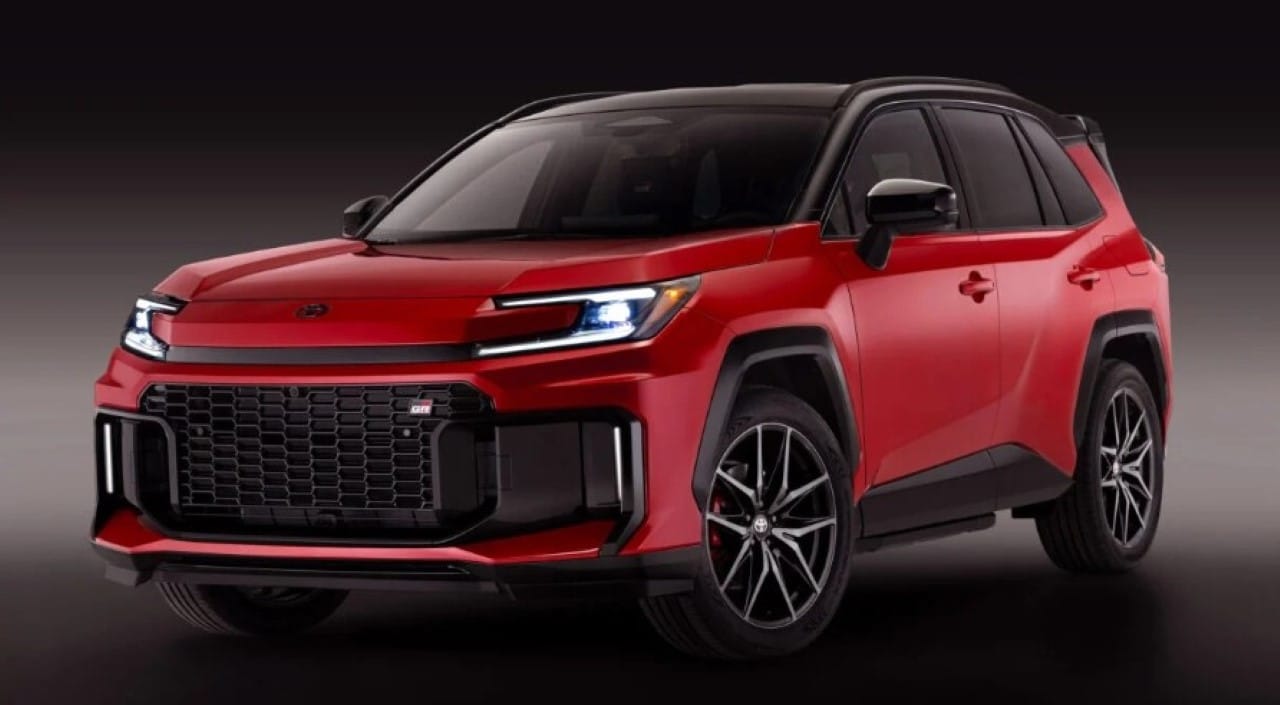
Automotive industry sources indicate that the new model will be built on an evolved version of the TNGA-K platform, which already serves as the basis for the current model. Essa architecture will allow not only the integration of new powertrain technologies, but also an increase in structural rigidity, resulting in greater safety and improved driving dynamics.
A revolutionary design inspired by nature
The main visual novelty of the next generation RAV4 will be the adoption of the “hammerhead” or hammerhead design language, already seen in recent launches from the brand, such as the Prius and the C-HR. The Este concept translates into a striking front end, with “C”-shaped headlights that integrate fluidly into the hood and bumper, creating a unique and aggressive lighting signature.
This approach represents a radical departure from the more conservative lines of the current generation. Espera The bodywork will gain more pronounced creases and a more aerodynamic silhouette, contributing not only to aesthetics, but also to energy efficiency by reducing drag. The rear should also receive LED lights with a new design, connected or with elements that reinforce the width and robustness of the vehicle.
Hybrid engine improvements
The heart of the new RAV4 will continue to be its hybrid system, but with the introduction of the fifth generation of Hybrid Synergy Drive technology from Toyota. The main package must maintain the 2.5-liter four-cylinder combustion engine, Atkinson cycle, but with optimizations to deliver more power and, mainly, greater fuel economy.
The combined power of the system, which in the current model is 222 horsepower in the AWD version, should exceed 230 horsepower. Essa improvement will be accompanied by a new transaxle calibration and a more compact and efficient lithium-ion battery, which will allow the SUV to run for longer in pure electric mode at low speeds.
In addition to the conventional hybrid (HEV) version, the Toyota will continue to offer the plug-in hybrid (PHEV) variant, known as the RAV4 Prime in some markets. The Este model will feature a larger capacity battery, providing an electric range of more than 100 kilometers, making it a viable option for daily use without consuming gasoline, while maintaining the versatility of a combustion engine for long journeys.
TNGA-K platform as the basis for evolution
The basis for all improvements will be an updated version of the TNGA modular platform (Toyota New Global Architecture), in its K variation, intended for medium and large vehicles. Essa architecture is known for providing a low center of gravity, which improves stability and agility when cornering.
With the improvement of the platform, an increase in torsional rigidity is expected, which translates into more precise and comfortable driving, in addition to reducing noise and vibration levels in the cabin. The suspension, independent on all four wheels, must also receive a new calibration to balance comfort on urban roads and the ability to face uneven terrain.
Another direct benefit of the TNGA-K platform is security. Sua structure is designed to absorb and dissipate impact energy more effectively, protecting occupants in the event of a collision. Combinada With new active safety systems, the sixth generation RAV4 aims to achieve top marks in the most rigorous global crash tests.
The flexibility of the architecture also facilitates the integration of different types of powertrain, including hybrid and plug-in hybrid versions, without compromising interior space or trunk capacity, a crucial point for family SUV consumers.
Technological and more connected interior
Inside, the new Toyota RAV4 will undergo a complete modernization, in line with the brand’s most recent launches. The dashboard will be redesigned to house a new infotainment system with a touchscreen that can reach 14 inches in top-of-the-line versions. Este system will feature faster, more intuitive software and the ability to receive remote updates (Over-the-Air).
The instrument panel will also be fully digital, with a screen measuring around 12.3 inches, allowing the driver to personalize the information displayed. Connectivity will be a strong point, with wireless mirroring for Apple CarPlay and Android Auto, as well as more USB-C ports and an induction cell phone charger with greater power. The quality of finishing materials should also be improved, with more soft-touch surfaces and new covering options for seats and doors.
Improved security with Toyota Safety Sense
Safety will be enhanced with the latest version of the driver assistance technology suite, the Toyota Safety Sense (TSS). Espera includes the inclusion of TSS 3.0 or an even more advanced version, which improves the functioning of existing systems and adds new functionalities. The pre-collision system, for example, will have a radar and a camera with greater range and detection capacity, identifying pedestrians, cyclists and motorcyclists more accurately, even in low light conditions. Adaptive cruise control (ACC) will work more smoothly and naturally in conjunction with the lane keeping assistant, which will be able to keep the vehicle centered on the road more effectively, including in smooth curves. Outra expected new feature is the Proactive Driving Assist (PDA), a system that can provide gentle braking or steering assistance to help maintain a safe distance from other vehicles, pedestrians or cyclists, anticipating possible traffic hazards.
Expected arrival on the market
Production of the sixth-generation Toyota RAV4 is expected to begin in the second half of 2025. The official launch and start of sales will first occur in the América of the Norte, with other global markets receiving the new model gradually throughout 2026.
For the Brasil, the expectation is that the new RAV4 will arrive imported from the Japão, maintaining the current strategy. The arrival should take place in the second half of 2026, with an exclusive focus on versions equipped with hybrid engines, in line with the brand’s electrification strategy in the country.



