
Approach of comet C/2026 A1 creates expectation of rare luminous phenomenon in April this year

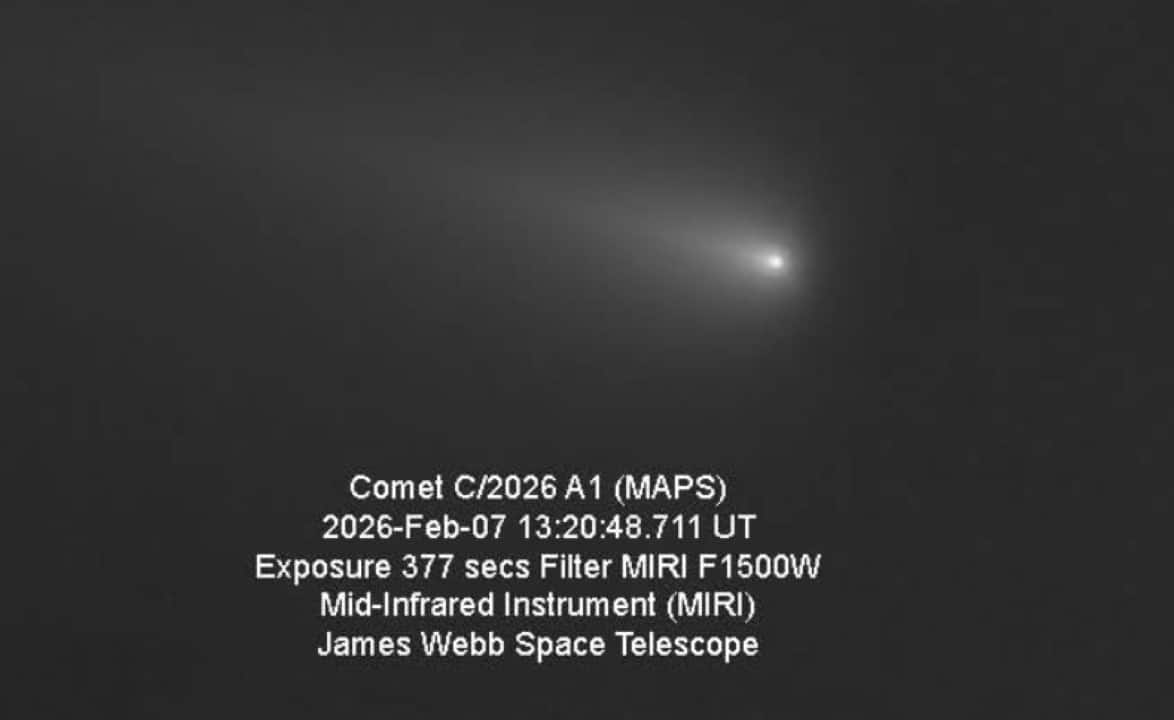
The global astronomical community turns its attention to a new celestial body that promises to alter the landscape of the night and day sky in the coming months. Identificado officially earlier this year, comet C/2026 A1, discovered through a collaborative effort of amateur astronomers, is on a trajectory that will take it dangerously close to Sol. Este object belongs to the famous family of Kreutz flyers, known for providing some of the brightest spectacles in the history of astronomy, but also for their extreme volatility when facing solar temperatures. The expectation is that, if it survives its passage through perihelion, the object may become visible to the naked eye, providing a memorable event for observers at Hemisfério Sul.
Collaborative discovery and scientific confirmation
The identification of this new visitor to the inner solar system occurred on January 13, 2026, as a result of the meticulous work of four French astronomers participating in the MAPS program. Utilizando data captured by the AMACS1 robotic research telescope, located in the privileged region of San Pedro of Inicialmente cataloged as 6AC4721, the celestial body underwent rapid validation of its orbit and physical characteristics.
☄️🔥 新しいクロイツ彗星が素晴らしいショーを見せるかもしれません! 🔥☀️
😱天文学者たちは C/2026 A1 彗星 (MAPS)について話題になっています。これは新しく発見されたクku 4 😲✨
🔭1月に発見…pic.twitter.com/XEnhxiUKQj— 3I/ATLAS アップデート (@Defence12543)2026 年 2 月 9 日
Minor Planet Center, the world authority on the designation of smaller bodies in the solar system, confirmed the discovery shortly afterwards, assigning it the official nomenclature C/2026 A1 (MAPS). The confirmation generated a wave of enthusiasm among professional and amateur observers, with prominent names in the field, such as Maury, Attard, Parrott and Chinaglia, expressing recognition for the achievement. The discovery underscores the continued importance of sky surveillance programs operating outside major space agencies, filling crucial gaps in monitoring objects approaching Terra and Sol.
Preliminary analyzes of the comet’s absolute magnitude indicate that it has a substantial nucleus, estimated at magnitude 17 at the time of discovery. Esta characteristic is fundamental, as it suggests that the object has enough mass to withstand, at least partially, the gravitational tidal forces and the intense heat it will face. Comparado to other smaller members of the Kreutz family that often disintegrate without a trace, C/2026 A1 presents a robustness that raises hopes of a great astronomical spectacle.
Orbital dynamics and the challenge of perihelion
The calculated trajectory for C/2026 A1 places it on an almost direct collision course with the outer solar atmosphere. The perihelion, the point of closest approach to the star, is expected to occur on April 4, 2026. At the critical moment, the comet will pass at a tiny distance of approximately 0.005 astronomical units from the center of the Sol, which is equivalent to mere thousands of kilometers from the visible surface of the star. Nesta proximity, the object will be subjected to temperatures exceeding thousands of degrees Celsius, testing the cohesion of its ice and dust core.
The comet’s speed during this encounter will be dizzying, exceeding 500 kilometers per second. Essa extreme acceleration is caused by the intense gravitational pull of Sol. Para astronomers, the biggest risk is not just heat, but structural fragmentation. Muitos comets in this category, known as “sungrazers” or sun-grazers, end up completely evaporating before they even emerge on the other side of the star. However, if the core of C/2026 A1 maintains its integrity, the violent sublimation of its volatile materials could create an immense, glowing tail of dust and gas.
The comet’s behavior after perihelion is the big unknown that keeps scientists on alert. Modelos of cometary evolution suggest that upon surviving the solar encounter, the object’s brightness may increase exponentially due to the scattering of sunlight on newly released dust particles. The Este phenomenon, known as frontal scattering, has the potential to make the comet visible even during the day, although its visual proximity to Sol requires extreme precautions on the part of observers.
The historical legacy of the Kreutz skydives
To understand the potential magnitude of this event, it is necessary to look to the past. C/2026 A1 is not a lone traveler, but rather a fragment of a colossal comet that broke apart centuries ago. The Kreutz family, to which it belongs, is made up of the remains of a progenitor object that split, creating a procession of fragments that orbit Sol with periods of hundreds of years. Estudos indicate that the original comet may have broken apart between the 3rd and 4th centuries BC, and since then, its pieces have periodically returned to illuminate the skies of Terra.
History records spectacular appearances from this group. The 1965 Grande Cometa, Ikeya-Seki, is perhaps the most notable example from the 20th century, having become visible in broad daylight and leaving a tail that extended across much of the firmament. Outro historical example was the Grande Cometa of 1882, which also fragmented after perihelion, creating multiple visible nuclei. Mais Recently, in 2011, comet Lovejoy surprised the scientific community by surviving a deep dive into the solar corona, reemerging without its original tail, but regenerating it shortly afterwards.
Comparison with these giants of the past is inevitable. Current data suggests that C/2026 A1 has dimensions and orbital characteristics that place it in a similar category to previous major events. If it follows the pattern of Ikeya-Seki or Lovejoy, we could witness not just a bright spot, but a complex structure in the sky, with a tail that can curve as it interacts with the solar wind and our star’s magnetic field.
Observation and security perspectives
C/2026 A1’s visibility will depend entirely on its structural strength in the coming weeks. If the comet emerges intact or even partially fragmented from perihelion in April, it should become a priority target for observers at Hemisfério Sul. Projections indicate that the best period for naked-eye viewing, if the brightness intensifies as expected, will be in early April for daytime observations (with adequate protection) and subsequently in the dawn or dusk sky as it moves away from Sol.
It is imperative to highlight the risks associated with observing any object close to Sol. Direct sunlight can cause irreversible damage to vision in fractions of a second. Astrônomos warn that no one should try to observe the comet with binoculars or telescopes without solar filters certified and specific for this purpose. The safest technique for the general public will be to wait for the comet to move a few degrees away from the star, becoming visible at dusk or dawn, or to follow the images transmitted by space observatories.
Space probes such as SOHO (Solar and Heliospheric Observatory), operated by NASA and ESA, will have a privileged view of the event. The probe’s chronograph, which blocks the solar disk to observe the corona, has been instrumental in discovering and monitoring thousands of Kreutz flybys in recent decades. The images that will be sent by these instruments promise to reveal details of the comet’s interaction with the extreme solar environment, providing valuable data about the internal composition of these primordial bodies.
Impact on amateur and professional astronomy
The discovery of C/2026 A1 by the MAPS program reinforces a growing trend in modern astronomy: the synergy between accessible technology and the dedication of citizen scientists. While large observatories focus on deep cosmology or exoplanets, dedicated groups of amateurs and semi-professionals continue to play a vital role in cataloging our own cosmic “backyard.” The ability to quickly process data and identify anomalies in wide-field images allowed this comet to be tracked early enough for observation campaigns to be organized worldwide.
For planetary science, each passage of an Kreutz is a natural laboratory opportunity. The sublimation of ices and the release of dust under extreme heat act as a dissection of the comet, exposing materials that have remained frozen and unchanged since the formation of the solar system. Espectroscópios on land and in space will be pointed at C/2026 A1, looking for chemical signatures that can tell us more about the origin of water and organic compounds in Terra.
Regardless of the visual outcome — be it a spectacular disintegration or the survival of a new “Great Cometa” — the passage of C/2026 A1 is already a scientific landmark of 2026.



