
Asteroid 2024 YR4: NASA anticipates date of possible impact and activates defense protocols


Space agency reviews data from asteroid 2024 YR4 and reinforces terrestrial defense strategies
Concern about planetary security is highlighted with NASA’s recent update on asteroid 2024 YR4, which has been intensively monitored since its discovery. Novas observations revealed an adjustment in the probability of collision with Terra, keeping space agencies in a state of continuous surveillance for a possible event dated to the end of 2032.
Initially, the forecast pointed to a potential impact on December 22, 2032.
This scenario reinforces the importance of preventive actions and constant monitoring of objects close to Terra (NEOs), aiming to guarantee humanity’s ability to respond to cosmic threats. Dialogue between global institutions remains active to share information and coordinate mitigation efforts.
Continuous monitoring of celestial objects
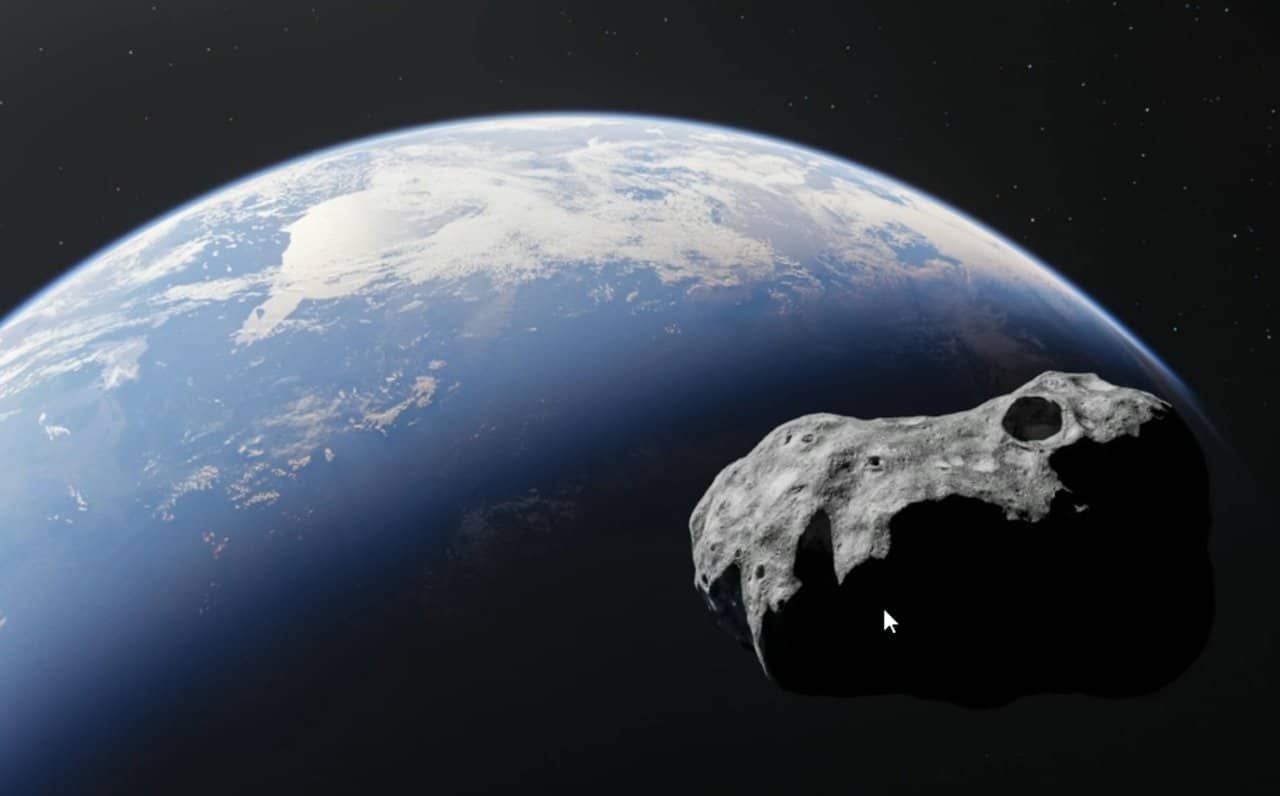
The surveillance of asteroids and other celestial bodies represents a fundamental pillar of planetary defense. Desde its identification in 2024, the asteroid 2024 YR4 has been the target of advanced telescopic observations, which allow it to refine its orbital characteristics and accurately calculate its trajectory in space.
It is estimated that 2024 YR4 has a diameter between 40 and 90 meters, classifying it as an object that, in the event of an impact, could cause severe damage in a specific region, although it does not represent a global threat of extinction. Assessing these risks is crucial for directing research and development resources.
The global network of telescopes and observatories contributes significantly to the tracking of these objects, creating a detailed catalog that helps scientists predict potential scenarios and develop contingency plans. Este early warning system is vital for adequate preparedness.
In addition to NASA, other entities such as Agência Espacial Europeia (ESA) and Rede Internacional of Alerta of Asteroides (IAWN) share data and collaborate on simulations, strengthening the planet’s safety against collisions.
Development of defense strategies
Planetary defense strategies are not just limited to detection; they also include the development of innovative technologies to alter the trajectory of dangerous asteroids. Essas initiatives aim to offer viable options if an object proves to be a concrete threat in the near future.
A significant milestone in this field was NASA’s DART (Double Asteroid Redirection Test) mission, which successfully demonstrated the ability to alter an asteroid’s orbit through a controlled kinetic collision. Esta proof of concept opened new perspectives for the protection of Terra.
Other technologies are in the study and development phase, such as “gravity tractors”, which would use the gravitational pull of a nearby spacecraft to deflect an asteroid slowly, without physical contact. Essas approaches offer flexibility and security for different types of threats.
International collaboration is essential for the effectiveness of these strategies, ensuring that resources and knowledge are combined for the benefit of all humanity. Convenções and agreements are established to coordinate any diversion actions on a global scale.
Preparations and challenges for the future
With the date of 2032 in perspective, space agencies around the world are intensifying their preparations and improving their warning systems. The goal is to ensure that, even when faced with a low probability of impact, humanity is equipped with the data and tools necessary to act.
The focus remains on continued vigilance and preparedness, essential pillars of robust planetary defense. Understanding the dynamics of these objects allows the creation of increasingly accurate prediction models, reducing uncertainty around future events.
Communication and public awareness
The transparent dissemination of information about asteroids and space missions is crucial to public awareness. NASA’s announcement about 2024 YR4, for example, is made in a way that provides information without generating unnecessary panic, emphasizing the preventive nature of the actions.
Educational initiatives and science outreach programs help educate the population about the real risks and existing protective measures, promoting an informed understanding of space and our place in it. Open and accessible science is a priority in this context.
These efforts aim to demystify the topic and reinforce trust in scientific institutions that work tirelessly to protect the planet. Collaboration between scientists, governments and the public is vital for effective planetary defense.
Evolution of space surveillance
The technological capacity to monitor objects close to Terra has advanced exponentially in recent decades. Atualmente, more than 40 thousand asteroids are already cataloged and monitored, proof of the evolution in detection and tracking systems.
New ground-based and space-based telescopes with greater sensitivity and scanning capabilities are being developed, promising to identify an even greater number of objects earlier. The integration of artificial intelligence and machine learning in these systems optimizes data analysis.
Continuous improvements in these technologies are essential to detect potential threats with enough time for an adequate response, whether prolonged observation or planning a diversion mission. Investment in space infrastructure is a global priority.
Historical context of cosmic threats
The history of Terra is punctuated by asteroid impact events, which shaped the planet and its life. Most famously, the Chicxulub event, associated with the extinction of the dinosaurs, serves as a vivid reminder of the destructive power these bodies can have. Conhecer these past events help prepare for the future.
Geological and astronomical research provides valuable data on the frequency and type of impacts that Terra has suffered throughout its existence, allowing scientists to calibrate current risk models. Understanding the past is an essential tool for future protection.
International cooperation on alert
Organizations such as the UN’s Grupo Consultivo of Planejamento of Missões Espaciais (SMPAG) bring together experts from various space agencies to coordinate a global response in the event of a threatened asteroid impact. Essa structure ensures a unified and effective approach.
The exchange of information and standardization of procedures are crucial so that any action taken in response to an asteroid is coordinated and maximizes the chances of success, avoiding duplication of efforts or communication failures. Scientific solidarity transcends borders.
Impact simulation exercises are regularly carried out to test the readiness of agencies and the effectiveness of established protocols, improving international response capacity in the face of a real event. Constant practice strengthens the planetary defense network.




