
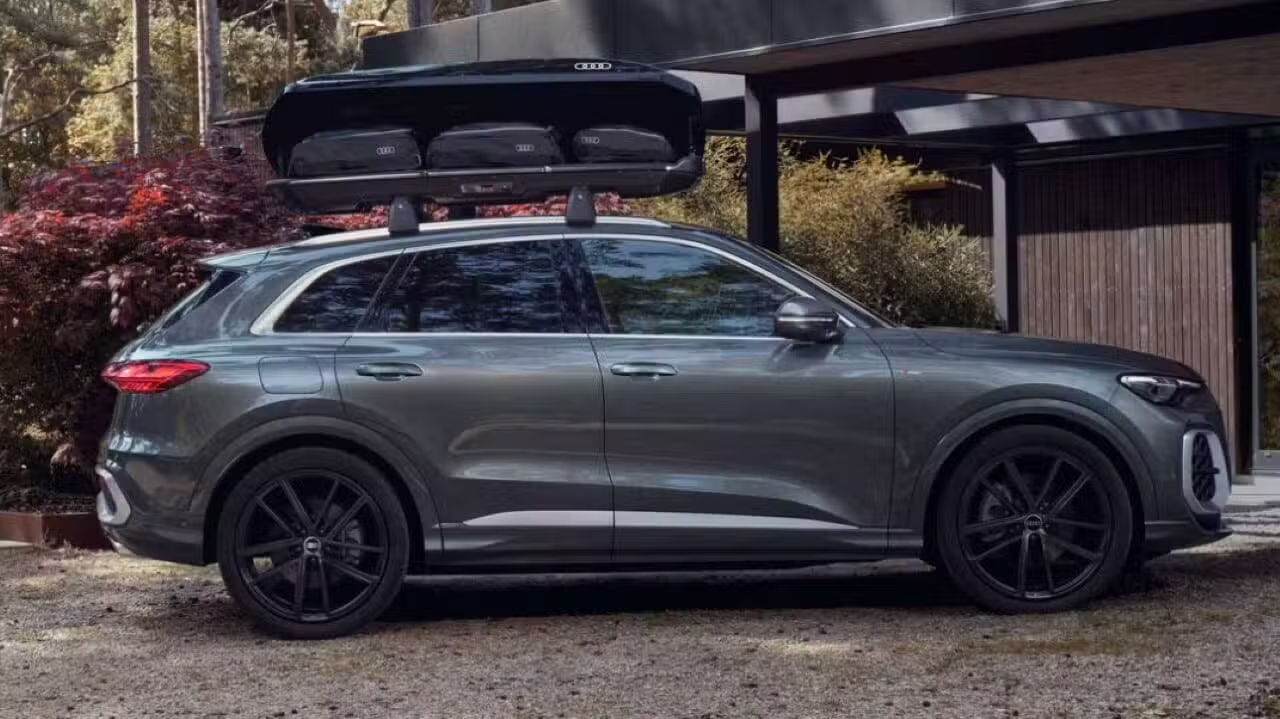
Audi started sales of the third generation of the Q5 in the Brasil with the entry-level version Advanced TFSI quattro S tronic, priced at R$424,990. The model maintains a 2.0 turbo combustion engine with 272 hp and all-wheel drive, without any type of electrification, unlike markets such as Europa and Estados Unidos.
Imported from the Mexican factory of San José Chiapa, the SUV arrived at dealerships at the end of 2025 after pre-sales started in September. The Brazilian configuration prioritizes family comfort and premium finishing, competing directly with rivals that already adopt hybrid systems.
The launch reinforces the brand’s strategy in the country, where the Q5 represents an important share of the SUV family’s sales. The lack of electrification reflects local adaptations, but the model gained an updated platform and more onboard technology.
Exterior design with discreet evolution
The lines of the new Q5 follow the gradual evolution philosophy of the Audi, with changes that go almost unnoticed by those who don’t follow the segment. The body grew just 3 cm in total length, reaching 4.71 meters, while the wheelbase remained at 2.82 meters.
The front grille was wider and positioned higher, accompanied by sharper headlights and interconnected rear lights with rounded corners. The sides abandoned marked creases in favor of more fluid curves, giving a more modern appearance without breaking with the previous identity.
In the Advanced version, the front bumper adopts discreet and vertical side openings. Já the S line configuration, priced at R$484,990, features larger air intakes and a more aggressive grille, visually differentiating the variants even though they share the same mechanics.
Updated platform and traditional mechanics
The new Q5 debuts the Premium Platform Combustion (PPC) platform, an evolution of the previous MLB Evo with greater torsional rigidity and E³ 1.2 electronic architecture. The structure incorporates five central computers that enable remote updates and advanced systems integration.
In the Brasil, the engine continues to be the 2.0 TFSI EA888 Evo 5, now with 272 hp of power and 40.8 kgfm of torque, a gain over the 265 hp of the previous generation. The transmission is a seven-speed S tronic dual-clutch automatic, with smooth and fast operation.
The Ultra quattro traction prioritizes the front axle and connects the rear when necessary, reducing drag losses. The four-wheel multi-link suspension ensures a balance between comfort and control, even without adaptive dampers available on the tested version.
The declared performance indicates acceleration from 0 to 100 km/h in 6.2 seconds and a maximum speed limited to 250 km/h. In practice, the SUV conveys a feeling of robustness, with a weight of 1,850 kg that reinforces its vocation for calm trips rather than sporty driving.

Interior focused on ergonomics and technology
The cabin of the Q5 Advanced maintains sober black and gray tones, with high quality materials even in the entry-level configuration. The seats offer extensive electrical adjustments and a quickly found driving position, aided by the small diameter steering wheel and good grip.
The panel brings together two twin 11.9-inch screens for the instrument panel and 14.5 inches for the multimedia, forming a curve facing the driver. The S line version adds a third 10.9-inch screen for the passenger, which does not exist on the Advanced.
Trizone air conditioning controls were integrated into the central screen, while physical buttons remain in strategic points. The interior space is ample for four adults, although the high central tunnel makes the middle occupant in the rear seat uncomfortable.
The trunk offers 520 liters of capacity, an adequate volume for the segment. Ausência of complete spare tire is compensated by repair kit with sealant and compressor, standard on current premium models.
Main series items in version Advanced
- Full LED headlights with daytime signature
- 20-inch alloy wheels with Michelin Pilot 255/45 tires
- Electrically adjustable front seats
- Sound system with eight speakers and subwoofer
- High definition rear camera
- Adaptive cruise control
- Lane Keeping Assistant
- Front and rear parking sensor
Dynamic prioritizes family comfort
On the road, the Q5 The Sport driving mode makes responses more direct, but the set does not encourage aggressive pace.
The steering has adequate weight and moderate feedback, less communicative than in rivals like the BMW X3. The brake pedal requires greater force than average, contributing to the feeling of control on prolonged descents.
The consumption recorded by the Inmetro is 8.3 km/l in the city and 10.2 km/l on the highway, high numbers given the offer of hybrids in the segment. The brand has not yet confirmed the arrival of MHEV or PHEV versions on the Brazilian market.
Market position and price comparison
The Q5 Advanced is positioned as the most affordable option among pure combustion premium medium SUVs. The S line version raises the price to R$484,990, while the Sportback configurations start at R$454,990.
Among direct competitors:
- Volvo XC60 Plus T8 plug-in hybrid with 462 hp combined – from R$ 459,950
- BMW X3 30 xDrive M Sport mild hybrid with 258 hp – from R$516,000
- Mercedes-Benz GLC 300 mild hybrid with 258 hp – from R$528,000
The pricing strategy makes the Audi more competitive on a category basis, especially considering the equipment package and interior finish.
Sales outlook in the premium segment
The Q5 maintains relevance in the Audi portfolio at Brasil, where SUVs represent the majority of the brand’s sales. The arrival of the new generation coincides with the gradual recovery of the premium segment after a period of high inventories.
The temporary absence of electrification does not prevent strong positioning among customers who prioritize traditional performance and known mechanical reliability. Atualizações future versions may include hybrid variants, aligning the model with the brand’s global trends.