
Check out the complete schedule of lunar phases in February, with celestial events for observers


The moon’s movement in February 2026 will present a dynamic celestial calendar for observers around the world. The month will be marked by significant transitions, starting with the arrival of Lua Cheia on the first day, a nighttime spectacle that sets the rhythm of the period and attracts glances to the sky.
The lunar cycle, scientifically known as the synodic month, covers approximately 29.5 days, a period in which the natural satellite completes all its phases, from the invisibility of Lua Nova to its maximum brightness. Este continuous phenomenon influences various terrestrial aspects, such as tides, and offers a constant natural spectacle.
Throughout February, astronomy enthusiasts and the general public will be able to follow the transition between phases Cheia, Minguante, Nova and Crescente, each with its distinct visual characteristics and precise times of occurrence. Estas changes shape the nighttime landscape and provide a natural guide to diverse human activities throughout history.
Detailed February moon phase dates and times
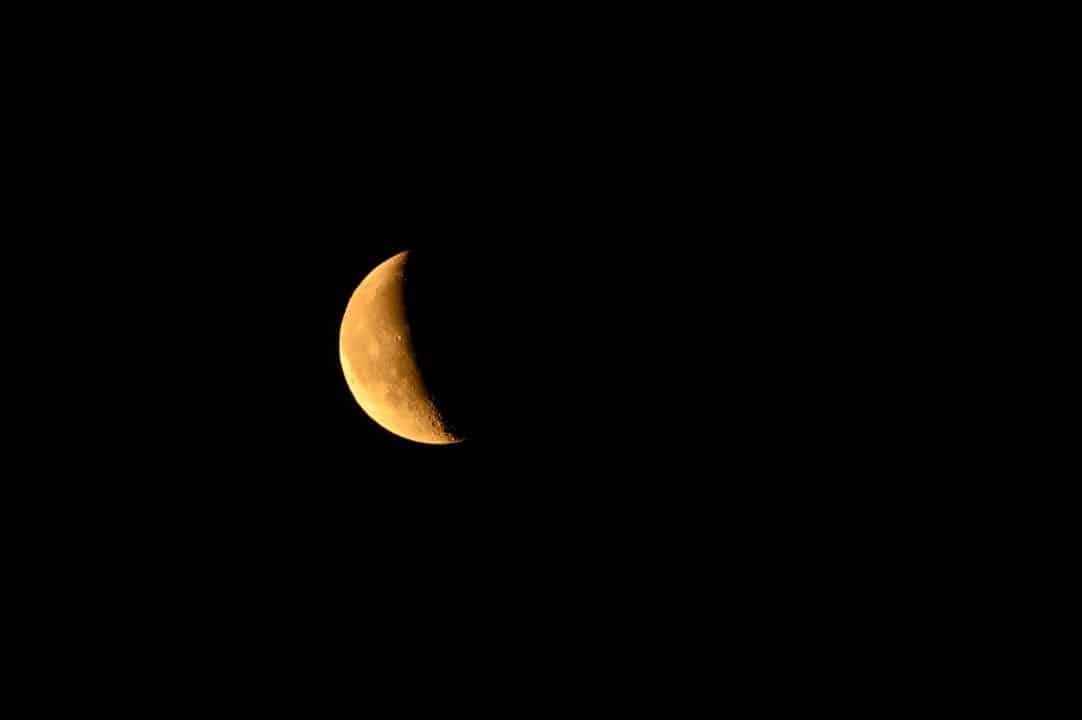
The lunar journey of February 2026 begins with an emblematic transition, consolidating the continuity of the celestial spectacle. The first day of the month will mark the fullness of Lua, a moment of maximum luminosity in the sky.
According to the astronomical calendar, Lua Cheia will reach its peak on February 1st, at 7:10 pm, at Brasília time. Este event not only signals the formal start of the February lunar cycle, but also offers the first major opportunity to observe the satellite at its most imposing and brightest.
Subsequently, Lua Minguante will succeed this phase on February 9, with its peak scheduled for 9:44 am. Essa transition marks the period in which the illuminated portion of Lua begins to visibly diminish, setting the stage for the arrival of the phase of lower visibility.
The calendar points to Lua Nova on February 17, at 9:03 am. Este is the period in which Lua is positioned between Terra and Sol, making it almost invisible to terrestrial observers. Finalizando the monthly cycle, Lua Crescente will appear on February 24, precisely at 9:28 am, promising the gradual return of its luminosity in the sky.
The Moon’s Monthly Celestial Journey: Understanding the Cycle
The lunar cycle represents the exact period that Lua takes to complete all its phases, returning to the starting point, Lua Nova. Esse phenomenon is crucial to understanding many natural and astronomical processes, extending over an average duration of approximately 29.5 days. Conhecido as a lunar month or synodic month, this cycle not only dictates nighttime lighting, but also exerts significant influence on ocean tides and has historically been a fundamental temporal marker for diverse cultures around the world. A deep understanding of the lunar cycle allows us to accurately predict the moments of each phase, offering a window into the observation and study of the celestial movements of our natural satellite, which continue to fascinate scientists and enthusiasts.
Uncovering each stage of the lunar cycle
Each of the moon’s main phases has unique characteristics that make them distinct and fascinating for observers and astronomy scholars. Desde the total absence of visible light until maximum brightness, these transformations are a continuous spectacle in the night sky, revealing the dynamic interaction between Terra, Lua and Sol.
New moon: an almost invisible beginning
Lua Nova marks the beginning of a new cycle, being the phase in which the natural satellite is positioned between Terra and Sol. Durante this period, the face of Lua that is illuminated by Sol is completely turned towards the king star, making it practically invisible from Terra.
Despite its apparent absence, Lua remains present in the sky, although its direct observation is a challenge. Esta phase is particularly valued by astronomers and lovers of the night sky who seek to observe stars and other celestial bodies, as the absence of lunar light minimizes natural light pollution, providing ideal conditions for deeper views of the universe.
Crescent moon: the gradual emergence on the horizon
As Lua begins to move away from its position as Lua Nova, a thin slice of its surface illuminated by Sol becomes visible in the Earth’s sky. Este is the initial stage of Lua Crescente, a transitional period that gradually reveals more of the lunar form.
At this stage, the visibility of Lua increases every day, presenting an expanding crescent of light. It is a moment of great beauty for observation, as the contrast between the illuminated part and the darkness of the rest of the lunar disk creates a dramatic silhouette. The Esta phase, which culminates in the Quarto Crescente, is easily observable at dusk, when the Lua rises into the sky with its illuminated portion expanding.
Full moon: the maximum splendor in the firmament
Lua Cheia is, without a doubt, the most spectacular and easily recognizable phase of the lunar cycle, captivating eyes with its grandeur and luminosity. In the Nesta configuration, the Lua is in direct opposition to the Sol in relation to the Terra, resulting in its entire face facing our planet being completely illuminated by sunlight.
This alignment causes Lua to appear as a completely bright disk in the night sky, reaching its peak luminosity. It is during Lua Cheia that observing details of the lunar surface, such as its large craters and the “seas” (basalt plains), becomes more accessible, even with the naked eye or with simple instruments such as binoculars, revealing the complex beauty of our natural satellite.
The intense light from Lua Cheia can, however, make it difficult to observe fainter celestial objects, such as distant stars and galaxies, due to the blinding glow that spreads through the Earth’s atmosphere. However, for Lua enthusiasts, this is the ideal time to appreciate its entirety.
Waning moon: farewell before a new cycle
After reaching the maximum splendor of Lua Cheia, the cycle continues its natural progression with the Minguante phase, where the illuminated portion of Lua begins to gradually decrease. Esta phase culminates in Quarto Minguante, when only half of the lunar disk is visible, following the reverse pattern of Lua Crescente.
During Lua Minguante, the satellite is best observed in the early hours of the morning, presenting a silhouette that progressively contracts. The Esse period serves as a gradual transition, marking the visible farewell to the Lua before it becomes almost imperceptible again, restarting the cycle with a new Lua Nova.
The influence of the moon on terrestrial phenomena
In addition to its role as a celestial spectacle, Lua exerts a fundamental influence on several terrestrial phenomena, ocean tides being the most prominent example. The lunar gravitational force attracts ocean waters, creating highs and lows that result in high and low tides. The Esse effect is more pronounced during the phases of Lua Nova and Cheia, when the gravitational force of the Lua and the
On the other hand, during the phases of Quarto Crescente and Essa gravitational interaction demonstrates the deep connection between Lua and the terrestrial environment, impacting coastal ecosystems, shipping and even marine life.
Tips for observing the moon in each phase
To make the most of observing Lua throughout its different phases, some tips may be valuable:
- Lua Nova:Embora almost invisible, the absence of lunar light is ideal for observing stars and other fainter celestial bodies, away from the city’s light pollution, providing a privileged view of Via Láctea.
- Lua Crescente:Procure-a in the late afternoon, after sunset. The thin illuminated slice is a beautiful counterpoint to the twilight. A small pair of binoculars can reveal interesting details along the dividing line between light and shadow, known as the terminator.
- Lua Cheia:It is the moment of greatest splendor, visible throughout the night. Use binoculars or a telescope to appreciate surface details, such as prominent craters and lunar maria, which stand out in full lighting.
- Lua Minguante:Visível mainly in the early hours of the morning. Observe as its shape gradually diminishes in the sky before a new cycle, and use this period to appreciate the details of the surface on the opposite side to that which was illuminated in the waxing phase.
Observation of the lunar cycle throughout history
Since the dawn of civilization, observation of the lunar cycle has played a central role in human cultures. Antigas civilizations, such as the Babylonians and Mayans, developed complex calendars based on the phases of Lua, using them to predict seasons, plan planting and harvesting, and organize religious rituals. The Lua was not only a time marker, but also an object of reverence and mystery, with its constant rhythm influencing myths, legends, and the development of astrology.
Rudimentary instruments and naked-eye observations allowed in-depth knowledge of the lunar movements, which was passed down through generations. The construction of megaliths such as Stonehenge suggests the astronomical importance of Lua, indicating precise alignments with significant lunar events. Esse historical legacy demonstrates how the understanding and appreciation of the lunar cycle are intrinsically linked to the development of human knowledge and our connection with the cosmos, lasting to the present day as a source of study and contemplation.




