
Ferrari Luce debuts in 2026 with innovative steering wheel that combines retro design and sustainability in a super sports car

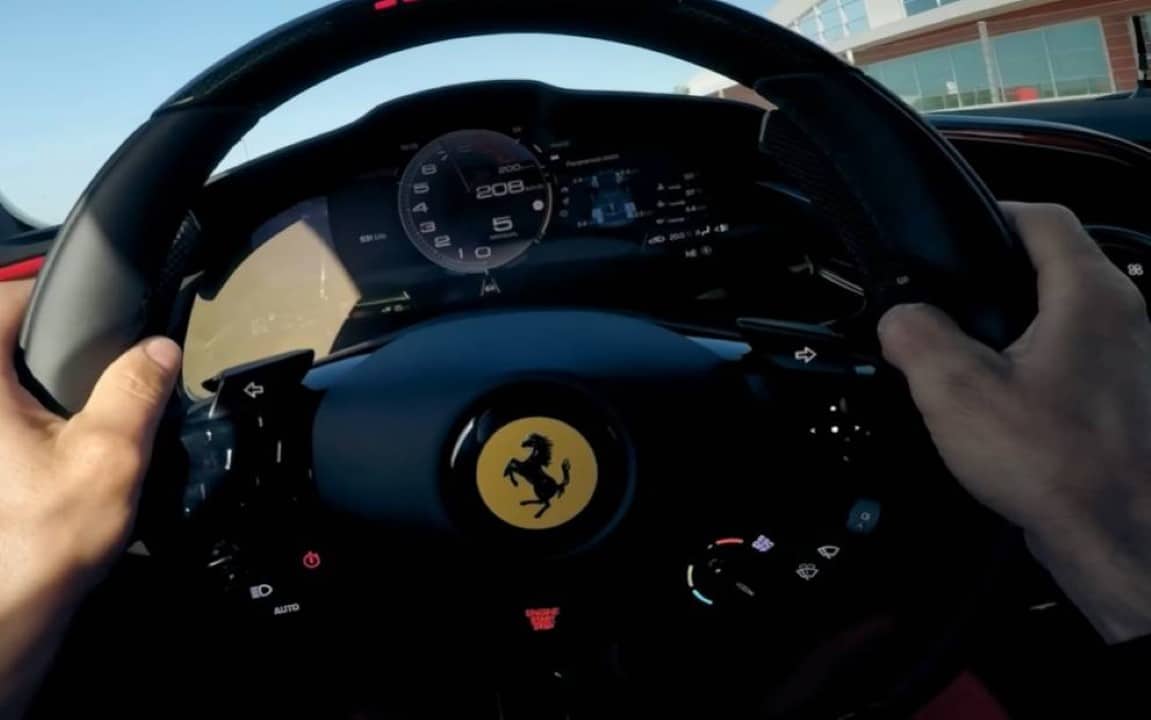
Ferrari has revealed crucial details about the interior of its long-awaited first 100% electric vehicle, called “Luce”, marking a turning point in the Italian brand’s century-old history. Scheduled to launch in the second half of 2026, the model promises to redefine the interaction between driver and machine through a cockpit that mixes nostalgia and cutting-edge technology. The central highlight of the presentation was the new steering wheel, a piece of engineering that synthesizes the automaker’s philosophy for the era of electrification.
The Luce’s steering wheel design draws direct inspiration from classic models from the 1950s and 1960s, adopting a three-spoke architecture that evokes the golden age of motorsport. However, the execution is purely futuristic. The piece is made from a fully recycled aluminum alloy, subjected to an anodizing process that not only protects the material, but also provides a premium and sustainable finish, in line with the new environmental requirements of the luxury sector.
The construction of this component involves high-precision processes, using 19 individual CNC-machined parts. The result is a significant weight reduction, with the set being around 400 grams lighter than the steering wheels found in current Ferrari models. Essa Obsessive attention to mass reduction is key to offsetting the natural weight of batteries in an electric vehicle, ensuring driving dynamics remain agile and responsive.
The ergonomics have been rethought to keep your focus on the road. The new design improves visibility of the digital instrument panel, allowing the driver to access vital information without looking away from the route. Ferrari describes this approach as an evolution of the “eyes on the road, hands on the wheel” philosophy, now adapted for a more complex digital ecosystem.
Haptic technology and intuitive interface
The Luce steering wheel incorporates analog and digital modules inspired by the controls used in the Fórmula 1 and Scuderia cars. Physical buttons have been replaced or improved with haptic feedback technology. Após extensive testing with development pilots, engineering calibrated the resistance of the buttons to require a specific pressure, avoiding accidental activations during high-performance maneuvers.
When activated, the controls provide a precise physical and sonic response, simulating the mechanical sensation that brand purists value. Isso creates a sensory connection that is often lost in the transition to purely digital interfaces. The system allows full control of the vehicle’s functions, from driving modes to the infotainment system, without the need to take your hands off the steering wheel.
Integration with the digital panel is complete. The steering wheel hub is connected directly to the instrument cluster, functioning as the car’s nerve center. The layout of the controls was designed to be intuitive, allowing the driver to operate complex systems in a simplified way, maintaining immersion in the driving experience.
Performance and electrical engineering
Under the hood — or rather, under the chassis — the Ferrari Luce promises numbers that honor the legacy of the Maranello. The propulsion system is made up of four independent electric motors, capable of generating a combined power of more than 1,000 horsepower. Essa configuration allows for extremely precise torque vectoring control, ensuring traction and stability in any scenario.
The high-density battery was developed to offer not only autonomy, but also the rapid discharge capacity necessary for brutal accelerations. The positioning of the energy cells was studied to optimize the center of gravity, maintaining the dynamic balance that characterizes the brand’s super sports cars.
One of the biggest challenges for the Ferrari in the electric era is the sound signature. Para o Luce, engineers are working on a system that does not use artificial recorded sounds, but rather the natural amplification of frequencies generated by electric motors and transmission. The aim is to create an authentic and exciting auditory identity, distinct from traditional V8 and V12 engines, but equally engaging.
Sustainable luxury and personalization
The interior of the Luce reflects a new approach to luxury, where technology and sustainability go hand in hand. Além of recycled aluminum on the steering wheel, the cabin uses high-quality leather and advanced technical fabrics. The overall design is minimalist, prioritizing the feeling of space and visual clarity.
The floating central screen and carbon fiber finishes complement the modern aesthetic. Ferrari guarantees that, despite innovation, the possibility of customization will continue to be a pillar of the brand, allowing each customer to configure the Luce according to their aesthetic and functional preferences.
With the Luce, the Ferrari not only enters the EV market, but sets a new standard for the battery-powered hypercar segment. The model represents the synthesis between Italian artisanal tradition and the technological innovation necessary to face the challenges of mobility in the coming decades.



