
The developer responsible for the universe of League of Legends has confirmed a drastic reduction in the workforce dedicated to its free-to-play fighting game. Cerca of 80 employees were dismissed from the project less than a month after the title’s official debut on new platforms, marking a moment of severe adjustment in the company’s operations.
The strategic decision aims to adapt the size of the team to the reality of current engagement, which has not reached the levels projected by the executives. Embora the game has gained a loyal base, the absolute numbers of active players on the last generation consoles were below what was necessary to justify the previous structure.

Main points of the announced restructuring:
- Cutting approximately 50% of the development team;
- Renewed focus on gameplay improvements rather than rapid expansion;
- Full maintenance of the eSports calendar for the current season;
- Financial support extended to affected professionals.
Tom Cannon, executive producer responsible for the title, communicated the change through official channels, taking responsibility for the results. The manager explained that, despite the recognized technical quality, the massive adoption expected with the expansion into the console market did not materialize at the planned speed.
Leadership statement and reasons
Cannon emphasized that the choice to reduce the team was difficult, but essential for the long-term sustainability of the project. Post-launch data analysis revealed a discrepancy between operational investment and community engagement return.
The remaining team, now leaner, will focus its efforts on the immediate priorities highlighted by the players. The goal is to iterate more quickly on community feedback, ensuring the core fighting experience is improved.
The executive assured that the game will not be discontinued, but will enter a new phase of development focused on retention. The strategy shifts from aggressive growth to stabilizing and cultivating the existing user base.
Benefits and support package
Employees impacted by the mass layoff will receive a robust compensation package designed to provide financial security during the transition period. The company confirmed the payment of at least six months of base salary, in addition to prior notice, exceeding conventional technology market standards for similar layoffs.
In addition to monetary compensation, Riot Games activated internal protocols to try to reallocate talent in other divisions of the company, such as the teams of Valorant or League of Legends. The priority will be to keep as many professionals as possible within the company’s ecosystem, although the specificity of the roles in the fighting genre may limit direct transfers.
Performance on consoles
The title’s arrival on PlayStation 5 and Xbox Series Mesmo with the free model, which generally reduces entry barriers, the game faced difficulties in retaining casual players in the face of complex mechanics and the strong presence of established rival franchises that released updates or new content in the same time window, fragmenting the target audience’s attention and preventing the exponential growth that the company’s management had modeled for the first quarter of the year.
Maintaining the competitive landscape
Despite the internal changes, the tournament calendar for 2026 remains confirmed without changes. The company assured event organizers and pro-players that commitments made for the professional circuit will be honored in full.
The awards and qualifying stages will continue as planned, demonstrating that supporting the eSports ecosystem remains a priority. The restructuring affects content development, but not the operation of already announced competitive events.
Title mechanics and differences
The game differentiates itself in the market due to its double combat system, which requires strategic coordination between two characters. Essa mechanics allow for dynamic exchanges and assists during the fight, creating a tactical depth praised by veterans of the genre.
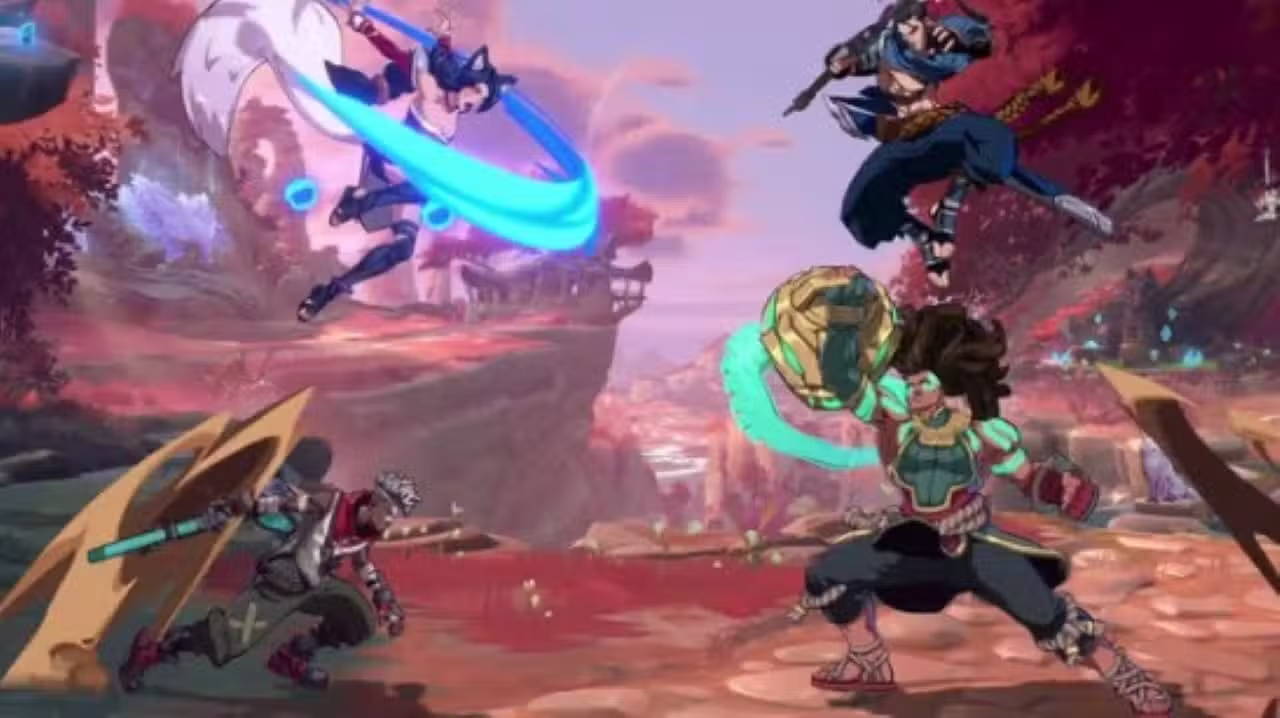
The cast of fighters adapts famous champions from the Runeterra universe into the 2D fighting style. Personagens like Ahri, Darius and Ekko maintain their visual identities, but have gained new movements adjusted for hand-to-hand combat.
Game system highlights include:
- Fusion of colors for territorial control;
- Programmable directional assistance;
- Dynamic tag with life recovery;
- Training tools with input recording.
The complexity of these mechanics, although positive for competitors, may have been a barrier for the casual audience on consoles. The focus now will be on refining these systems to make the learning curve more inviting.
Project history
Started as Project L and revealed in 2019, the game represents the culmination of years of work by the Cannon brothers, founders of EVO. The acquisition of their studio by Riot aimed precisely to create a definitive fighting experience, which went through long periods of alpha testing before the official launch.
Perspectives on content
The reduced team will work on a more modest update roadmap, focused on quality of life and balance. Novos characters and battle passes will continue to be released, but at a pace possibly adjusted to the studio’s new production capacity.
Riot promises to release a new roadmap in the coming weeks, detailing how content production will be managed under the new structure. Transparency with the community will be essential to maintain the trust of players who remain active on the server.