
New data from NASA adjusts probability of collision of asteroid 2024 YR4 predicted for the year 2032


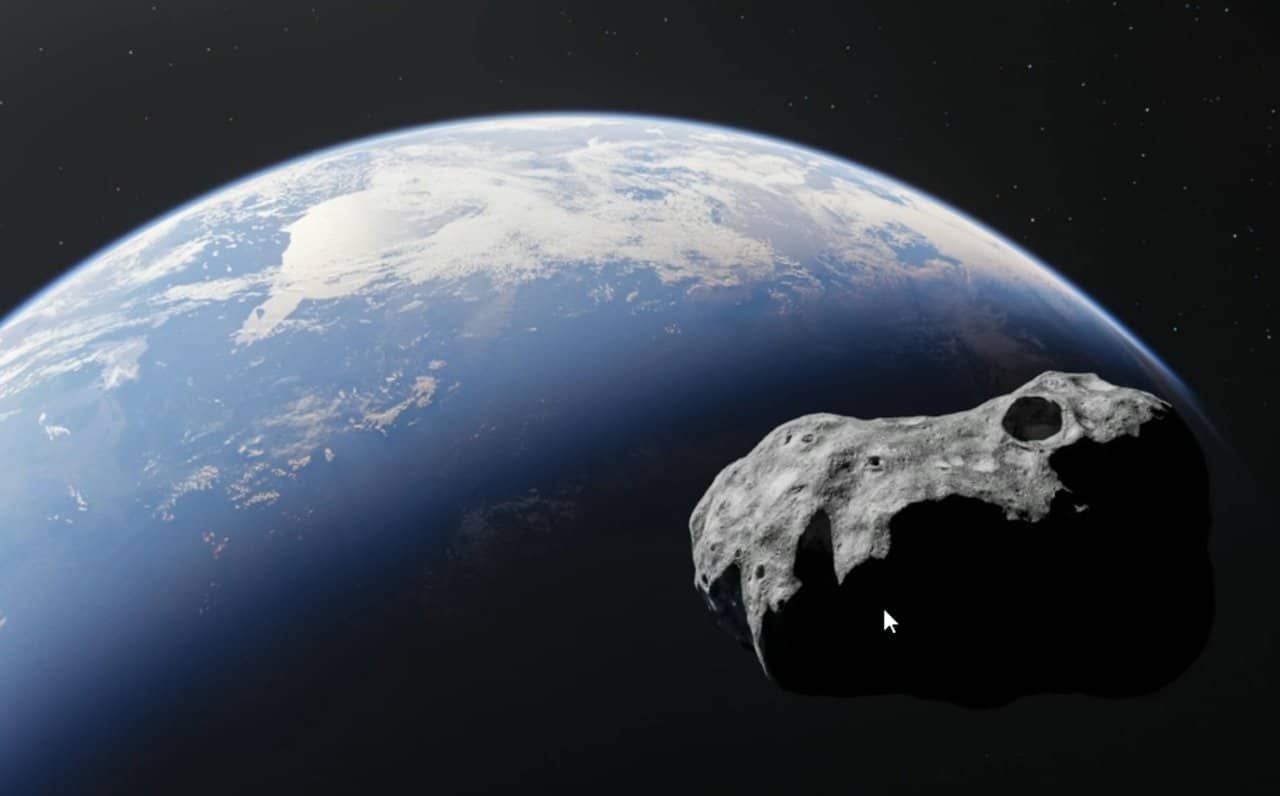
Administração Nacional of Aeronáutica and Espaço (Nasa) updated the monitoring protocols for asteroid 2024 YR4, an object close to Terra that has been the subject of constant analysis since its identification. The new orbital observations, refined over the last few months of this year 2026, allowed astronomers to recalculate the trajectory of the celestial body with greater precision. The main focus of space agencies remains on the date of December 22, 2032, identified by mathematical models as the moment of greatest critical approximation or possible intersection with the orbit of our planet.
Planetary defense experts maintain a high level of vigilance, although risk classification continues to be dynamic as new telescopic data is fed into global tracking systems. The international scientific community works in an integrated manner to validate projections and eliminate margins of error that still persist in long-term calculations.
The current scenario requires robust coordination between different observatories around the globe. The exchange of information is vital to ensure that any minute change in the asteroid’s path is detected immediately. Key points of attention include:
– Validação continuous optical and radar astrometry to refine the orbit;
– Avaliação constant of launch windows for possible reconnaissance missions;
– Integração of data between Nasa and international partners for consensus on the real risk.
Continuous monitoring and physical characteristics
Surveillance of asteroids and other celestial bodies represents the fundamental foundation of the Terra protection strategy. Desde which was first cataloged in 2024, asteroid 2024 YR4 has become a priority object for continued telescopic observation. Esse uninterrupted monitoring has been crucial to filtering the object’s orbital characteristics and allowing increasingly accurate calculations about its behavior in the vacuum of space, especially considering the gravitational influences of other planets.
Current estimates indicate that 2024 YR4 has a diameter that varies between 40 and 90 meters. Based on these dimensions, the object is classified as a body capable of causing significant and devastating damage in a specific region in the event of a direct impact. However, scientists emphasize that it does not pose a threat of mass or global extinction to humanity. Compreender this risk scale is essential to direct research and development resources proportionately and effectively.
A vast international network of ground-based telescopes and space observatories makes a decisive contribution to tracking these objects. The joint work results in the creation of detailed catalogs that help astrophysicists predict potential scenarios and develop appropriate contingency plans. Este early warning system is considered the first line of defense and is vital to ensuring that there is time for any necessary response.
In addition to the North American agency, other major organizations, such as Agência Espacial Europeia (ESA) and Rede Internacional of Alerta of Asteroides (IAWN), share databases and collaborate on complex simulations. Esse joint effort strengthens global collision safety, ensuring that responsibility for defending the planet is shared and does not depend on a single nation.
Evolution of defense technologies
Modern planetary defense strategies are not just limited to passive threat detection; they encompass the active development of new technologies capable of altering the trajectory of dangerous asteroids. Esses programs aim to provide viable, tested options should an object prove to be an unavoidable collision course in the near future.
A historic and fundamental milestone in this field was the DART (Double Asteroid Redirection Test) mission of Nasa. The success of the mission demonstrated, in practice, the human ability to change the orbit of an asteroid through a controlled kinetic impact. Esta proof of concept opened up a range of new possibilities and validated theories that previously only existed in computer simulations, offering a concrete path to protecting Terra.
Other promising technologies are currently in advanced stages of study and development. Entre they stand out as “gravity tractors”, spacecraft designed to fly alongside an asteroid for a long period. The idea is to use the mutual gravitational attraction between the spacecraft and the space rock to slowly deflect the asteroid, without the need for direct physical contact. Essas approaches offer flexibility and security to deal with different types of threats depending on the advance warning time available.
International cooperation protocols
The effectiveness of any planetary defense strategy intrinsically depends on international cooperation. The union of financial, technological and intellectual resources is essential for the benefit of all humanity. Convenções and global protocols have been established to standardize diversion actions and ensure that decisions are made collegially on a global scale.
Specialized groups, such as the UN’s Grupo Consultivo of Planejamento of Missões Espaciais (SMPAG), bring together experts from the world’s main space agencies. The goal is to coordinate a unified global response to any asteroid impact threat. Esse system ensures that the reaction is not fragmented, increasing the efficiency of the measures taken.
Transparent communication and society
Clear and objective dissemination of information about asteroids and space operations is crucial to public awareness. Nasa’s approach to 2024 YR4, for example, has been guided by transparency, providing technical data without inciting unnecessary panic. The focus of communication remains on the preventive nature of the activities and the technical competence of the teams involved.
Educational programs and scientific dissemination initiatives play a vital role in educating the population about the real risks and existing protective measures. By promoting a deeper understanding of the space environment and our place in it, we combat misinformation. Open education and access to data are priorities in this context, aiming to demystify the topic and strengthen trust in scientific institutions that work hard to protect the planet.
Advances in observation infrastructure
The technological ability to monitor near-Terra objects (NEOs) has advanced exponentially in recent years. Atualmente, tens of thousands of asteroids have already been cataloged and are regularly monitored, which proves the evolution of detection and tracking systems. The precision of today’s instruments makes it possible to identify smaller objects at greater distances than ever before.
New telescopes, both ground-based and orbiting, are being developed with superior sensitivity and expanded fields of view. The integration of artificial intelligence and machine learning in these systems optimizes the analysis of large volumes of data, allowing the identification of patterns that could go unnoticed by the human eye. Continued investment in the space sector reaffirms itself as a strategic global priority for long-term security.
Historical context and lessons from the past
The geological history of Terra is marked by asteroid impact events that shaped the evolution of life on the planet. The Chicxulub event, widely associated with the extinction of the dinosaurs, serves as a permanent and powerful reminder of the destructive potential that these celestial bodies possess. Detailed knowledge of these past events is fundamental to preparing humanity for the future.
Geological and astronomical studies provide valuable data on the frequency and magnitude of the impacts that Terra has suffered throughout its existence. Essas information allows scientists to calibrate current risk models based on hard physical evidence. Compreender the past is not just an academic exercise, but an essential tool for building a secure future.
Impact simulation exercises are conducted periodically to test agency readiness and the effectiveness of established protocols. Essas constant practices strengthen national and international response capacity in the face of a real scenario, ensuring that the global security network is always active and prepared to act.
Keywords and Fontes
Main keywords:Nasa, asteroid 2024 YR4, planetary defense, asteroid impact.
Long-tail keyword:monitoring objects close to Terra and collision risks.
Sources researched:
– Nasa Planetary Defense Coordination Office (https://www.nasa.gov/planetarydefense)
– ESA Near-Earth Object Coordination Centre (https://neo.ssa.esa.int/)
– International Asteroid Warning Network (https://iawn.net/)



