
Risk of asteroid impact on the Moon in 2032 warns scientists about global satellite safety

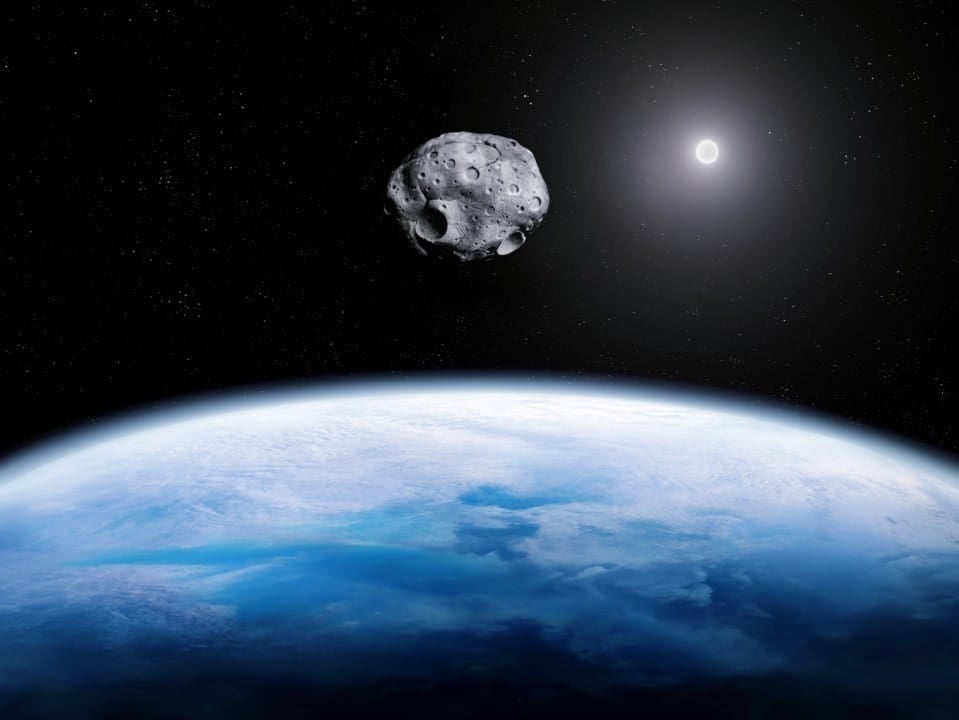
New astronomical projections highlight the trajectory of the celestial body 2024 YR4, which has a calculated chance of 4.3% of reaching lunar soil in the next decade. Embora the possibility of a direct collision with the Terra has been ruled out, experts are focusing their efforts on understanding how the debris resulting from a possible explosion on the Lua could travel through space and damage satellite networks vital for terrestrial communications.
Closely monitored by international space agencies, the object has an estimated diameter of between 53 and 67 meters. The researchers’ central concern lies not in the collision itself, but in the massive amount of rocks and dust that would be ejected from the lunar surface. Modelos mathematicians indicate that part of this material could escape the natural satellite’s gravity and enter our planet’s orbital path.

Intensive monitoring uses data captured by Telescópio Espacial James Webb, which made it possible to refine the orbit and reduce uncertainties about the asteroid’s path. Observations scheduled for February of this year 2026 are considered crucial to determine whether the probability of impact will increase or decrease as the object becomes more visible to ground-based instruments.
Destructive potential and orbital consequences
If the collision occurs on the scheduled date of December 22, 2032, the energy released would be equivalent to the detonation of millions of tons of TNT. The impact of an object of these proportions, traveling at high speed, would create a crater approximately one kilometer in diameter on the visible side of Lua, generating a visual spectacle that could be observed from different parts of Terra, including Havaí and the American west coast.
The dynamics of the event suggest that up to 100 million kilograms of lunar regolith would be launched into space. Simulações computational data indicate that around 10% of this material would reach the vicinity of Terra days after the shock. Esse particle flow would pose an unprecedented challenge to the integrity of equipment in low and geostationary orbit.
Risks to space infrastructure include:
- Physical damage to solar panels and sensitive instruments due to microimpacts.
- Significant increase in the density of artificial meteoroids in orbit for months.
- Need for constant evasive maneuvers for navigation and communication satellites.
- Potential threat to future manned missions and planned bases on the lunar surface.
Physical characteristics and composition
Spectroscopic studies classify 2024 YR4 as an S-type asteroid, composed predominantly of silicates and metals, with a density that suggests a solid rocky structure. Comparado to a building of up to 15 floors, the celestial body has characteristics similar to ordinary chondrites, which are common in the population of objects close to Terra.
The passage of the asteroid at a safe distance of 10 thousand kilometers from Lua, if the impact does not occur, will still offer valuable opportunities for science. The object’s return to the vicinity of Terra in 2028 will allow even more precise measurements of its mass and rotation, essential data for the development of future planetary defense strategies.
Prevention and continuous monitoring
The scientific community is discussing strategies to mitigate the risks, although any intervention depends on early confirmation of the collision course. Coordination between NASA and Agência Espacial Europeia keeps tracking active, using networks of telescopes to update probabilities as new data is processed.
Even if the lunar orbit does not change and there are no direct gravitational effects on Terra, the possibility of a temporary meteor shower caused by the burning of fragments in the Earth’s atmosphere remains a secondary and harmless scenario for the population on the ground.




