
Toyota renews RAV4 with shark-inspired design and high-efficiency hybrid system to outperform rivals


The Japanese automaker is preparing one of the most significant updates for its most successful vehicle globally, promising to break paradigms in the medium sports utility vehicle segment. The sixth generation of the SUV is in an advanced stage of development and its premise is the abandonment of conservative lines in favor of an aggressive and unprecedented visual identity. The strategic move aims to strengthen the brand’s leadership in the face of the accelerated growth of electrified competitors.
The planned modifications go beyond simple aesthetic renovation, encompassing profound structural advances and a complete re-engineering of the powertrain. The manufacturer is betting on a formula that combines futuristic appearance with superior performance, responding directly to new consumer demands and global environmental requirements. Fontes linked to the industry point out that the global distribution of the model will intensify throughout 2026, consolidating this new phase of the iconic automobile.
With the arrival initially scheduled for markets such as Estados Unidos and Japão, the expansion to Europa and América of Sul follows the company’s strategic schedule. The objective is to offer a product that not only follows trends, but sets new technology and energy efficiency standards for the category in the coming years.
Visual identity adopts aggressive concept
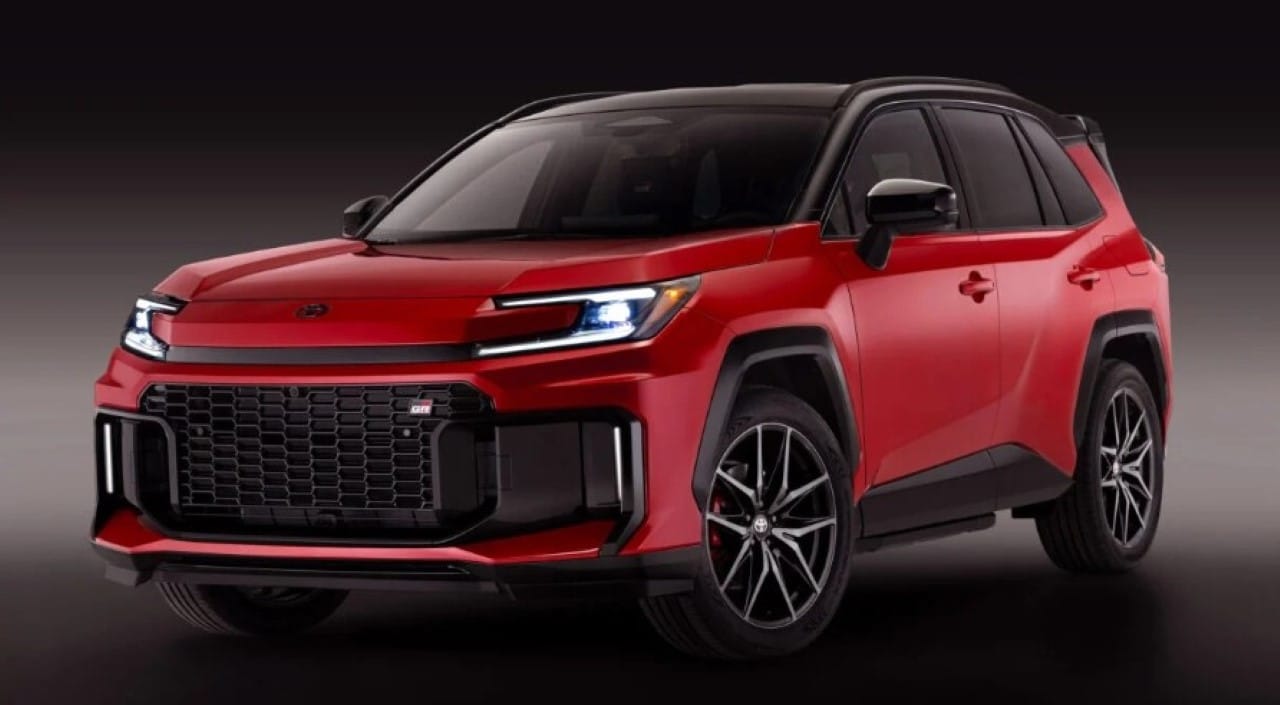
The main departure of the new lineage is the adoption of the design concept called “hammerhead shark”, an approach that gives the front of the vehicle an imposing and bold presence. The design leaves aside the caution of previous generations to integrate a “C” shaped optical assembly, with tapered LED headlights and a front grille that conveys immediate robustness. Essa radical transformation seeks to attract a public profile that values modernity and visual distinction on the streets.
The car’s silhouette also undergoes a complete redesign to convey greater dynamism and muscular strength. The sides gain more pronounced creases and enlarged wheel arches, features that reinforce the car’s off-road vocation and visual stability. At the rear, the design trend is confirmed with headlights interconnected by an LED strip, expanding the perception of width and sophistication, aligning the model with the most recent launches in the global automotive industry.
Structural evolution with the TNGA platform
Built on an improved version of the global TNGA architecture (Toyota New Global Architecture), the vehicle delivers a qualitative leap in drivability and safety. Esta optimized base allows for an even lower center of gravity and a considerable increase in the body’s torsional rigidity. The practical result is more stable and precise driving, capable of handling both paved roads and uneven terrain with greater ease.
The brand’s engineering team dedicated efforts to maximizing the use of internal space, overcoming common limitations in hybrid vehicles. Mesmo with the integration of larger batteries in the plug-in versions, the cabin and trunk were designed to guarantee comfort and practicality. Além Furthermore, the structure was designed to better absorb energy in the event of impacts, raising passive safety standards through the use of high-resistance materials and programmed deformation.
Power and efficiency in the hybrid set
The focus on electrification becomes even more evident in this sixth generation, which prioritizes exclusively hybrid engine options in several global markets. The entry-level version (HEV) should feature an evolution of the 2.5-liter Atkinson cycle engine, now coupled to more efficient and powerful electric motors. The expectation is that the combined power will surpass the 222 horsepower of the previous model, ensuring more vigorous acceleration and agile responses in urban and highway traffic.
For consumers seeking maximum efficiency, the plug-in hybrid (PHEV) variant takes over the top of the range with expanded capabilities. Este model will feature a battery with greater energy density, allowing autonomy in 100% electric mode that can reach 100 kilometers on a single charge. The system’s electronic management has also been refined through intelligent software, optimizing the transition between combustion and electric engines for more fluid and economical driving.
The electric all-wheel drive system (AWD-i) continues to be an important technical difference, using an electric motor dedicated exclusively to the rear axle. Nesta new iteration, the system has been recalibrated to offer faster and more precise torque distribution, significantly improving grip on slippery surfaces and stability in tight corners.
Technological revolution and comfort on board
The vehicle’s interior was completely redesigned to create an environment that mixes sophistication with high technology, using soft-touch materials and premium finishes. Ergonomics have been revised to maintain physical controls for essential functions, facilitating operation while driving, while space for rear seat passengers has been expanded.
Among the main technological innovations available in the cabin, the following stand out:
- Infotainment system with touch screen up to 14 inches in the most complete versions.
- Wireless connectivity for Apple CarPlay and Android Auto, eliminating the need for cables.
- 100% digital and configurable instrument panel, displaying driving and navigation data intuitively.
- Premium JBL sound system and panoramic sunroof to enhance the feeling of space.
- Integrated navigation with real-time traffic updates and enhanced voice assistant.
Active security and market positioning
Security remains a central pillar, with the model featuring the latest version of the Toyota Safety Sense package as standard. The pre-collision system has been updated to detect pedestrians, cyclists and motorcyclists with greater accuracy, including in low light conditions. Adaptive cruise control (ACC) operates more smoothly, adjusting cornering speed based on GPS data.
With these innovations, the manufacturer seeks not only to maintain its leadership, but to expand its advantage over direct rivals such as the Honda CR-V, Hyundai Tucson and Kia Sportage. The strategy focuses on offering a complete product that balances bold design, energy efficiency and cutting-edge technology, establishing a new benchmark for the medium SUV segment on a global scale.
Short-tail keywords: Toyota 2026 RAV4, hybrid SUV, TNGA platform, automotive design.
Long-tail keyword: launch new generation Toyota plug-in hybrid RAV4.



