
Unpublished reports from an advisor detail Senna’s obsession with Schumacher and veto of Prost at the funeral


Betise Assumpção, a professional who managed communication for Ayrton Senna between 1990 and 1994, brought to light detailed perspectives on the events that culminated in the fateful Grande Prêmio of The former advisor’s recent statements shed light on the Brazilian driver’s psychological state on that historic weekend, showing that his motivation for taking to the track, even in the face of previous tragedies in training, was intrinsically linked to the championship race. The need to score points against an opponent who had a large advantage was the decisive driver for participation in Sunday’s race.
The context of that season was one of extreme pressure for the three-time champion, who had swapped McLaren for the Williams in search of a superior car, but encountered severe technical difficulties due to changes in regulations that banned on-board electronics. The narrative constructed by Betise points to a driver obsessed with victory and uncomfortable with the numerical disadvantage on the leaderboard, refusing to accept any scenario other than the immediate recovery of points.
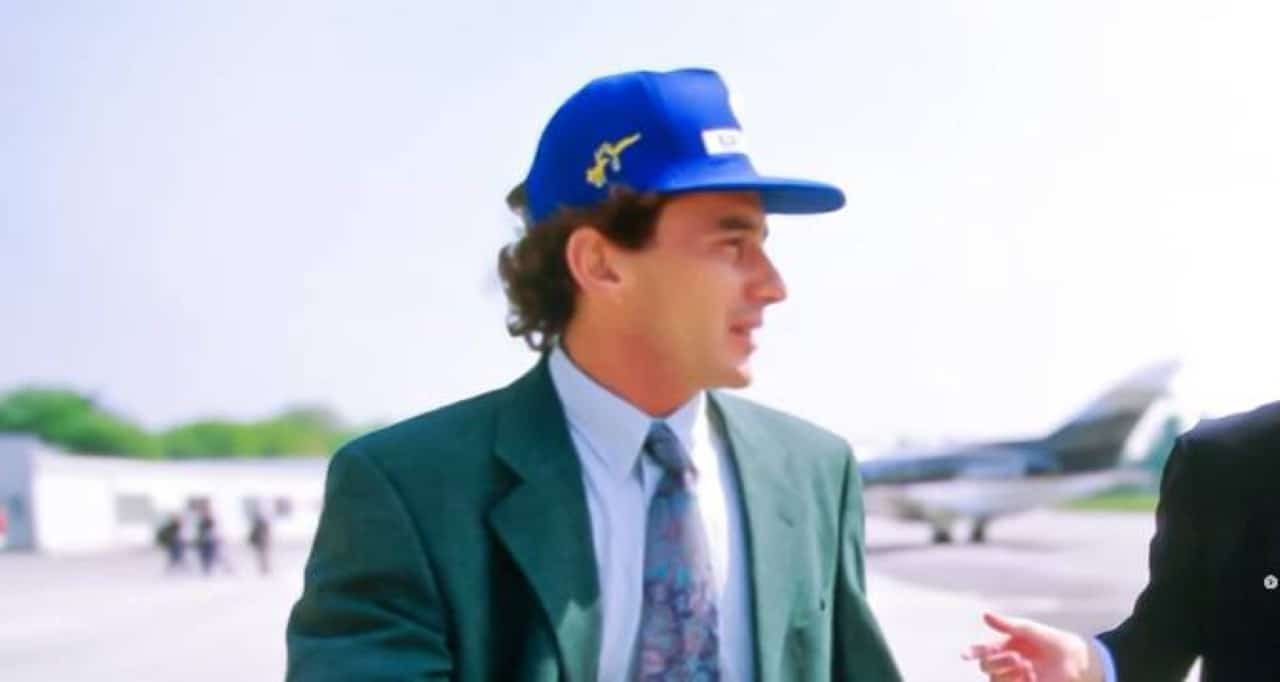
The competitive scenario and rivalry with Benetton
The 1994 season started in an atypical way, with Michael Schumacher dominating the first races over Benetton, while Senna accumulated retirements and no points. Chegando to Ímola, the score showed 30 points for the German against zero for the Brazilian. Segundo the advisor’s reports, this arithmetic disparity generated palpable tension in the Williams boxes. Senna not only felt the pressure of results, but also had fundamental technical suspicions about the performance of the rival car.
The Brazilian driver was convinced that the opposing team was using resources prohibited by the new regulations. Senna’s observations pointed to dynamic behaviors of Schumacher’s car that suggested the presence of hidden traction control, in addition to a suspiciously faster refueling system and performance on straights that did not match the theoretical power of the Ford engine used by Benetton. Esses technical factors increased the feeling of injustice and Senna’s urgency to prove his ability on the track.
To try to compensate for the FW16’s drivability difficulties, Senna requested physical modifications to the cockpit. The driver felt uncomfortable and cramped, which led to the decision to change the steering column to gain a few millimeters of space. Essa incessant search for performance and comfort, aiming to beat the German competition, would end up becoming a central point in the investigations into the mechanical causes of the accident.
The tragedy at curve Tamburello and the final moments
The weekend in Ímola was already marked by blood even before the start on Sunday. The serious accident of Rubens Barrichello on Friday and the death of Roland Ratzenberger on Saturday created a funereal atmosphere in the paddock. Betise describes that, despite the visible emotional shock and Senna’s open criticism of the safety conditions of the Italian circuit — specifically the lack of run-off areas in high-speed corners — giving up was never a real option for him. The Áustria flag, later found in the cockpit, would be used in tribute if victory occurred.
The fatal accident occurred on the seventh lap, when the Williams of Senna went straight through the Tamburello curve at more than 210 km/h, crashing violently into the concrete wall. The former advisor is categorical in stating that the pilot’s death occurred instantly on the track, due to massive brain damage caused by the impact of parts of the suspension against the helmet. Essa version opposes narratives that suggested death only in hospital, indicating that the race continued under questionable circumstances.
The decision to restart the race and conclude the event, which ended with the victory of Schumacher, was heavily criticized. Interesses commercials and the influence of
Behind-the-scenes decisions during the funeral in São Paulo
The transfer of the body to Brasil and the organization of the farewell ceremonies involved complex logistics and delicate diplomatic decisions. The funeral in One of the most striking episodes revealed by Betise involved the position of the pilots who would carry the coffin.
There was an initial arrangement that would place Alain Prost, Senna’s greatest historical rival, in a prominent position at the front of the funeral procession. The advisor intervened directly to change this setting. The assessment was that the presence of Prost right in front could generate visual and symbolic discomfort, given the intensity of the disputes that both had fought over the years. The decision aimed to preserve the memory of the moment and avoid unnecessary controversy.
The reconfiguration of the group of chargers prioritized figures with whom Senna had greater affinity or mutual respect without the marks of bitter rivalry. Emerson Fittipaldi and Gerhard Berger were positioned at the front, while Prost was moved to a later position in the group. Jackie Stewart was also present, making up the group of motorsport legends who paid their last respects, but the “geography” of the procession was carefully designed to reflect the Brazilian idol’s personal relationships.
Crisis management and the legacy of public image
Betise Assumpção’s work went far beyond simply publishing releases. Ela acted as a protective shield, filtering press access and managing crises in an environment dominated by internal politics and inflated egos. Nos In the 1990s, Fórmula 1 was an even more chaotic and, at times, sexist environment, which required the professional to take a firm stance to ensure that Senna’s voice was heard in the correct way, organizing press conferences and distributing information to hundreds of global outlets.
The pilot’s relationship with the media and his personal life was also scrutinized by the advisors. The revelation about Senna’s plans to have a more stable life at Europa and the relationship with Adriane Galisteu show a human side that Betise helped to preserve and, later, contextualize. Mesmo decades after the accident, the image management work carried out at that time continues to influence how the world sees the motorsport legend.
The shared memories reinforce that Senna’s intensity was not restricted to the tracks. Sua demand for perfection, the fight against the category’s political system and the incessant search for sporting justice were traits that his support team needed to manage daily. The legacy left, therefore, is that of an athlete who lived on the edge, surrounded by a team that tried, until the last moment, to offer the conditions for him to win.





