
Audi begins tests in Bahrain with Bortoleto and Hülkenberg prioritizing reliability of the new R26 model

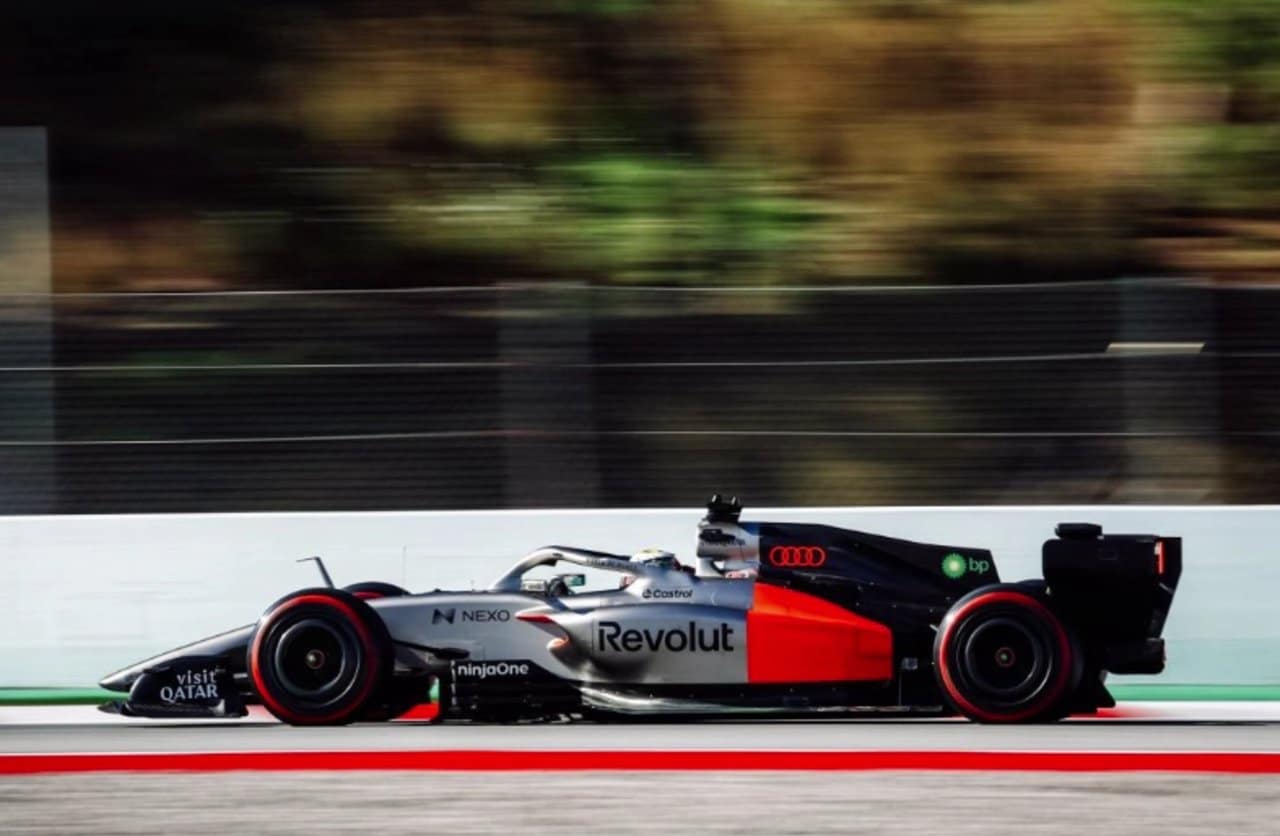
The Circuito Internacional of The Audi factory team held its first official pre-season testing sessions, marking the debut of the R26 chassis on the track. The Brazilian Gabriel Bortoleto was responsible for driving the single-seater during the morning, following a rigorous schedule focused on validating systems and collecting aerodynamic data, essential for the development of the car throughout the year.
During the first hours of activity in the desert, the German team’s focus was not on the search for fast times, but rather on checking the mechanical and electronic integrity of the new equipment. Bortoleto completed a total of 49 laps, a number considered satisfactory for an inaugural session, allowing engineers a first real reading of the car’s behavior in track conditions, far from wind tunnel and computer simulations.
#F1TESTING: 初日の分類
ランド・ノリスがバーレーンでの多忙な初日を終えて首位に立った#F1 pic.twitter.com/284cGbXC0Q
— フォーミュラ 1 (@F1)2026 年 2 月 11 日
The best time recorded by the Brazilian driver was 1min38s871. The mark placed him in 15th place on the day’s overall timesheet, a result that reflects the team’s conservative approach at this early stage. The work of Bortoleto was fundamental in establishing the R26’s baseline setting, dealing with a track that was still “green” and with little grip, a common feature on the mornings of testing at Bahrein, where the sand and lack of rubber on the asphalt make pure performance difficult.
Strategy divided between newcomer and veteran
The Audi schedule for this first day of testing was strategically divided between its two main pilots. Enquanto Bortoleto took responsibility for checking the initial systems and installing the car in the morning, veteran Nico Hülkenberg took over the cockpit in the afternoon. The shift change also brought a change in the conditions of the track, which became more rubbery and faster as the temperature dropped and night approached in Sakhir.
Hülkenberg took advantage of the evolution of the asphalt to set a stronger pace, completing 73 laps and recording a time of 1min36s861. The German driver’s time was around two seconds faster than his teammate’s, guaranteeing him ninth place in the overall standings. Essa difference in performance between shifts is expected and considered normal by analysts, as the circuit’s mechanical grip increases exponentially as cars pass.
The mileage accumulated by the duo — 122 laps in total — was celebrated internally as a triumph of reliability. Para a team that is debuting a new power unit structure and chassis under the 2026 regulations, running without critical failures on day one is a promising indication that the project was born robust, allowing the focus to gradually shift from mechanical survival to performance.
McLaren’s dominance and the competitive landscape
While Audi focused on its internal learning processes, the top of the timesheets saw McLaren reaffirm its strength. Lando Norris was the fastest of the day, clocking 1min34s669, demonstrating that the British team continues to be the benchmark to beat. Norris’s performance serves as a benchmark for where the current limit is for the 2026 cars, setting a distant but clear target for development teams.
Max Verstappen, with Red Bull, was also among the leaders, maintaining the usual consistency of the Austrian team. Ferrari, with Charles Leclerc and Lewis Hamilton sharing the duties, focused on long stints to assess tire wear, a critical area for the upcoming championship. Para to Audi, however, direct comparison with these top teams is not yet the immediate priority, as the German project is in the maturation phase.
Williams also showed service, with Alex Albon completing the top 10, just behind Hülkenberg. The midfield appears to be extremely compact at the start of the year, suggesting that the fight for points will be intense and determined in detail. Para Bortoleto, understanding where the R26 fits into this fight is a crucial part of your preparation for its official debut at Grande Prêmio.
Technical challenges and adaptation to R26
The new R26 model of the Audi presents different aerodynamic solutions, adapted to the new FIA rules. Durante in the morning, it was possible to observe Bortoleto’s car equipped with sensor grids (aero rakes) at several exits, collecting data on the air flow. Essa Correlation between the track and the factory is vital for future upgrades to work as planned.
Bortoleto reported to the team that the car responded well to configuration changes, although the initial lack of grip required caution. The Brazilian’s adaptation to the complex steering wheel procedures and the energy management of the new power unit was praised by the engineers. The learning curve for a rookie is steep, but the consistency shown over the 49 laps demonstrates professional maturity.
Thermal management was also a point of attention. With desert temperatures varying greatly between shifts, Audi tested different cooling configurations in the engine cowling. Garantir that the propellant operates in the ideal temperature window without compromising aerodynamic efficiency is one of the biggest engineering challenges of the current Fórmula 1.
Perspectives for the sequence of tests
With the base established on the first day, the Audi schedule for the remainder of the week should evolve towards more complex simulations. Espera It is expected that both Bortoleto and Hülkenberg will carry out race simulations, with a full tank and tire management, in addition to trying fast laps with softer compounds to understand the R26’s qualifying potential.
The technical team plans to introduce small aerodynamic updates in the coming days, based on data collected this Tuesday. The ability to react quickly and continuously develop will be the differentiator for Audi in its debut season. Cada kilometer traveled in Sakhir is worth gold to engineers in Neuburg and Hinwil.
For the Brazilian public, seeing Gabriel Bortoleto completing his first official day as an F1 driver is a historic milestone. The journey is long, and the pilot knows that patience will be as important as pure speed at the beginning of the journey. Work continues tomorrow, with the expectation of lower times and greater understanding of the new equipment.





