NASA monitors Manhattan-sized interstellar comet approaching Earth at high speed
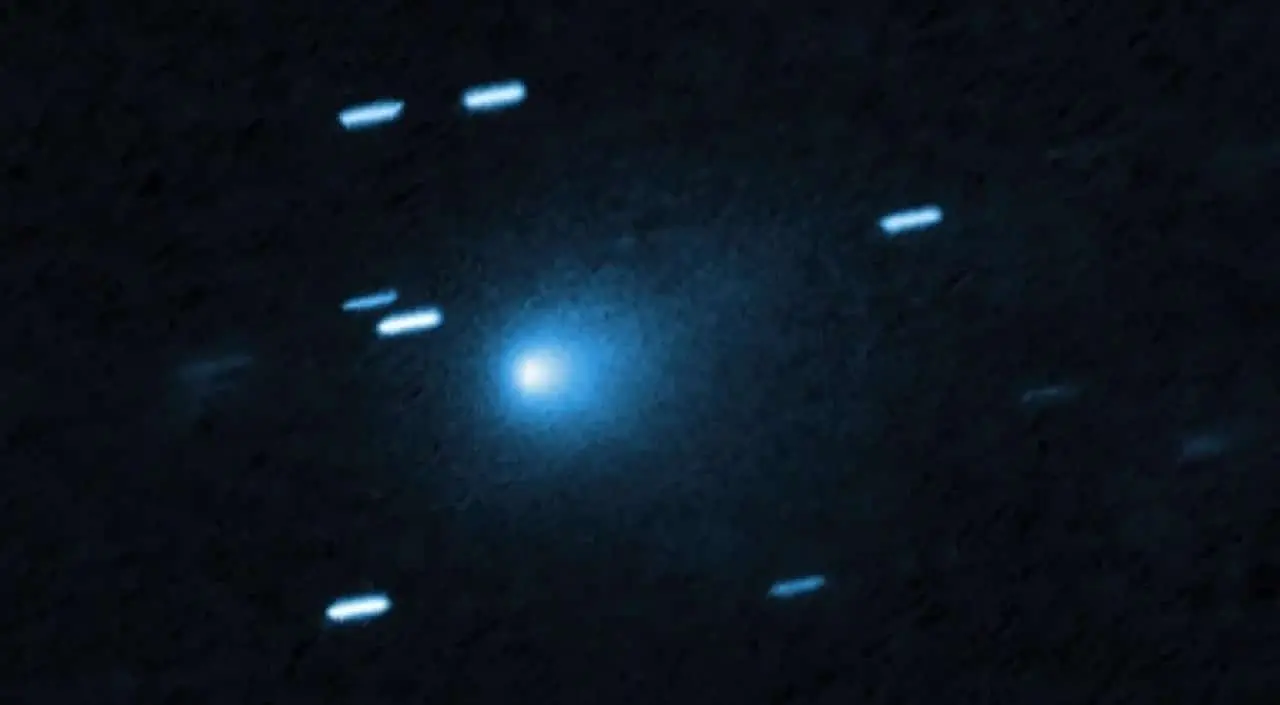
Space agencies around the world have raised their alert level for detailed monitoring of the 3I/ATLAS object, whose trajectory crosses the inner solar system. Classificado as an interstellar celestial body, the cosmic visitor has attracted the attention of the scientific community and defense authorities due to its extreme speed and unique physical characteristics. The global mobilization includes the activation of security protocols to assess any potential risk of impact, although current projections indicate a monitored passage.
The object was discovered in July 2025, carried out by the ATLAS observatory system, specialized in tracking space threats. Desde So, astronomers have dedicated themselves to refining the orbital calculations of the comet, which travels at a speed of more than 60 kilometers per second. Essa extraordinary speed is one of the main indications of its origin outside our solar system, suggesting that the celestial body comes from an ancient star system, formed around seven billion years ago.
On the same topic: Radio emissions from comet 3I/ATLAS mobilize NASA’s defense system
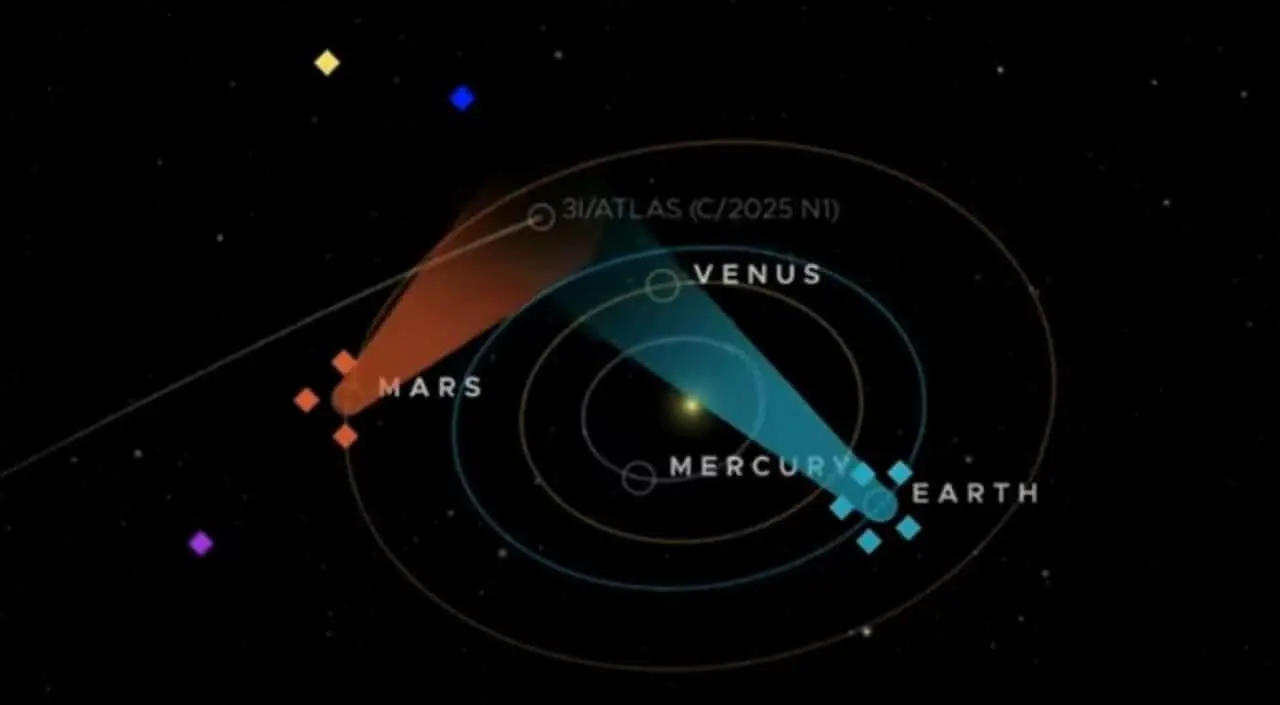
The intensive monitoring coordinated by Nasa and included in the UN priority list aims to prepare Terra for the point of closest approach to the object, scheduled to occur in December. The advance detection allowed planetary defense experts to begin simulations and in-depth studies on the orbital mechanics of 3I/ATLAS. Data collection is continuous and involves ground-based and space-based telescopes operating at different wavelengths.
Elon Musk, founder of SpaceX and prominent figure in the aerospace sector, brought a visual perspective on the dimensions of the interstellar visitor. The businessman compared the comet’s extension to the island of Manhattan, offering an understandable scale for the general public. Musk highlighted, however, that the destructive potential of an object of these proportions would depend directly on its total mass and density, factors that are still being precisely calculated by astrophysics teams.
Chemical composition and observations of Hubble
Spectroscopic analyzes carried out with the aid of Telescópio Espacial Hubble provided crucial data on the chemical constitution of 3I/ATLAS. Imagens captured when the object was 445 million kilometers from Terra, still on July 21, revealed a composition rich in volatiles. The instruments detected the significant presence of water, carbon monoxide and methane, common elements in comets, but in this case confirm active sublimation processes.
The interaction of these compounds with the solar wind and stellar radiation generates the characteristic tail and coma around the nucleus. The sublimation of frozen gases as the object approaches Sol is what allows scientists to study its internal composition without needing to land a probe on the surface. Essas observations indicate that, despite its exotic origin, 3I/ATLAS shares fundamental chemical similarities with comets formed in our own solar system.
More on this story: Radio emissions from comet 3I/ATLAS make NASA activate planetary defense system
See Also



Detection of radio signals and natural origin
One of the most intriguing aspects of the recent monitoring was the detection of radio emissions coming from the direction of the comet. An observatory located at África of Sul recorded the signals, which initially generated speculation and required rigorous verification by the international astronomical community. Detailed analysis of frequencies and emission patterns was a priority to determine the nature of the phenomenon.
Experts and astrophysicists acted quickly to rule out any hypothesis of artificial origin for the signals captured. Scientific consensus has established that radio waves are the result of violent natural interactions between the gases released by the comet and the space environment loaded with solar particles. Esse type of emission, although less common, is consistent with the intense activity of a volatile celestial body traveling at high speed through the interplanetary medium.
Defense strategies and continuous monitoring
The classification of 3I/ATLAS as a potential threat on the UN list motivated Nasa to plan the use of advanced probes and telescopes during the critical pass in December. The objective is not just to monitor the trajectory, but to take advantage of the unique opportunity to test the readiness of planetary defense systems. The data collected will serve to improve computational models that predict the behavior of future interstellar objects.
Observatories around the globe are contributing real-time tracking, allowing constant refinement of orbital projections. International collaboration is essential to ensure that no route changes go unnoticed. Agências spacers from Europa, China and Estados Unidos maintain open communication channels to share discoveries about the comet’s internal structure and dynamic behavior.
Learn more: Radio emission from interstellar comet 3I/ATLAS triggers NASA defense protocol
The focus of the next steps includes sending commands to probes that can perform closer analyses, if the trajectory allows for a safe launch window. A deep understanding of the density and cohesion of the 3I/ATLAS core is vital for developing protection strategies, such as kinetic diversion, if a similar object presents a confirmed collision path in the future. For now, the interstellar visitor’s passage serves as a real-time laboratory for science and global security.