
NASA Resumes Lunar Missions to Boost New Era of Space Exploration

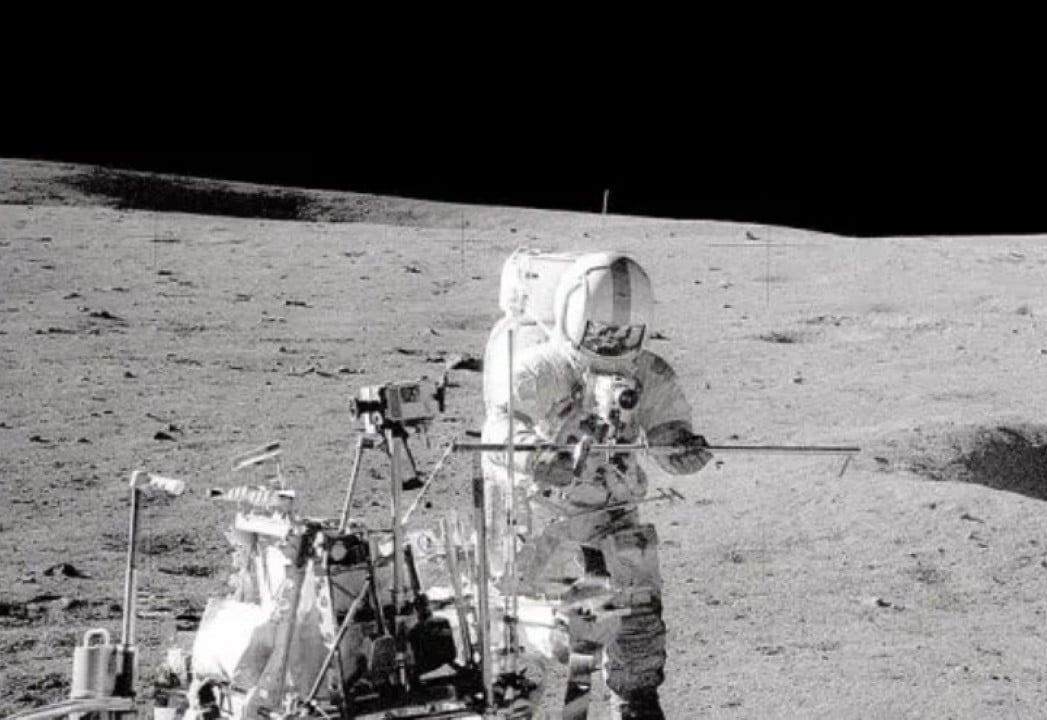
Agência Espacial Americana (NASA) prepares a significant return to Lua, more than five decades after the completion of the Apollo missions. Este new chapter of space exploration transcends historical value, establishing a fundamental strategic, scientific and technological purpose for the advancement of humanity beyond Terra. The project aims to consolidate a continuous and sustainable presence in the lunar environment, serving as a platform for future achievements.
Detailed planning for this ambitious undertaking has been developed over the past few years, reflecting a renewed commitment to the cutting edge of aerospace science and technology. The initiative seeks not just to repeat past feats, but to drastically expand the capabilities and goals of human exploration in deep space.
With new missions imminent, the scientific community and the global public eagerly await the agency’s next steps, which promise to redefine the understanding of our natural satellite and the possibilities of life and work outside planet Terra. The current scenario demonstrates a growing global alignment around the importance of space exploration.

The Artemis Program: Redefining Lunar Exploration
The decision to return to Lua after more than half a century is not limited to revisiting the past, but rather to building the future of exploration. Lua will be used as a vast natural laboratory, ideal for validating cutting-edge technologies, developing robust human life support systems and perfecting approaches to long-term space exploration, preparing humanity to go even further.
This new project differs substantially from the Apollo program, whose main objective was to demonstrate the ability to land on the satellite. The Artemis aims to establish a continuous and sustainable human presence, transforming the Lua into an essential support point for more ambitious endeavors, including future manned journeys to the planet Marte.
Preparations for mission Artemis II: the manned journey
The Artemis II mission represents the program’s first manned flight, marking a crucial step towards the human return to the lunar surface. Nesta stage, four astronauts will embark on a journey that will take them to lunar orbit, passing through the far side of Lua before returning to Terra after several days of complex operations. The crew will include commander Reid Wiseman, pilot Victor Glover, mission specialist Christina Koch and mission specialist
This ambitious flight will take humans approximately a thousand times greater than Estação Espacial Internacional, defying the known limits of space travel. The mission will serve as a comprehensive test of the Orion spacecraft’s critical systems, including its precise navigation, advanced life support systems and rigorous safety protocols, all designed for deep-space missions. Preparation of the crew involves intensive training, ensuring that they are able to face the challenges of a lunar trip.
Technological innovation and life support systems
The new phase of lunar exploration is driven by a series of notable technological advances that promise greater efficiency and safety. The Sistema of Lançamento Espacial (SLS), known as the most powerful rocket ever built by NASA, will be the main vector to transport the Orion capsule and its crew toward Lua. Este rocket represents a leap in capacity and propulsion, surpassing any predecessor.
The Orion capsule, designed specifically for manned deep space missions, offers a more spacious and comfortable environment for astronauts compared to spacecraft from decades past. Durante re-entering the Earth’s atmosphere, Orion will face speeds of up to 40 thousand kilometers per hour and extreme temperatures, close to 3 thousand degrees Celsius, requiring cutting-edge thermal protection materials and systems to ensure the safety of the crew and the ship. Onboard life support systems have been improved for long duration missions.
Comparison with the Apollo missions: an evolutionary leap
Despite sharing the same destiny, the Artemis missions are distinguished from the pioneering Apollo by a series of innovations and expanded objectives. The fundamental differences reveal an evolutionary leap in space exploration capacity, focusing on sustainability and preparation for future interplanetary flights. Current technology allows for a more robust and efficient approach to deep space challenges.
The technologies currently employed reflect more than five decades of learning and development. The new launch vehicles are significantly more powerful and efficient, while the manned spacecraft offer greater space and comfort, as well as improved safety systems. Tudo this makes for longer, more meticulously planned missions, setting a new standard for exploration.
The main changes and improvements in relation to the missions that marked the story include:
– Foguetes more powerful and more fuel efficient.
– Naves wider and more comfortable spaces for crews.
– Sistemas modern and redundant security systems to protect astronauts.
– Missões with longer duration and detailed strategic planning.
– Preparação direct and structured for future manned trips to Marte.
The long-term vision: from Lua to Marte
The return to Lua under the Artemis program is widely considered the first concrete and strategic step towards realizing manned missions to Marte. The experience and knowledge gained from prolonged human and robotic presence on the lunar surface will be crucial to developing and refining the technologies and protocols necessary for interplanetary crossing.
NASA’s long-term strategy involves establishing permanent lunar bases, which will serve as points of research, development and even resource mining. Esses advanced posts will allow testing equipment, training astronauts and better understanding the challenges of life in extraterrestrial environments before undertaking the more complex journey to the red planet.
Furthermore, continued lunar exploration promises to generate unprecedented scientific advances, revealing secrets about the formation of the solar system and the evolution of Terra itself. Lua, with its unique geology and absence of atmosphere, offers a privileged observatory to study the universe without the distortions caused by the Earth’s atmosphere, driving new discoveries.
International cooperation is a fundamental pillar of the long-term vision. The Artemis program already has the participation of several space agencies and partner nations, strengthening global ties and sharing the costs and risks of complex missions. Esta collaborative approach is essential to ensure the success and sustainability of large-scale space exploration.
The role of diversity in the new space age
The Artemis program not only pushes technological boundaries, but also symbolizes a new era of inclusion in space exploration. Pela for the first time in history, a woman and a black astronaut will be part of a manned lunar mission. Esta NASA’s initiative reinforces the commitment that space exploration must reflect the diversity of humanity, opening doors for talents from all backgrounds to contribute to the future of science and discovery.
Scientific and technological benefits at Terra
When NASA undertakes a return to Lua, it is not just revisiting a destination. Está inaugurating a phase in which humanity will begin to operate outside Earth’s orbit in a constant, planned and, fundamentally, sustainable manner. Este continuous exploration effort generates a wide range of benefits that extend far beyond space, directly impacting life on the planet.
Technological advances developed for lunar missions and future trips to Marte often find practical applications on Terra, resulting in innovations for areas such as medicine, energy, communications and materials. Research in extreme environments and the development of autonomous and sustainable systems creates a legacy of knowledge and tools that drive progress across multiple sectors.



