Supposed leak details performance of Monster Hunter Wilds on Nintendo’s new console and use of the RE Engine


Recent information circulating on specialized technology and video game forums indicates that Capcom would be working on a highly optimized version of its next major release for the successor to Nintendo Switch. The data, coming from an alleged internal leak, points to specific settings within RE Engine, the developer’s proprietary graphics engine, adjusted to extract maximum performance from the Japanese giant’s new hardware. The expectation is that the title will be able to run stably on a portable device, something that challenges current technical limits.
The gaming community and industry analysts are closely watching the technical details revealed, which suggest a significant leap in quality compared to the current console. Capcom’s focus appears to be on balancing visual fidelity and fluidity, utilizing advanced rendering techniques that are typically only seen on midrange PCs or current-gen desktop consoles. If confirmed, these specifications would place the new Nintendo device at an interesting competitive level in the dedicated hardware market.
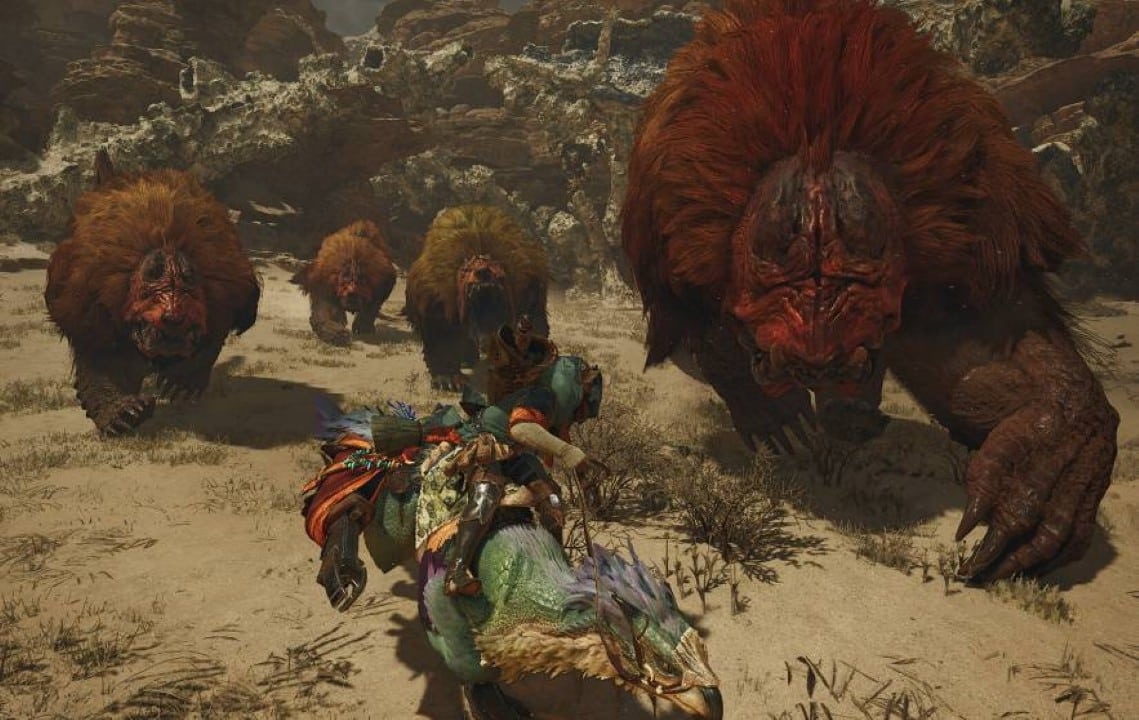
The leak details that the game’s architecture is being adapted to ensure near-instant loading times and efficient memory management. Isso is crucial for an open world game with the scale of Monster Hunter Wilds, where the transition between areas and the density of monsters on the screen are processor and graphics unit intensive. The Capcom strategy reinforces the historic partnership with Nintendo, seeking to deliver a premium experience even on a hybrid platform.
Experts point out that the use of RE Engine has been a differentiator for the company in recent years. The engine is known for its scalability, allowing games like Resident Evil Village and Street Fighter 6 to run on an impressive variety of configurations. The adaptation for the successor to Switch seems to be the next big test of this tool’s flexibility, promising visuals that, although adapted, maintain the artistic identity and mechanical complexity of the main version.
Optimization and loading technologies
One of the most discussed points in the leaked document is the implementation of a feature internally called “FastLoadMode”. Esta functionality would be specifically designed to minimize player wait time, possibly taking advantage of the read speed of the new storage types that Switch’s successor is expected to utilize. In hunting games, where the pace is dictated by continuous action and the exploration of vast environments, eliminating long loading screens is vital for immersion.
In addition to loading, the leak mentions aggressive graphical resource management techniques. The goal is to ensure that the console does not waste processing rendering elements that are not visible to the player or that are too far away to be clearly noticed. Essas techniques are essential for maintaining a stable frame rate, especially in moments of frantic combat against gigantic creatures, which are the franchise’s trademark.
Among the strategies cited for optimization, we highlight methods that alleviate the load on the graphics processing unit (GPU) without severely compromising the quality of the final image presented on the laptop screen or television:
- Implementation of advanced “Occlusion Culling”, a process that prevents the system from drawing objects, scenery or monsters that are blocked by terrain geometry or other visual elements, saving precious resources.
- Dynamic adjustment of LOD (Level of Detail), which changes the complexity of 3D models depending on the distance from the camera; Nearby objects are rendered in full detail, while distant elements use simplified models.
- Use of dynamic resolution, which adjusts the number of pixels on the screen in real time during very heavy scenes to avoid drops in frame rate, maintaining gameplay fluidity.
- Texture and shadow settings equivalent to the “Medium” profile of the PC version, representing a considerable improvement compared to “ports” that use low or minimum settings on current hardware.
Performance comparison and visual profile
The comparison with personal computer configurations is one of the aspects that attracted the most attention in the unofficial report. Enquanto many adaptations for portables target minimum settings, the leak suggests that the performance profile of the new Nintendo console would allow the game to be run with parameters close to the “Medium” of the PC. Isso would indicate a much higher processing capacity for textures, lighting and particle effects than what is seen in the original Nintendo Switch.
This rough parity with mid-range PCs suggests the new hardware will have enough RAM and bandwidth to handle high-quality assets. Para fans of the franchise, this means that Monster Hunter Wilds’s armor, monster scales, and detailed environments won’t suffer the severe visual degradation that often accompanies portable versions of “AAA” games. Global lighting and weather effects, which are central to the atmosphere of this new title, must be preserved.
Still, concessions are expected. The native resolution may be lower than that found on the PlayStation 5 or Xbox Series X, relying on upscaling technologies (resolution increase via software or AI) to deliver a sharp image on 4K screens. The focus of Capcom seems to be consistency: delivering a game that, visually, belongs to the new generation, but that works within the thermal and energy restrictions of a device that can be carried in a backpack.
History of success with Nintendo
The relationship between Capcom and Nintendo has been extremely fruitful, especially with regard to the Monster Hunter franchise. The release of Monster Hunter Rise, developed natively for the Switch using the RE Engine, was a technical milestone. The game proved that it was possible to deliver stunning visuals and fluid gameplay on hybrid hardware, serving as a basis for confidence in current rumors about its successor.
Monster Hunter Wilds represents the natural evolution of this trajectory. Se Rise was built with the limitations of Switch in mind, Wilds appears to be being adapted to explore the new freedoms of the upcoming console. Capcom has a history of being one of the first developers to make the most of new hardware, and the investment in specific optimization suggests that they see the Nintendo platform as a central pillar for the new title’s sales.
The community is now awaiting official confirmation from the companies. The existence of a new Nintendo console is one of the industry’s worst kept secrets, and technical leaks like this only increase anticipation for the formal announcement. Para to Capcom, ensuring your major release of the year runs well on the popular Nintendo platform is an essential business strategy for maximizing the game’s reach globally.
Impact on the notebook market
The ability to run a game of Monster Hunter Wilds magnitude at respectable settings could reset expectations for the portable console market. Até At the moment, devices like the Steam Deck and other handheld PCs have been leading the race in terms of raw power, but dedicated optimization of a closed console like the Nintendo often delivers surprising results with lower theoretical specs.
The success of this optimization may dictate the pace of support from other third-party developers. If Capcom can prove that it is viable to port new generation games to the successor of Switch without compromising the artistic vision, other companies such as Ubisoft, EA and Activision can follow suit, ensuring a robust library for the new device from its first years of life.
Finally, the culling technology and memory management cited in the leak demonstrate that software engineering remains as important as the raw power of the hardware. In a scenario where game development costs explode and the demand for realistic graphics increases, the ability to optimize codes for different architectures becomes the great differentiator for major Japanese producers.
Final keywords: RE Engine, graphics optimization, Nintendo Switch 2, Monster Hunter Wilds.
Long-tail keyword: performance leak Monster Hunter Wilds console Nintendo.