
Anbernic’s new portable console brings a retro look and plays PlayStation 2 games with high performance

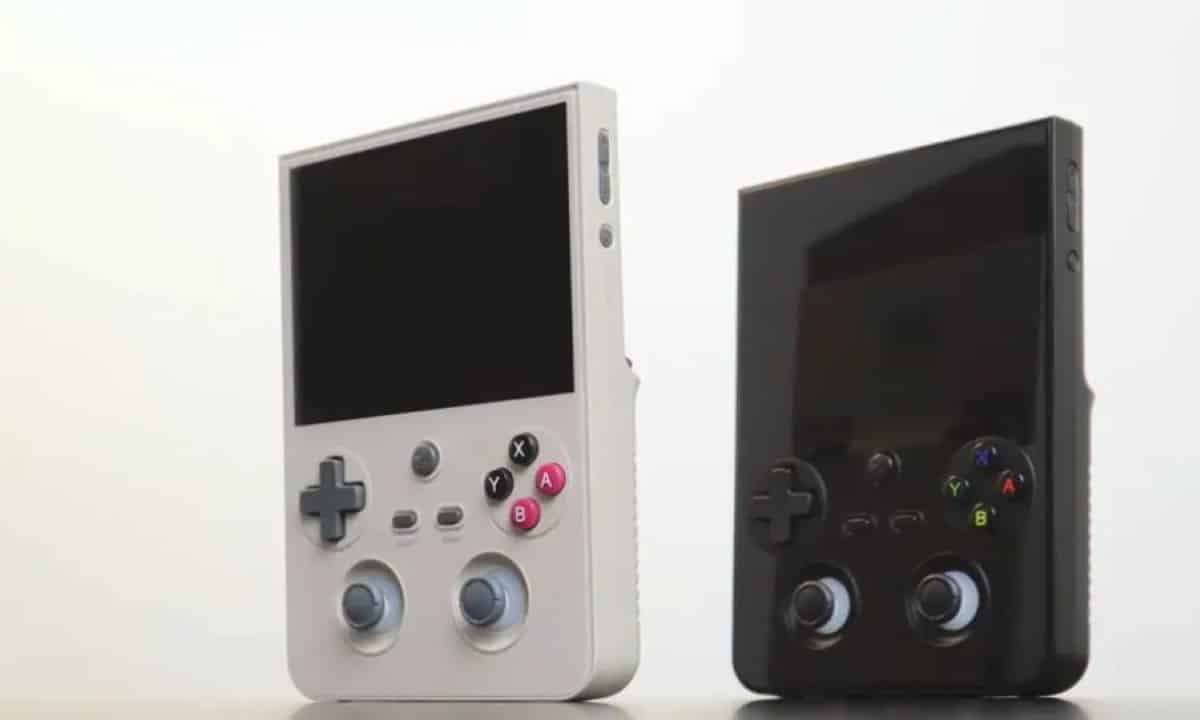
Anbernic officially expanded its hardware portfolio with the reveal of the RG477V. The new device bets on nostalgia by rescuing the vertical format recognized by notebooks from the 90s, but integrates modern components capable of running platforms from recent generations.
The announcement was made through a promotional video that detailed the aesthetic characteristics and technical specifications of the device. The manufacturer’s strategy aims to serve both collectors and players who seek extreme portability without giving up performance in complex three-dimensional titles.
Among the main differences confirmed for the new device, the following stand out:
- Vertical design inspired by the classic DMG with front glass finish;
- Robust processor capable of emulating systems such as Wii U and PlayStation 2;
- Active cooling system to maintain stability in demanding games.
Processing power and screen
The heart of the RG477V is the MediaTek Dimensity 8300 chipset, built on 4-nanometer lithography. Este octa-core processor reaches speeds of up to 3.35 GHz and works in conjunction with the Mali-G615 MC6 GPU, a set that promises to run heavy libraries, including Nintendo Switch games, with considerable fluidity and support for high frame rates.
For viewing, the laptop adopts a 4.7-inch screen with LTPS In-Cell technology and a resolution of 1280×960 pixels. The refresh rate of 120
The chosen operating system is Android 14, which guarantees native compatibility with a wide range of popular emulators, such as Dolphin and NetherSX2. RAM memory options vary between 8 GB and 12 GB in the LPDDR5 standard, while UFS internal storage offers 128 GB or 256 GB versions, expandable via microSD card up to 2 TB.
Construction and ergonomics
Unlike previous models that used metal casings, the new vertical design uses a reinforced plastic chassis. Essa engineering decision aims to reduce the final weight of the product and the production cost, while maintaining the robustness necessary for daily use, while the glass front panel covers the entire surface of the screen to protect against scratches.
The ergonomics were designed for prolonged sessions, with the inclusion of two analog levers with Hall Effect technology, which prevents physical wear and tear and the problem of “drift” over time. On the back, four additional buttons offer strategic shortcuts, essential for modern games that require more commands than older laptops offered.
Energy autonomy is supported by a 5300 mAh battery, designed to offer up to seven hours of continuous use depending on software requirements. Support for 27W fast charging via the USB-C port ensures the device returns quickly to activity, while an internal fan manages temperatures to prevent performance drops.
Launch and market
The device will reach the global market in two distinct aesthetic options: a black version with a matte finish and colored buttons, and a gray variant that directly pays homage to the portable consoles of the late 80s.
Pre-sales are expected to begin in December 2025, with the first units being shipped to consumers in the first quarter of 2026. The suggested price should be around US$229 for the entry-level model, positioning it competitively against direct competitors in the segment of handhelds based on Android.
Industry analysts point out that the launch reinforces the brand’s leadership in the emulation niche, meeting a growing demand for powerful vertical devices. The expectation is that the model will compete for space directly with alternatives from Ayaneo and Retroid, focusing on the balance between cost and processing capacity.



