
Cosmic waterfalls on space-time cliffs reveal black hole glow

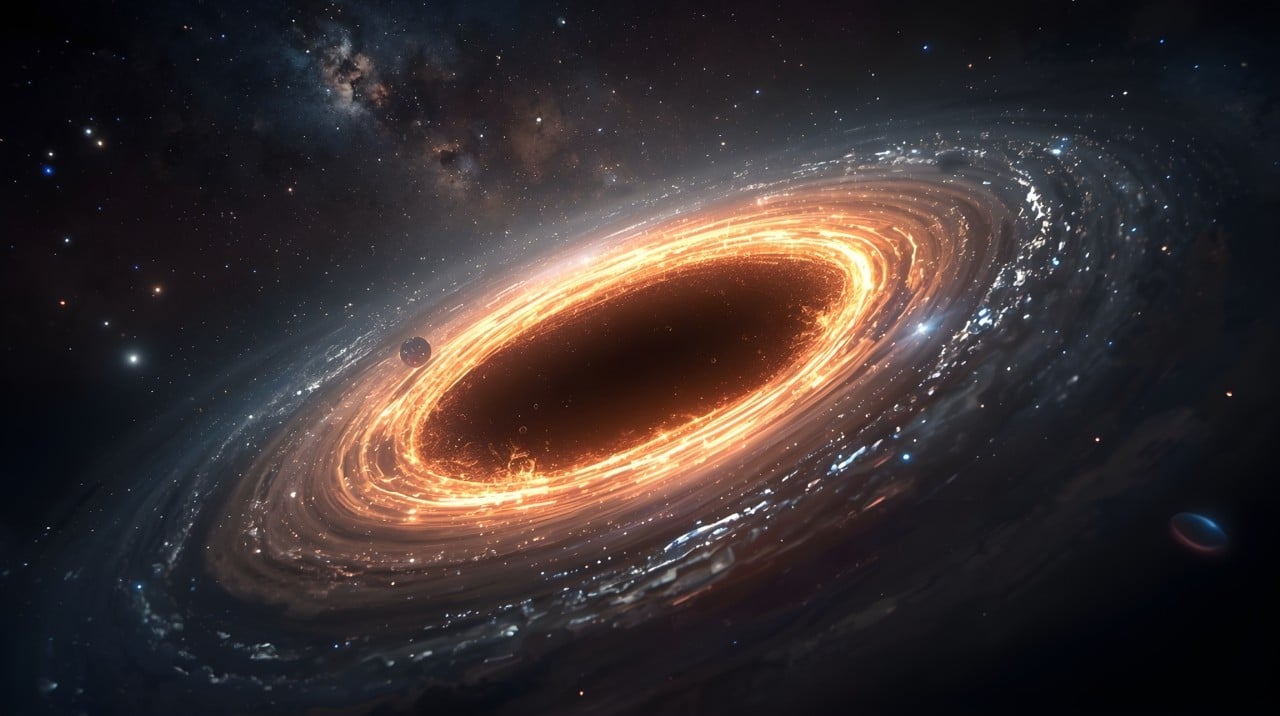
Astrophysicist Avi Loeb published a recent essay that compares the fall of matter into black holes to the dynamics of terrestrial waterfalls. Nessa analogy, extreme gravity bends space-time and accelerates gas to speeds close to that of light, generating intense luminosity observed in distant quasars.
Telescópio Espacial James Webb identified supermassive black holes at remote times in the universe. Esses objects emerged when the cosmos was less than a billion years old, defying traditional models of cosmic formation.
The surrounding matter falls toward the event horizon and heats up through friction, emitting radiation that outshines entire galaxies. Essa active phase lasts millions of years and expels gas, limiting the growth of the black hole.
James Webb Space Telescope sees lonely supermassive black hole-powered quasars in the early universe | Space
Recent observations confirm this dynamic in primordial quasars. The process highlights the irony that the darkest objects produce the brightest known light sources.
Analogy between gravity and terrestrial waterfalls
The Relatividade Geral of Einstein describes gravity as the curvature of space-time. Perto of black holes, this curvature creates deep pits where matter accelerates intensely.
Acceleration generates extreme heating and emits radiation at multiple wavelengths. Quasares appear as bright spots that dominate the brightness of their host galaxies.
A recent example involves the quasar CAPERS-LRD-z9, detected by James Webb at redshift 9.288. Esse object has a mass equivalent to 40 million suns and has existed since 500 million years after Big Bang.
The galactic gas falls like water over a cliff, glowing as it heats up. Essa configuration explains the luminosity observed at extreme cosmological distances.
Active phases and feedback in quasars
The quasar phase in galaxies lasts between 10 and 100 million years. Nesse period, the luminosity heats the surrounding gas and expels it from the gravity well.
This feedback mechanism regulates the growth of supermassive black holes. The correlation between the mass of the black hole and the host galaxy reflects this balance.
- Expulsion of gas interrupts continued accretion.
- Mass limit depends on the depth of the gravity well.
- Feedback maintains stability on galactic scales.
- Observations of Webb reveal isolated quasars in the early universe.
These solitary quasars have reduced gas reservoirs. The dynamics suggest accelerated growth in the initial conditions of the cosmos.
Formation of stellar-mass black holes
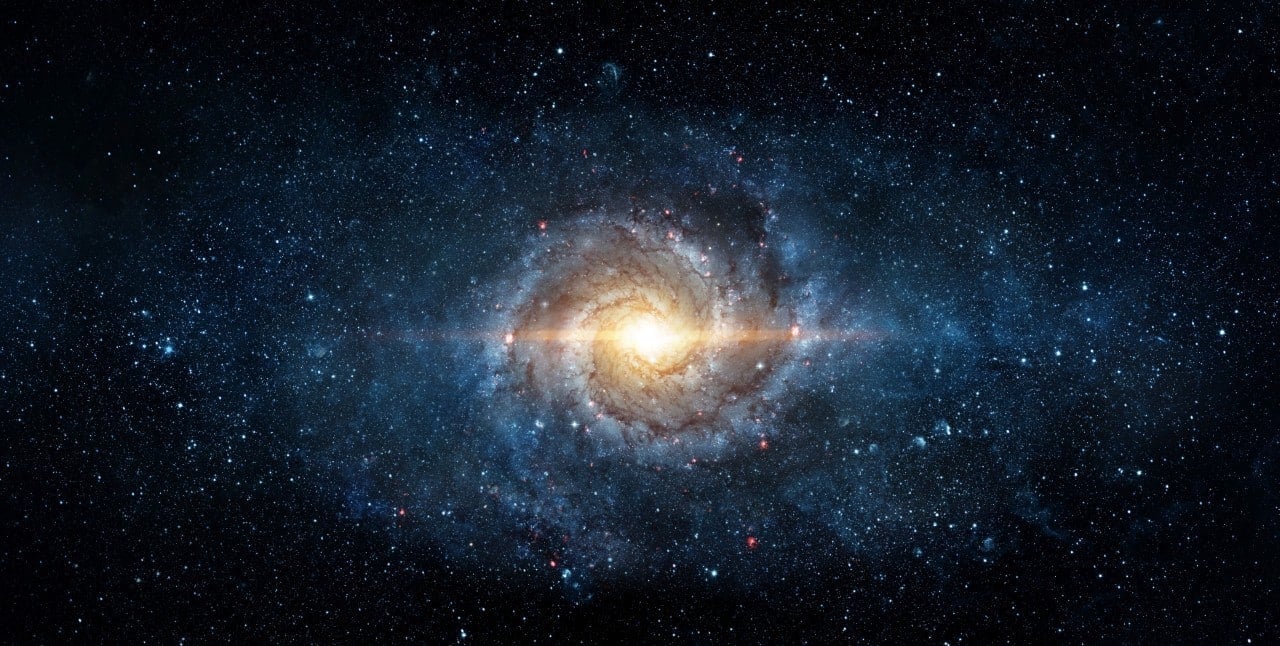
Stellar black holes arise from the collapse of massive stars after they run out of nuclear fuel. The loss of internal pressure allows gravity to quickly take over.
A star in the Andrômeda galaxy disappeared without a visible explosion, indicating direct collapse into a black hole. Observações recent records of the event in detail.
The process consumes mass equivalent to one solar per second in extreme cases. Jatos opposites can form and channel matter into collimated flows.
Internal collisions in the jets generate observable gamma-ray bursts. The afterglow persists at longer wavelengths after interaction with the interstellar medium.
Gamma-ray bursts and collimated jets
Long-lasting gamma-ray bursts are associated with the birth of stellar black holes. Jatos pierce the progenitor star’s envelope.
Observers aligned with the axis detect intense, high-energy flashes. The subsequent deceleration produces emissions in varying spectrums.
These events occur at redshifts similar to those of ancient quasars. The connection reinforces the analogy of cosmic waterfalls on different scales.
- Jets channel falling matter.
- Internal collisions emit gamma rays.
- Residual shine appears after environmental impact.
- Events observed at cosmological distances.
The immense gravitational cascade results in extreme light sources. Buracos blacks convert matter into efficient radiation near the event horizon.
Recent discoveries of Telescópio James Webb
James Webb has detected multiple supermassive black holes in the early universe. Esses objects grow rapidly in dense gas environments.
Quasars hidden by dust reveal larger-than-expected population. Observações indicate accelerated formation in the first billion cosmic years.
Black holes with high masses appear in small galaxies. The phenomenon challenges conventional theories of galactic evolution.
Dados espectroscópicos confirmam ventos poderosos em quasares antigos. Esses ventos regulam o crescimento e influenciam a formação estelar.
Artistic illustrations and interdisciplinary collaboration
Watercolors by artist Greg Wyatt depict heavenly waterfalls based on Loeb’s essay. The works combine science and art to visualize abstract concepts.
Quotes from classical philosophers accompany the images. The collaboration explores interfaces between astrophysics and artistic expression. Representações visuals facilitate understanding of extreme processes. The analogy gains an aesthetic dimension when portraying gravitational falls.
Cosmic regulation by gravitational feedback
Feedback in quasars limits the indefinite growth of black holes. Gas expulsion creates self-imposed deprivation after phases of intense accretion.
The black hole mass-galaxy mass correlation reflects this process. Observações of Webb provide evidence in remote times.
Supermassive black holes influence large-scale galactic evolution. Ventos and jets redistribute matter in the intergalactic medium. The resulting balance shapes cosmic structures observed today. Dynamics explains the distribution of masses in central black holes.
Observations on neighboring galaxies
The Andrômeda galaxy offers a nearby laboratory for studying stellar collapses. The disappearance of a massive star suggests the silent formation of a black hole.
Absence of supernova indicates direct collapse. Continuous Monitoramento records residual brightness variations.
These events complement distant observations of gamma-ray bursts. The diversity of phenomena reflects varying initial conditions. Estudos in nearby galaxies validate theoretical models. Dados locations calibrate interpretations of remote cosmological signals.
Implications for understanding the primordial universe
Discoveries from James Webb expand knowledge about early structure formation. Buracos supermassive blacks emerge earlier than expected.
The presence of luminous quasars indicates efficient accretion in dense environments. Modelos adjust to incorporate rapid growth. The analogy of cosmic waterfalls unifies processes on stellar and galactic scales. Quedas extreme gravitational forces generate observable phenomena throughout the cosmos.
Future research will delve deeper into connections between feedback and cosmic evolution. Observações will continue to reveal details of the initial universe.



