UEFA draws and places Germany with the Netherlands, Serbia and Greece in League A of the 2026/27 Nations League

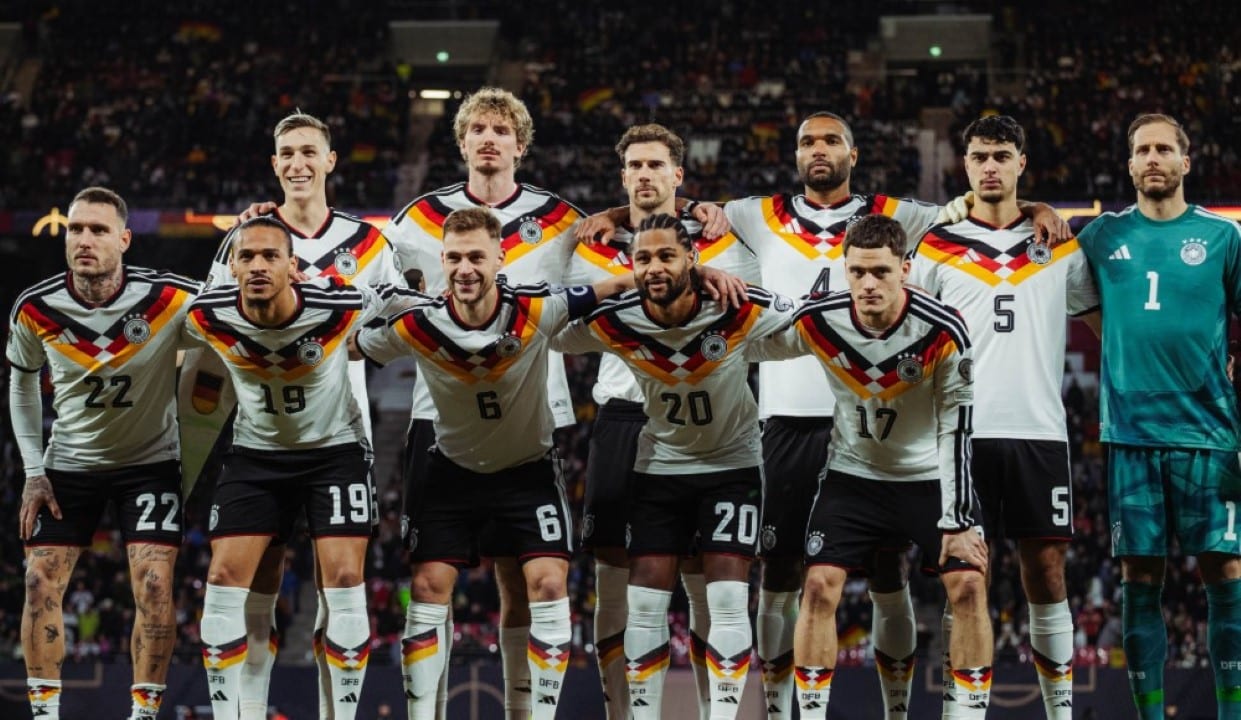
UEFA held the draw for the league phase of Nations League 2026/27 this Thursday, February 12, 2026, at Bruxelas. The German team was placed in Grupo A2 of Liga A alongside Países Baixos, Sérvia and Grécia. The event defined the clashes for the fifth edition of the European national team competition.
The group stage games will take place in six rounds concentrated between September and November 2026. The top two from each group of Liga A will advance to the quarterfinals, scheduled for March 2027. Alemanha, positioned in Pote 1, avoided opponents such as Portugal, Espanha and
The competition maintains the format consolidated in previous editions, with promotion and relegation between the leagues. The results also influence places for the Euro 2028 qualifiers.
Competition format
Nations League 2026/27 divides the 55 UEFA teams into four leagues according to the ranking. Liga A brings together the 16 best positioned teams, divided into four groups of four teams each. The group winners compete in the quarterfinals in round-trip games.
Third-placed teams face relegation playoffs against teams from Liga B. Já last-placed teams fall directly to the lower division. Essa structure guarantees balanced confrontations and alternative paths to bigger competitions.
The round dates were confirmed by UEFA to optimize the international calendar. The entity seeks to reduce the number of friendlies and increase competitiveness between the teams.
League 🅰️
— UEFA EURO (@UEFAEURO)February 12, 2026
Which fixture excites you the most? 🤔#NationsLeague pic.twitter.com/6bIGFOX4CA
Complete groups of Liga A
The draw produced four groups in Liga A with varying pot combinations. The Alemanha is part of the Grupo A2, considered balanced by experts.
- Group A1: França, Itália, Bélgica and Turquia
- Group A2: Alemanha, Países Baixos, Sérvia and Grécia
- Group A3: Espanha, Croácia, Inglaterra and República Tcheca
- Group A4: Portugal, Dinamarca, Noruega and País of Gales
These clashes bring together recent champions and rising teams. The distribution avoids excessive imbalances in the initial groups.
Round calendar
The group stage concentrates six games per team across three international windows. The dates follow the standard adopted in previous editions to minimize conflicts.
The first round takes place between September 24th and 26th, 2026. The second window takes place from September 27th to 29th, followed by the third from September 30th to October 3rd. The fourth round is scheduled for October 4th to 6th, 2026.
The last two windows will be in November. The fifth round runs from November 12th to 14th, and the sixth from November 15th to 17th, 2026. Cada team plays three matches at home and three away.
Alemanha’s opponents
Countries Baixos arrive as runners-up in the previous edition and maintain a solid base. The orange team is looking for its first title in the competition after good recent campaigns.
Serbia has a talented generation with players at top European clubs. The Balkan team rose to Liga A and wants to consolidate its position among the elites.
Greece returns to the top division after good performance in the lower leagues. The Hellenic team relies on tactical organization to surprise the favorites.
Context of the draw
The draw followed pot criteria based on the updated UEFA ranking. Alemanha occupied Pote 1 alongside Portugal, Espanha and França, guaranteeing group leadership.
Countries Baixos came from Pote 2, Sérvia from Pote 3 and Grécia from Pote 4.
UEFA held the event on Bruxelas with representatives from the federations. The procedure lasted around 40 minutes and defined all groups in leagues A, B, C and D.
German history in the competition
Germany has participated in all editions of the Nations League since 2018. The team reached the Final Four in 2025, but lost to the Portugal in the final.
Coach Julian Nagelsmann has led the team since 2023 and is looking for its first title in the competition. The German team alternates good times with changes to the squad.
The Nations League serves as preparation for larger tournaments. The results influence seeding in the qualifiers and offer an alternative route to continental competitions.
Other leagues and movement
Ligas B, C and D also had groups defined in the same draw. Promoções and demotions from the previous edition determined the current compositions.
Teams from Liga B compete to rise to the elite, while those from Liga C avoid falling to D. The system maintains competitiveness at all UEFA levels.
The competition distributes financial prizes depending on the league and performance. The values encourage active participation from all teams involved.
Nations League has established itself on the international calendar since its creation. UEFA adjusts details edition by edition to improve format and engagement.