
Vladyslav Heraskevych loses Olympic spot due to helmet protest over Ukraine conflict

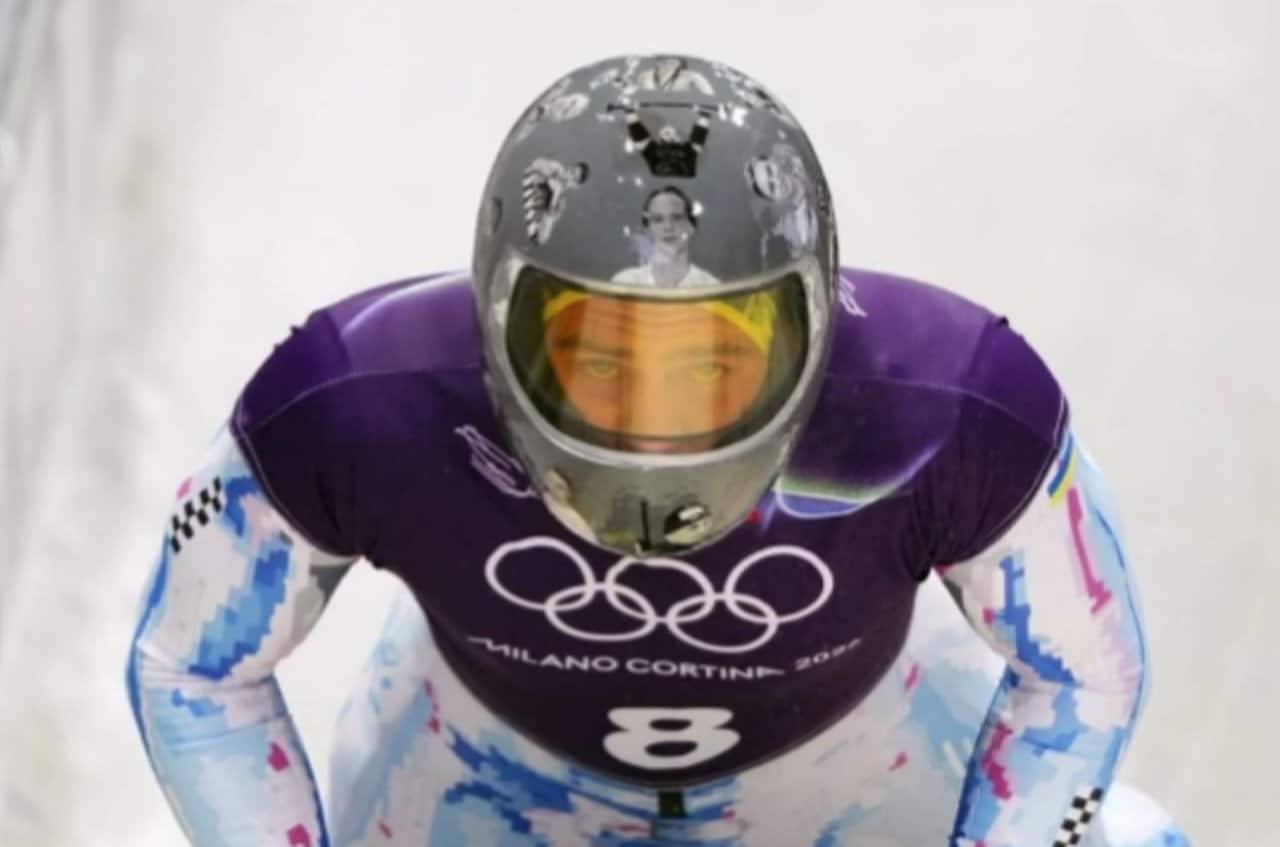
The flag bearer of the Ukrainian delegation, Vladyslav Heraskevych, was officially disqualified from the Jogos Olímpicos of Inverno of Milão-Cortina 2026 this Thursday morning. The skeleton competitor was prevented from participating in official competitions after insisting on wearing a helmet that displays photographs of athletes and friends killed during the Russian invasion of Ukrainian territory. The decision came after a series of negotiation attempts between the athlete’s technical team and representatives of the Comitê Olímpico Internacional (IOC), who alleged a violation of the entity’s political neutrality guidelines.
The organization allowed the accessory to be used only during training sessions, which do not have official television broadcast or large-scale media coverage. However, for the competitive descents scheduled for this week, the IOC maintained the total ban on any visual manifestation on the athlete’s protective equipment. Sem a consensus between the parties, the athlete chose to maintain the tribute to his compatriots, which resulted in the application of the maximum sanction provided for in the sporting regulations in force for the event.
The circumstances surrounding Heraskevych’s departure were marked by strong statements on social media and in interviews in the Milão mixed zone. The competitor stated that he did not deliberately seek an institutional confrontation, but highlighted that the interpretation of the rules by the highest entity in world sport is discriminatory given the situation in his country. Segundo the athlete, the price of the dignity and memory of those who lost their lives in the armed conflict surpasses the search for medals or podiums in the current edition of the Jogos of Inverno.
- The competitor had already held demonstrations in Pequim 2022.
- Among those honored were skater Dmytro Sharpar and biathlete Yevhen Malyshev.
- The appeal presented by the Ukrainian federation was denied in less than 24 hours.
- The IOC president, Kirsty Coventry, communicated the decision personally to the athlete.
Tensions between Ukrainian delegation and committee neutrality standards
The declassification of The Olympic administration based the veto on the Carta Olímpica article that prohibits political, religious or racial demonstrations or propaganda in any official location or installation of the Jogos. Para international leaders, the photos on the helmet constitute a political message that violates the exemption required of all participants in the global movement.
The Ukrainian’s defense argued that the helmet did not carry political slogans or attack phrases, being exclusively a memorial to athletes who were his companions on his sporting journey. Heraskevych emphasized that some of the faces printed on the equipment belonged to close friends with whom he shared training and international competitions before the war escalated. Federação Ucraniana of Esportes of
Decisive meeting and impact on skeleton competition
Kirsty Coventry, president of the IOC, met with Heraskevych early this morning to seal the athlete’s fate in the competition. In a visibly emotional statement, the leader stated that the message of remembrance is powerful and that no one disagrees with the Ukrainian people’s feeling of mourning. However, she reiterated that the rules need to be applied uniformly to all national committees, regardless of the severity of the geopolitical contexts external to the sporting event.
The meeting took place near the alpine ski slope, moments before the athlete began his final preparation for the descent that could give him a historic podium. Heraskevych had competitive times in free practice and was considered one of the favorites to be among the top five in the men’s category. With his forced departure, the race followed the original schedule without the presence of one of its main technical protagonists, changing the list of favorites in the sport.
The athlete’s frustration was shared by his father and coach, who followed the entire process of dismissing the appeal and notification of his departure. Ambos highlighted that the physical preparation for Milão was the most intense of Vladyslav’s career, focused precisely on bringing visibility to the Ukrainian cause through sporting performance. The technical team regretted that the years-long effort was interrupted by a disagreement over a symbol of personal and collective mourning.
History of demonstrations and the symbolism of the flag bearer
This is not the first time that Heraskevych has used the Olympic platform to express his dissatisfaction with the war in Leste Europeu. Nos Jogos of The evolution of punishment in Milão indicates a tightening of the committee’s policies regarding visible protests during high-rated live broadcasts.
As the flag bearer of Ucrânia at the opening ceremony, the visibility of Vladyslav was one of the pillars of the country’s communication strategy in these Jogos of Inverno. The use of the memory helmet was seen by the delegation as an act of peaceful resistance and a way of taking dead athletes into the ice arena. The veto frustrated not only the competitor, but the entire Ukrainian sports community that had hoped to see the accessory crossing the finish line on a global network.
Official positions and repercussions on the international scene
Comitê Olímpico Internacional reinforced, in a subsequent note, that it offered alternatives for the athlete to express his feelings outside the competitive playing field. Entre the suggestions were statements at press conferences, posts on authorized digital platforms and participation in hospitality programs. Nenhuma of these options was accepted by Heraskevych, who considered the use of a helmet during the descent to be the only truly significant gesture for his cause.
The case immediately had repercussions among other delegations present in the Olympic village, generating debates about the limits of athletes’ freedom of expression in times of humanitarian crisis. Representantes of European committees showed solidarity with the Ukrainian, although they highlighted the need to follow established norms to avoid using sport as a propaganda tool. The debate on the modernization of Carta Olímpica should gain strength after the end of this event at Itália.
Technical details and safety in skeleton equipment
Skeleton is one of the most dangerous disciplines in the Jogos of Inverno, where the athlete descends the ice tunnel face down at speeds that can exceed 130 km/h. Because of this risk, helmets undergo rigorous inspections that analyze not only structural resistance, but also any element that could interfere with aerodynamics or identification. The IOC also uses these technical inspections to verify the commercial and political compliance of all competitors’ personal safety items.
The refusal to change the helmet shell or cover the images with tape was the breaking point that prevented authorization for Vladyslav to start. Técnicos from the organization even suggested painting neutral colors over the photos, but the athlete considered the proposal disrespectful to the memory of those honored. The technical rigidity of the skeleton did not allow room for last-minute adaptations that would not compromise the entity’s physical integrity or image rules.
Consequences for the medal table and the athlete’s future
The absence of Vladyslav Heraskevych takes away from Ucrânia one of its real chances of winning a gold medal in this edition of the Jogos of The athlete was coming off a string of impressive results on the Copa and Mundo circuit and was deeply familiar with the layout of the Italian track. Sem its main exponent in skeleton, the delegation now focuses its attention on other disciplines, such as biathlon and freestyle skiing, to try to climb the podium.
As for Heraskevych’s professional future, there is still no confirmation as to whether the athlete will suffer additional suspensions in competitions organized by the sport’s international federation. Sua’s firm stance in Ele remains at Itália to support the rest of the delegation, but will not be allowed to access the technical areas of the remaining competitions.
The photographs of Dmytro Sharpar and Yevhen Malyshev, which the athlete wanted to display, continue to be shared widely by Ukrainian media as a form of protest against exclusion. The episode serves as a reminder of the complex relationships between the neutrality required by elite sport and the reality experienced by athletes coming from active war zones. The early end to the Vladyslav Olympic journey will be remembered as one of the most tense and divisive moments of the Jogos of Inverno of 2026.




