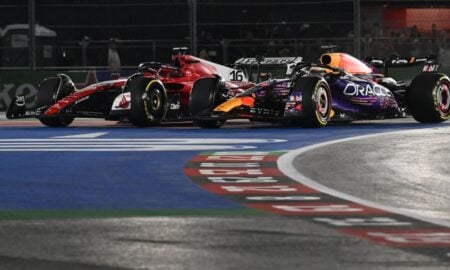
Antonelli overtakes Russell and leads the last day of Formula 1 testing in Bahrain with Mercedes


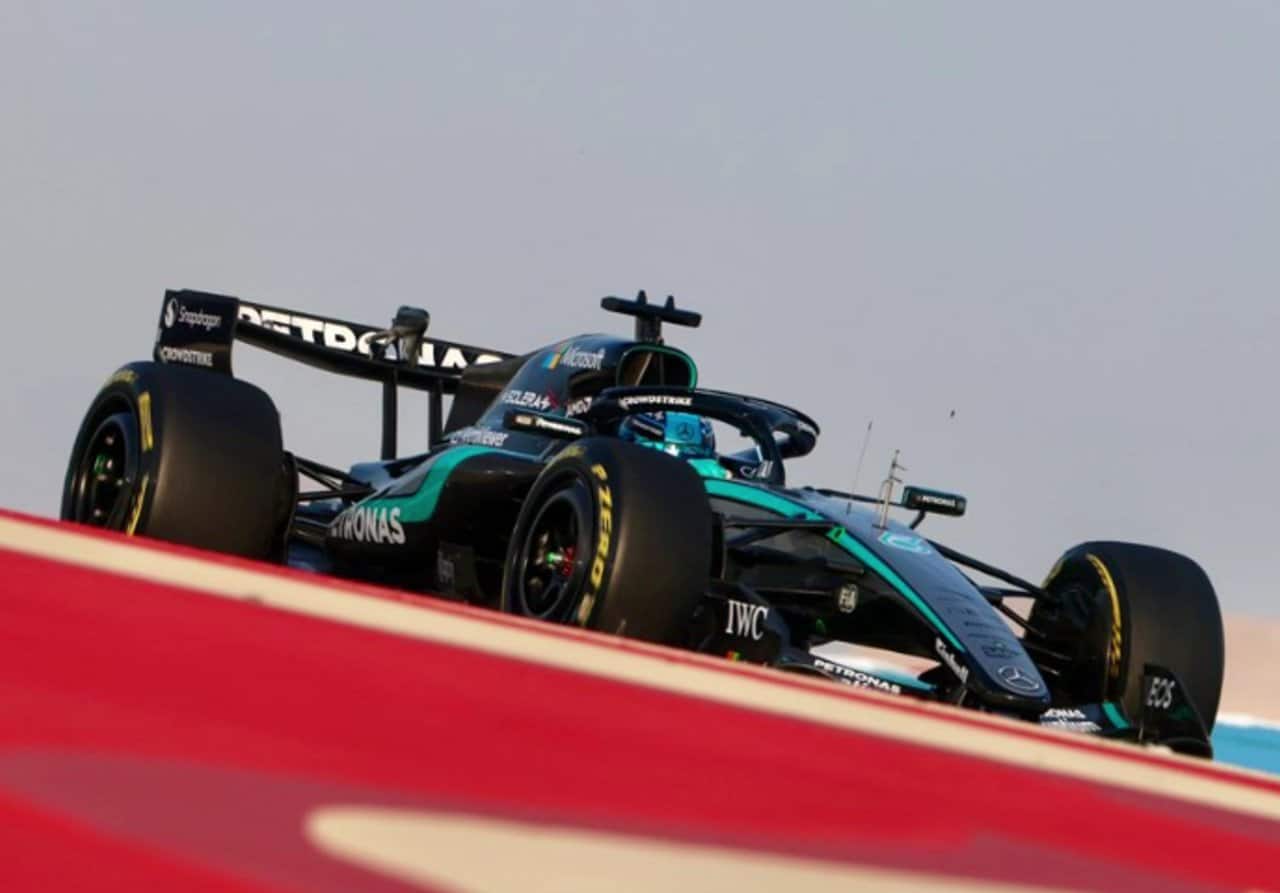
Andrea The young Italian driver, who took command of the W17 from Mercedes in the afternoon, surpassed his teammate George Russell with a time of 1min33s669, setting the best time of the entire week of activities in the desert. The performance reaffirms the potential of Lewis Hamilton’s replacement, which saw its last test session before Ferrari’s official debut interrupted by mechanical problems in the final minutes.
The final session was marked by technical dominance from Mercedes, which managed to place its two drivers in the top positions on the timesheets. Russell, who had led part of the morning, finished in second place with 1min33s918, just 0s249 behind the time set by Antonelli. The German team’s performance suggests a leap in competitiveness compared to the previous year, although the teams’ focus during the pre-season varies between qualifying simulations and race pace with full tanks.
- Antonelli topped the table with 1min33s669 in 56 laps completed.
- Russell secured the Mercedes double with the second fastest time of the day.
- Hamilton faced mechanical problems and caused the only red flag of the afternoon.
- Oscar Piastri was the most productive driver, completing 164 laps with McLaren.
- Gabriel Bortoleto ended his participation in 15th position with the car from Audi.
The day was also important for the Brazilian Gabriel Bortoleto, who carried out his battery of tests in the first half of the day aboard the Audi single-seater. The young national talent focused on collecting telemetry data and adapting to the new team’s systems, completing his best time of 1min37s536 after 60 laps covered. In the afternoon, he gave up the cockpit to the experienced Nico Hulkenberg, who managed to lower the German team’s time to 1min36s271, ending Friday in tenth position overall.
Performance of Mercedes and the challenges of Hamilton
Mercedes demonstrated a consistency that caught the attention of rivals throughout the schedule of activities in Sakhir. Antonelli used softer compounds for its fast lap, but the car’s balance in twisty sections indicated that the team had found solutions to the rear instability issues that had plagued the previous design. The team’s track engineer stressed that the focus was on aerodynamic validation, but the Italian’s pure speed brought renewed optimism to the Brackley garage.
Lewis Hamilton, now wearing the colors of Ferrari, had a bittersweet end to testing at Bahrein. Apesar After having recorded the third best time of the day with 1min34s209, the seven-time world champion had to park his car in the escape area in the final moments of the session due to an electronic failure. The incident caused the only red flag of the afternoon period, preventing other drivers from carrying out their final qualifying simulation attempts under the circuit’s artificial lights.
Ferrari, however, did not seem alarmed by the interruption suffered by Hamilton, as the English driver accumulated 148 laps throughout the day. Esse mileage volume is essential for the veteran to feel comfortable with the ergonomics and power delivery systems of the Italian power unit. The Maranello team prioritized long stints, evaluating the degradation of the Pirelli tires in track conditions that simulate the official Grande Prêmio season opening time.
Oscar Piastri marathon and McLaren stability
Oscar Piastri was the highlight in terms of durability and physical resistance during the completion of work in the desert. The Australian McLaren driver covered the equivalent of almost three Grandes Prêmios in a single day, totaling 164 laps without presenting any relevant technical failure in the car. Sua best time of 1min34s549 placed him in fourth position, showing that McLaren has a reliable team ready to fight for the front rows on the starting grid.
The Woking team’s strategy was different from that of Mercedes, avoiding seeking extreme lap times when the track was at its lowest temperature. Piastri focused on testing different suspension settings and engine mappings to understand the car’s behavior across various operating windows. The data collected by McLaren is considered the most robust in the paddock, given the consistency of the lap times recorded by the Australian during his streaks of 15 to 20 laps in a row.
Red Bull keeps a low profile with Verstappen and Hadjar
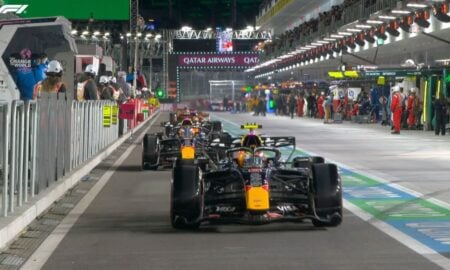
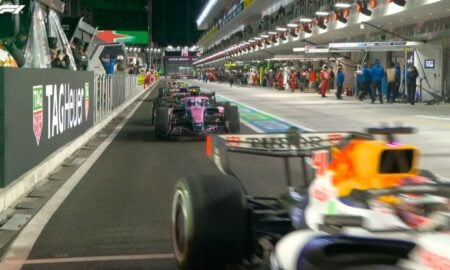
Red Bull Racing opted for a more conservative profile on the last day of testing, finishing with Max Verstappen in fifth place. The current world champion clocked 1:35.341, focusing almost entirely on racing simulations on hard compound tires. The Austrian team seems to be hiding its game, as Verstappen did not try to lower its times even when the track offered better grip conditions in the late afternoon, preferring to monitor the cooling of the brakes and the efficiency of the DRS.
Isack Hadjar, who also tested for the Red Bull main team, followed a similar program to that of The technical team led by Adrian Newey expressed satisfaction with the correlation of data between the wind tunnel and the track, indicating that the upgrades carried over to the The reliability of the Honda-RBPT engine was also a positive point, allowing the pair to complete a combined 120 laps without mechanical scares.
Gabriel Bortoleto premieres on Audi at Bahrein
The Brazilian Gabriel Bortoleto concluded his first full pre-season as the starting driver of the Audi with a result considered positive by the team directors. Embora ended the day in 15th position, the pilot’s focus was on adapting to the starting procedures and managing the hybrid system’s energy. Bortoleto highlighted that rapport with engineers advanced quickly, which is crucial for a team that is still adjusting its internal processes at the highest level.
Nico Hulkenberg, Bortoleto’s teammate, brought a different perspective when he took over the car in the afternoon and tested components aimed at aerodynamic efficiency at high speed. The German veteran managed to extract a little more performance from the chassis, but recognized that the Audi still has work to do to catch up with the consolidated midfield. The difference of just over a second between Hulkenberg and the leaders shows that the race in the middle of the grid will be extremely tight from the first race.
Evolution of the intermediate teams and surprises of the day
Haas presented a solid performance with Esteban Ocon, who secured the seventh time of the day with a time of 1min35s753. The American team appears to have overcome the chronic tire overheating problems that plagued its previous campaigns, showing a more stable race pace during testing. Oliver Bearman, the team’s other driver, also had a productive day and finished ninth, reinforcing that the Haas car has a competitive basis to seek points regularly.
Franco Colapinto, racing for Alpine, surprised by setting the eighth best time, beating theoretically faster cars. The Argentine driver completed 146 laps, demonstrating excellent physical shape and helping the French team to better understand the weight problems that affected the car at the start of testing. The Alpine is looking to recover after a year of transition and the data collected by Colapinto suggests that the new aerodynamic concept is generating the load necessary to stabilize the car in high-speed corners.
Williams and Racing Bulls focus on reliability
Williams split the day between Alexander Albon and Carlos Sainz, who finished 11th and 13th, respectively. The British team prioritized testing cooling systems and new gearbox components, avoiding laps launched with little fuel. Albon completed 76 laps and Sainz another 68, ensuring that the team has enough information to finalize the setup of the car for the upcoming official competition weekend at the same circuit.
Liam Lawson, representing Racing Bulls, was 12th fastest and focused on durability tests, reaching the mark of 126 laps covered. The Red Bull satellite team showed a very balanced car mechanically, although it still lacks a bit of top speed compared to the McLaren and the Ferrari. Lawson worked intensively on pit stop simulations and radio procedures, fundamental elements to minimize operational errors during the real races of the season.
Cadillac situation and difficulties at the bottom of the grid
Cadillac, newcomer to the grid, faced a challenging day with Sergio Pérez and Valtteri Bottas occupying the last relevant time positions. Pérez came in 14th place, facing difficulties with the car’s braking balance, while Bottas finished 17th after a hydraulic leak limited his track time to just 37 laps. The American team recognizes that the learning curve is steep, but emphasizes that the initial objective is to finish the races and collect as much experience as possible.
Lance Stroll, with the Aston Martin, also had a low-key Friday, finishing in 16th place after 74 laps of technical work focused on aerodynamic sensors. The Silverstone team appears to have adopted a gradual development approach, in no rush to post competitive times on the leaderboard. The end of testing on the Bahrein leaves an open scenario for the opening of the championship, with the Mercedes showing strength, the Ferrari fast but with reliability warnings and the Red Bull maintaining the mystery about its true potential.