
Apple allows video playback on the dashboard of parked vehicles with new system update


The convergence between mobile devices and the automotive industry has reached a new milestone with the recent software update that transforms the role of center screens in modern vehicles. The technology giant has implemented a significant change to its mirroring protocols, allowing drivers and passengers to consume video content directly on the car dashboard for the first time. Esta functionality, awaited for years, arrives with strict safety restrictions, working exclusively when the car is properly parked, changing the waiting dynamics inside the vehicles.
This change represents a paradigm shift in a guideline that has been in force for more than a decade, where central consoles were strictly limited to audio and navigation to avoid distractions. With the arrival of iOS 26, the operating system begins to communicate more deeply with the vehicle’s sensors, identifying the state of the transmission and the activation of the parking brake to release the visual layer of entertainment. The measure aims to meet the growing demand for multimedia features in a scenario where cars are becoming extensions of living rooms.
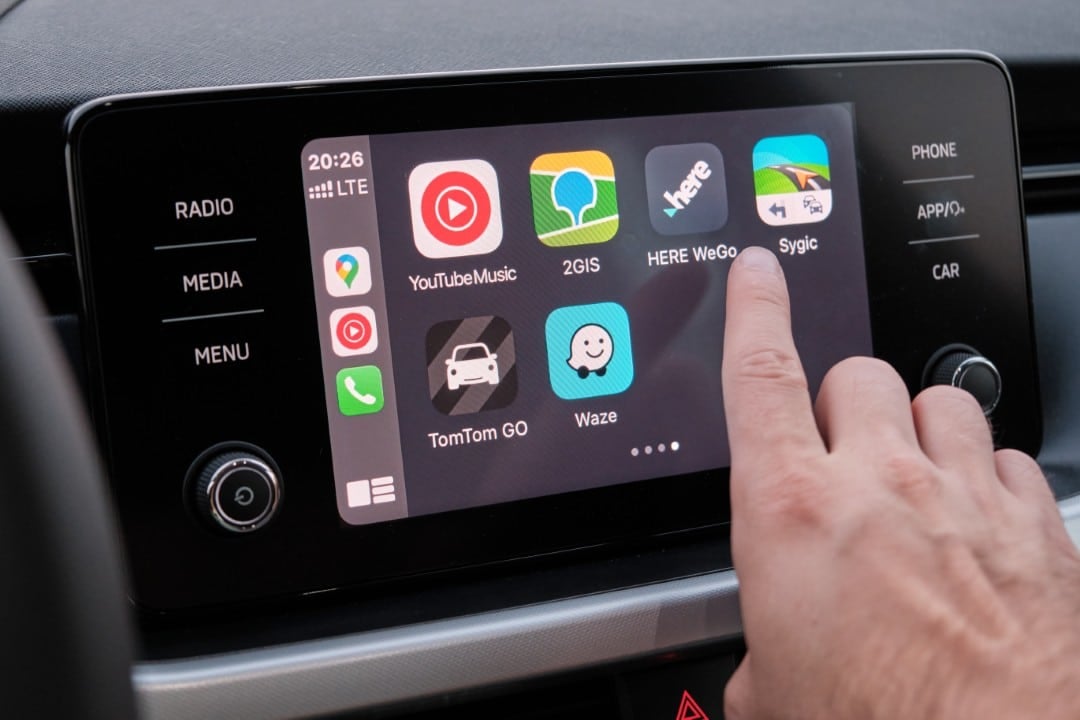
The integration uses advanced wireless data transmission protocols, such as AirPlay, to ensure that image quality is maintained without latency, taking advantage of the high-resolution screens that equip the latest releases. The system was designed to be foolproof: the moment the sensors detect any movement of the wheels or the gear shift to “Drive”, the video feed is instantly cut off, leaving only the audio active in the speakers, ensuring that the driver’s attention is immediately returned to the road.
Automotive sector experts point out that this update reflects the change in user behavior, driven mainly by the electrification of the global fleet. With the increase in the number of electric vehicles, drivers are spending more time at charging stations, creating windows of idle time that can now be filled with films, series or informative videos directly on the car’s screen, without the need to hold a tablet or smartphone.
Deep integration with sensors and active safety
To enable this functionality without compromising road safety, collaborative development between software engineers and car manufacturers was necessary. The system does not rely solely on GPS to know if the car is stopped, as this could generate false positives in traffic jams. Validation occurs through a direct reading of the vehicle’s CAN network (Controller Area Network), electronically confirming that the car is in safe parking mode.
The technology requires double authentication between the mobile device and the vehicle’s on-board computer. Quando the user tries to start a video, the car’s operating system sends a security token confirming the “Park” status. Sem this digital confirmation, the video application on the cell phone may even start playback, but the car screen will remain displaying only the media controls and the album or video cover, blocking the moving image.
In addition to physical security, the update brought improvements to privacy and notification management during playback. Enquanto video is being displayed, message and call alerts are minimized or silenced so as not to interrupt the immersive experience, unless they are classified as urgent or emergency. Isso demonstrates a refinement of the user interface, designed specifically for the stationary environment.
The tests carried out demonstrated that the transition between video mode and driving mode occurs in milliseconds. Essa agilidade é fundamental para cumprir as normas regulatórias internacionais de trânsito, que proíbem terminantemente a exibição de entretenimento visual ao alcance da visão do motorista com o veículo em movimento. The technical solution found satisfies both consumers’ desire for more technology and the demands of regulatory bodies.
The impact on the market and partner manufacturers
Big names in the automobile industry, such as Honda, Toyota, Ford and BMW, had already been integrating hardware capable of supporting these functionalities, but were running into software limitations imposed by technology companies. With the release of the resource, these automakers gain a new selling point, especially for their models equipped with panoramic screens and high-fidelity sound systems, which can now be used to their fullest.
The user experience inside the cabin becomes an even stronger competitive differentiator. In luxury models, where the rear screens already allow video consumption, the new feature integrates the driver and front passenger into the entertainment ecosystem, useful in situations such as waiting for children to leave school or waiting for someone in a parking lot. The car stops being just a transport machine and becomes a hub for digital services.
The movement also pushes for the development of connectivity infrastructure. Para supports high-definition video streaming on panels, the demand for 5G connections embedded in vehicles or the use of robust mobile hotspots is likely to grow. Automakers are responding to this by installing faster modems and more powerful antennas to ensure the streaming experience is uninterrupted.
Market analysts predict that this functionality will open doors to new commercial partnerships. Serviços streaming services may begin offering apps native to or optimized for automotive dashboard screen ratios, creating a new category of “on-the-go” media consumption. The iOS 26 update, therefore, is not just technical, but a catalyst for new business models within the cabin.
Regulatory challenges and the future of the digital dashboard
Despite the positive reception from users, the introduction of video on the front panel reignites debates about distracted driving. Associações road safety officials remain vigilant regarding the effectiveness of software blocks. The concern is that, through unofficial modifications or “jailbreaks”, users may try to bypass the sensors to watch videos on the go, something that technology companies combat with advanced encryption and constant security updates.
The concept of a “living room” on wheels is an irreversible trend, especially with the advancement of autonomous vehicles. Embora current technology requires the car to be stationary, it serves as a laboratory for the future where, at advanced levels of autonomy, visual entertainment can be released even in motion, since the “driver” will become just another passenger.
The current update serves as an intermediate and educational step. Ela gets the user used to interacting with complex screens in the car, but reinforces the discipline that certain activities are only allowed when the vehicle is immobilized. The visual interface was designed to be clean and direct, avoiding complex menus that could retain the driver’s attention for longer than necessary before starting the journey.
Finally, the evolution of automotive software demonstrates that the life cycle of a modern car is increasingly linked to digital updates. Diferente of the past, where the car dashboard remained the same from factory to scrapyard, today’s vehicles renew their capabilities annually, staying relevant and offering new experiences to owners without the need to change cars.




