
Avi Loeb reveals swarm of 35 million interstellar objects within Earth’s orbit

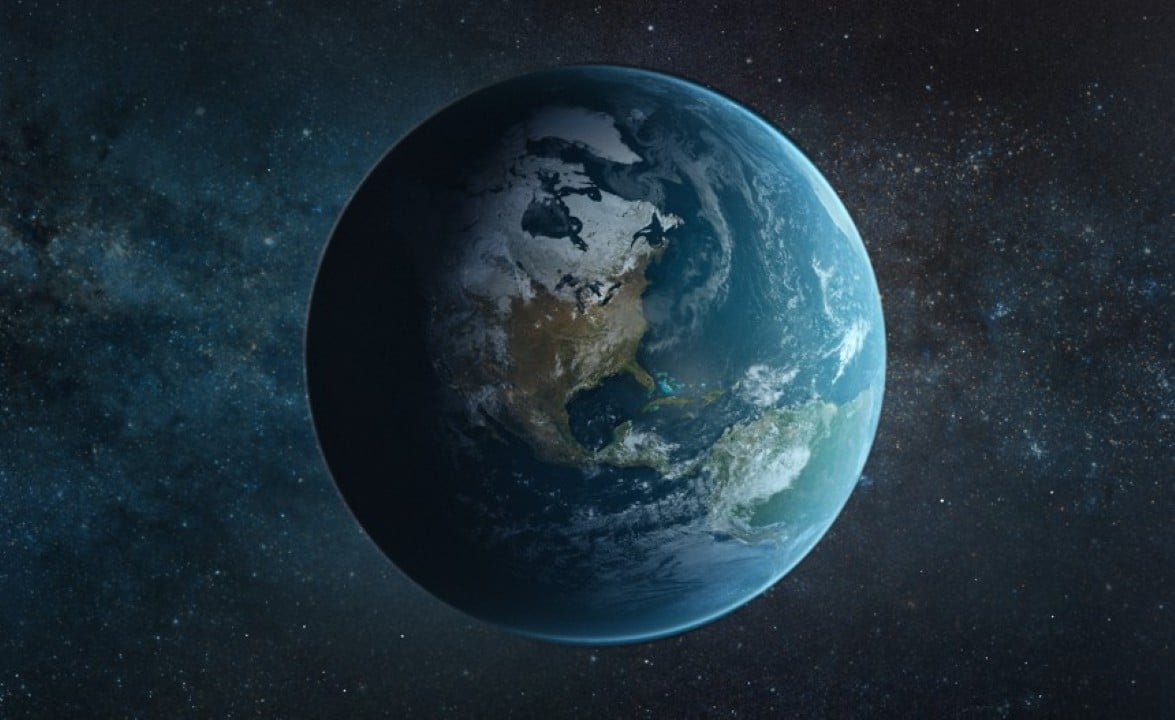
A study led by Avi Loeb astrophysicist Universidade Harvard has identified two meteor candidates of interstellar origin from data from NASA’s CNEOS catalog. The events occurred in 2022 over the eastern tropical Pacífico and in 2025 over the Mar of Barents, in the Ártico. The recorded speeds significantly exceed the escape velocity of the Sistema Solar, indicating an external origin.
The analysis considered hundreds of fireballs detected by US government satellites between 2018 and 2025. Dois cases showed robust evidence of a hyperbolic trajectory. Essa detection allowed us to estimate an abundant population of interstellar objects in the inner region of Sistema Solar.
The calculations are based on the observed collision rate with the Earth’s atmosphere. The inferred density suggests millions of meter-scale bodies present at any time within Terra’s orbit.
- Collision rate: approximately 0.3 per year for objects 1 to 2 meters
- Numerical density: 8.4 million per cubic astronomical unit
- Estimated total population: about 35 million objects within 1 AU
- Collective mass: one hundred trillion metric tons
Interstellar meteor candidates
The first event, recorded on July 28, 2022, involved an object 1.8 meters in diameter. Sua velocity exceeded the escape velocity by 8.7 standard deviations, according to the uncertainty model applied. The impact generated energy comparable to large-magnitude explosions.
The second case occurred on February 12, 2025, with a body measuring 1.2 meters. Statistical significance reached 5.5 standard deviations above the solar threshold. The location at Ártico facilitates possible searches for fragments in the ocean.
Analysis methodology
The data comes from the CNEOS catalog, which compiles records of declassified military satellites. Esses sensors monitor heat emissions for national security purposes. The uncertainty calibration used was developed empirically in 2025.
The team filtered post-2018 events for greater accuracy in speed parameters. Apenas two met the strict criteria for interstellar origin. The seven-year observation period served as the basis for rate calculations.
Population density calculations
The measured collision rate multiplied by the cross-sectional area of the Terra and the average orbital velocity provided the density. The result indicates 8.4 million objects per cubic AU for metric scale. Essa estimate only considers solid bodies with a typical density of grams per cubic centimeter.
Each object carries a mass of millions of tons. The total population within Earth’s orbit reaches 35 million units. The set represents one hundred trillion tons of material external to Sistema Solar.

Comparisons with larger objects
Confirmed interstellar objects, such as 1I/’Oumuamua and 2I/Borisov, have larger dimensions. The recent 3I/ATLAS, with 2.6 kilometers, exemplifies this category. Sua numerical density is billions of times lower than that of metric bodies.
Despite the numerical difference, the mass per unit volume balances out. Fatores cubes of scale compensate for the rarity of kilometric objects. Ambas populations contribute equally to the total mass in the inner region.
The size distribution follows patterns observed in asteroid populations. Corpos smaller ones dominate numerically in planetary systems. Gravitational ejection explains the interstellar presence on several scales.
Detection by different methods
Survey telescopes identify larger objects by reflected sunlight. Instrumentos like Observatório Rubin capture bodies above a hundred meters. Planned Projetos will expand coverage in the northern hemisphere.
Smaller bodies remain optically undetectable at solar distances. The Earth’s atmosphere serves as an effective alternative sensor. Impactos generate intense fireballs routinely recorded by satellites.
Scientific implications of the discovery
The revealed abundance indicates common ejection processes in distant star systems. Interstellar Objetos regularly transit the inner Sistema Solar. The population metric exceeds previous expectations based on optical detections.
Future research could refine estimates with more data from the CNEOS catalog. Recent Eventos open opportunities for material recovery. Análises compositional elements would clarify specific galactic origins.
The massive presence near Terra highlights cosmic connectivity. Material from other systems constantly circulates in our orbital neighborhood. Continued Observações will better map this dynamic population.
Future observation perspectives
New telescopes will increase sensitivity to intermediate objects. Combinações of atmospheric and optical methods will complement estimates. Expanded Catálogos will provide more robust statistics over the years.
Searches for fragments of recent events will test interstellar compositions. Missões dedicated devices could collect samples directly. Avanços technological technologies will expand the scope of systematic detections.
Historical context of detections
Previous discoveries of interstellar objects have occurred by ground-based telescopes. Casos like ‘Oumuamua revealed unexpected hyperbolic trajectories. Borisov exhibited distinct cometary features of local origins.
The use of military data for civilian science has expanded the field. Meteoros confirmed as interstellar remained rare until recent analyses. The current approach multiplies the number of candidates identified.



