
Experts reinforce warning about the high lethality of the Nipah virus and the urgency of global monitoring


The international scientific community keeps the Nipah (NiV) virus under strict surveillance, classifying the pathogen as one of the most severe threats to global health due to its high mortality rate and pandemic potential. Identificado originally in the late 1990s during outbreaks in Ásia, the virus continues to challenge public health systems as there are, to date, no vaccines or specific antiviral treatments approved for human use. Lethality, which varies between 40% and 75% depending on the outbreak and local response capacity, places NiV at the top of Organização Mundial and Saúde monitoring priorities.
The virus is an emerging zoonosis, which means that its transmission occurs primarily from animals to humans, although contamination between people is also a confirmed and worrying route. Fruit bats from the Pteropodidae family are the natural hosts of the virus, living with the pathogen without developing the disease. The complexity of the transmission cycle, which may involve intermediate hosts such as pigs or the consumption of contaminated food, requires a multisectoral approach to preventing new outbreaks.
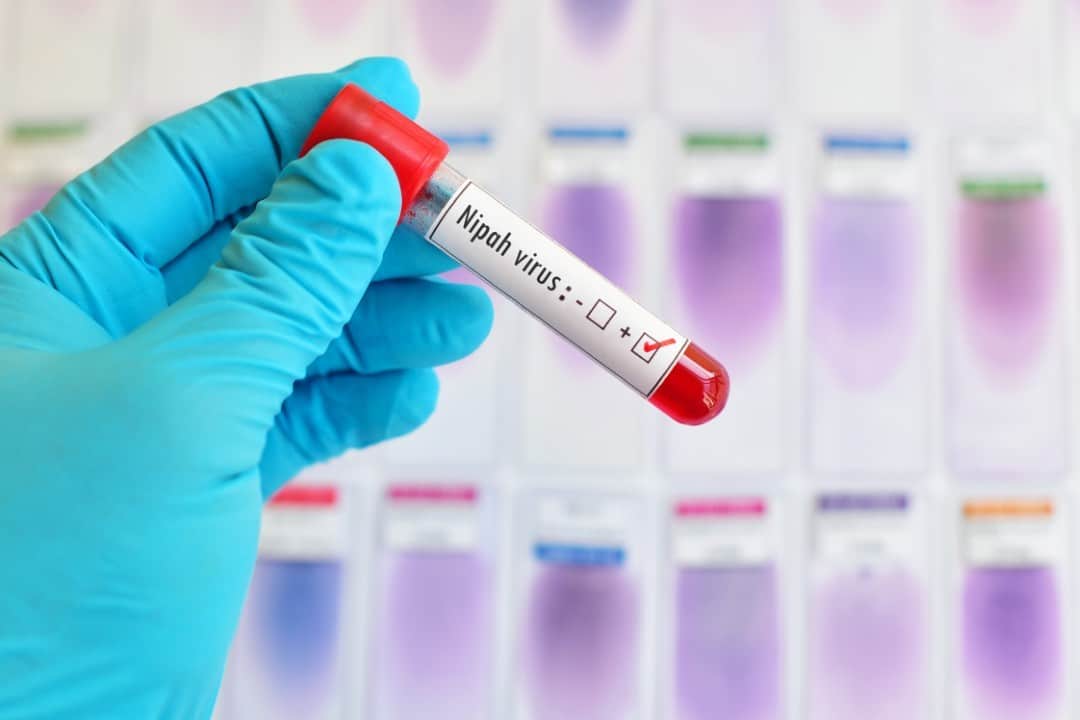
In the current scenario of 2026, epidemiological surveillance focuses on the intersection between human, animal and environmental health. The expansion of urban areas and the invasion of natural habitats increase the risk of contact between bats and human populations or livestock, creating the perfect scenario for viral “spillover.” Especialistas warn that the lack of rapid diagnoses in remote regions could facilitate the silent spread of the virus before containment measures are activated.
Transmission mechanisms and associated risks
Understanding the routes of contagion is essential to interrupt the Nipah transmission chain. Direct contact with infected animals or their bodily fluids, such as saliva and urine, poses the primary risk. Historicamente, initial outbreaks were associated with close contact with sick pigs, which led to the implementation of strict biosafety measures in pig farming in several parts of the world.
Another significant route of infection, especially in Ásia regions, is the consumption of raw date palm sap or fruit that has been partially eaten or contaminated by infected bats. The virus has a remarkable ability to survive in fluids rich in sugar, making food hygiene a critical defense barrier. Além In addition, person-to-person transmission, observed mainly among family members and healthcare professionals who care for infected patients without proper protection, increases the risk of hospital outbreaks.
The main factors that amplify the risk of contagion include:
– Consumo of raw food or fruit contaminated by saliva or urine of fruit bats.
– Contato direct and unprotected with pigs or other domestic animals that act as intermediate hosts.
– Exposição to bodily fluids from infected patients, especially in hospital environments with inadequate infection control.
– Manipulação of carcasses of infected animals without personal protective equipment.
Clinical symptoms and disease progression
The clinical picture of infection with the Nipah virus is variable, ranging from asymptomatic infections to acute respiratory illnesses and fatal encephalitis. The incubation period generally ranges between 4 and 14 days, but reports of periods of up to 45 days complicate contact tracing and quarantine. Initial symptoms are nonspecific and similar to those of a severe flu, making early diagnosis difficult without advanced laboratory tests.
Patients often experience high fever, headaches, muscle pain (myalgia), vomiting and sore throat. As the disease progresses, dizziness, drowsiness and changes in consciousness may appear, signs that indicate impairment of the central nervous system. Acute encephalitis is the most feared complication, which can lead to coma in a matter of 24 to 48 hours. Além of neurological symptoms, severe respiratory compromise, including atypical pneumonia, is common and contributes to high lethality.
For survivors, the consequences can be long-lasting. Estudos indicate that about 20% of recovered patients suffer from persistent neurological consequences, such as seizures and personality changes. Há also records of late or recurrent encephalitis, where the virus remains latent in the body and returns to manifest symptoms months or even years after the initial infection, a phenomenon that intrigues the medical community.
Challenges in diagnosis and treatment
The absence of approved specific pharmacological treatments makes the clinical management of Nipah a life-sustaining challenge. Current treatment focuses on relieving symptoms and maintaining the patient’s vital functions while the immune system fights the virus. Terapias experimental studies, including the use of monoclonal antibodies, have been evaluated on a compassionate basis, but large-scale efficacy still requires definitive validation.
Laboratory diagnosis requires high biological safety facilities due to the risk of contamination of analysis teams. Métodos and reverse transcriptase polymerase chain reaction (RT-PCR) are the gold standard for detecting the virus in the acute phase, using samples of body fluids. Testes serological tests (ELISA) can be used later to detect antibodies, assisting in epidemiological investigation and confirmation of past cases.
The search for an effective vaccine remains a race against time. Diversas vaccine platforms, including viral vectors and mRNA technology, are in different phases of preclinical and clinical development. The logistical complexity of conducting robust clinical trials, given the sporadic nature of outbreaks, is a significant obstacle that international collaboration seeks to overcome.
The One Health Approach to Prevention
Given the lack of a cure, prevention based on the “Health Única” (One Health) approach is the most effective strategy. Este concept recognizes that human health is intrinsically linked to animal health and the environment. Active surveillance of bat and domestic animal populations in risk areas allows early detection of viral circulation, enabling early warnings for local communities.
Educational measures are crucial to reduce exposure. Campanhas that encourage rigorous washing of fruits, proper cooking of date palm sap, and the use of protection when handling sick animals have demonstrated effectiveness in reducing cases. In hospital settings, strict implementation of standard infection control precautions is vital to protect healthcare workers and prevent nosocomial transmission.
The Nipah virus remains a constant reminder of global vulnerability to emerging pathogens. Strengthening health systems, continued investment in research and transparent international cooperation are the only barriers capable of preventing localized outbreaks from turning into health crises on a global scale.



