
February will have a complete lunar cycle starting with a fully illuminated satellite on the first day of the month

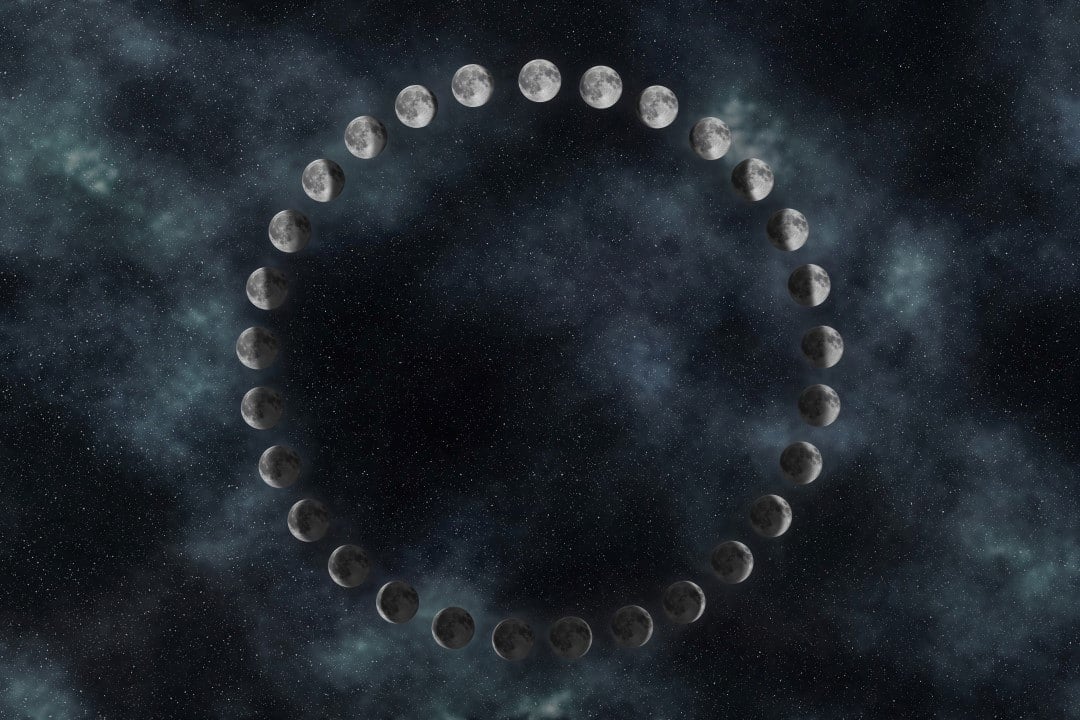
The astronomical calendar for the second month of 2026 holds an immediate visual spectacle for Brazilians, with the natural satellite reaching its maximum luminosity right at the beginning of the period. The synodic cycle, which lasts around 29.5 days, will allow the observation of all four main configurations of Lua in a short period of time, depending only on the meteorological conditions of each region. The specific alignment between Terra, Sol and Lua this month creates angles of incidence of light that vary progressively, altering the perception of the star from the Earth’s surface.
Experts and observatories confirmed the exact moments for each phase transition, using the time of Brasília as the official reference for the entire country. The schedule serves as a basis for both astronomy enthusiasts and maritime and agricultural activities that depend on nighttime light or tidal behavior. The confirmed sequence for the coming weeks presents specific dates for the culmination of each event.

Official schedule of phases and peak times
The distribution of lunar phases throughout February follows a regularity that allows the planning of observations with the naked eye or with instruments. Abaixo are the exact moments calculated for the phase changes:
– Lua Cheia: February 1st at 7:10 pm
– Quarto Minguante: February 9 at 9:44 am
– Lua Nova: February 17th at 9:03 am
– Quarto Crescente: February 24th at 9:28 am
The cycle ends with the crescent phase, preparing the celestial scenario for the month of March and maintaining orbital constancy. Visualizing the lines that separate the lighted part from the dark, known as terminators, is made easier by using simple binoculars, although the phenomenon is fully visible without equipment.
Impact of total luminosity on ocean tides
The opening of the month with Lua Cheia on the 1st, at 7:10 pm, occurs due to the satellite’s opposition to Sol, with Terra positioned between them. Este alignment allows the lunar face facing the planet to receive full solar illumination, generating the characteristic intense glow. Além of visual beauty, this rectilinear configuration causes the phenomenon of spring tides, where the gravitational forces of Sol and Lua add up, resulting in maximum amplitudes in coastal regions.
Navigators and coastal communities should pay attention to sea levels, which tend to have higher peaks and more significant lows during this period. Direct gravitational influence demonstrates the physical connection between orbital motions and the dynamics of Earth’s oceans.
Reduction of light and moment of invisibility
The transition to Quarto Minguante on the 9th marks a change in celestial geometry, with the stars forming an angle of 90 degrees. At Nesta stage, the gravitational attraction stops adding up and starts to act perpendicularly, generating the so-called neap tides, which have much smaller level variations. Visualmente, the reduction in the illuminated area favors the observation of other stars, as the lunar brightness decreases significantly.
The peak of nighttime darkness occurs on February 17th with Lua Nova, when the satellite positions itself between Terra and Sol, showing its unilluminated face to us. Este is the ideal period for astronomers to search for galaxies and deep nebulae, taking advantage of the absence of natural light interference.
Observation conditions and cycle closure
The month ends its orbital dynamics with the arrival of Quarto Crescente on the 24th, when the satellite once again displays half of its illuminated surface, this time on the right side. The visibility of all these phenomena in Brasil will directly depend on atmospheric stability. Historicamente, the regions Norte and Nordeste tend to have clearer skies at this time, while Sul and




