Ferrari imposes a strong pace in Bahrain while Red Bull and Mercedes suffer from technical failures

The second day of pre-season testing for Fórmula 1 at Circuito Internacional at Bahrein began with a scenario of striking contrasts between the main teams on the grid. Enquanto to Ferrari demonstrated solidity and immediate speed, direct rivals faced significant difficulties that drastically limited track time. Charles Leclerc, driving the Italian team’s single-seater, took the lead in the morning session, setting the best lap with 1m34s273 and completing a total of 62 laps, an impressive number that indicates the reliability of the new technical package for the 2026 season.
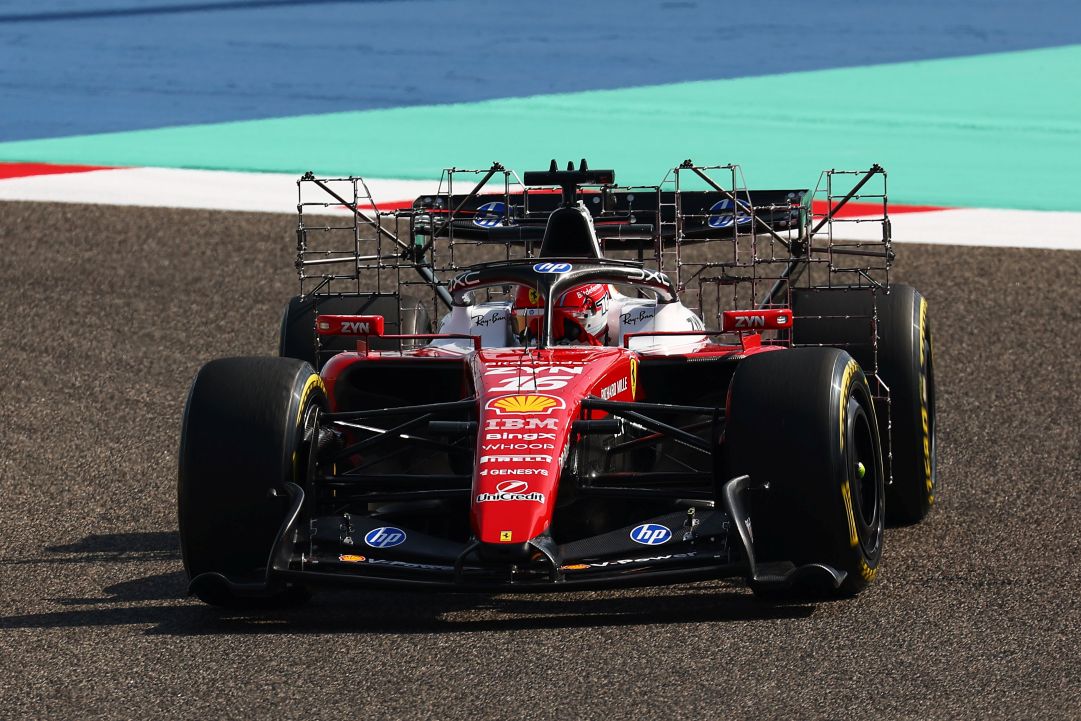
Leclerc’s performance was not just about pure speed, but also about consistency. Ferrari focused on race simulations and validation of aerodynamic data, taking advantage of the ideal track conditions in Sakhir. The Monegasque driver managed to execute the planned program without interruptions, something crucial at this stage of development where every kilometer counts for the correlation between the wind tunnel and the reality on the asphalt. The car’s stability in medium and high speed curves was a highlight noted by analysts present at the race track.
2日目午前のセッションではルクレールがノリスをリード
詳細 👉https://t.co/6ZWFDNGdwA#F1 #F1テスト pic.twitter.com/esl1B5aXDI
— フォーミュラ 1 (@F1)2026 年 2 月 12 日
Just behind the Ferrari, McLaren showed the power to react. Lando Norris, who had faced setbacks the previous day, recorded the second best time and was the driver who accumulated the most mileage in the morning, with 64 laps. The British team appears to have overcome the initial flaws, now focusing on refining the car’s set-up and ensuring the power unit can withstand the demands of the long calendar. The presence of Norris at the top of the laps completed table brings relief to the Woking engineers, who seek to consolidate the team as a title challenger from the first stage.
Another positive surprise of the morning was the performance of Alpine. Pierre Gasly placed the French car in third place, showing a competitive pace that could indicate an advance in chassis development. Williams also had a productive morning with Alex Albon, who tied with Leclerc in number of laps (62), suggesting that the Grove team prioritized durability and data collection over long stints, a key strategy for the midfield looking to capitalize on any mistakes from the top teams.
Nightmare in the garage of Red Bull and Mercedes
If the morning was full of smiles at Ferrari and McLaren, the atmosphere was tense in the garages at Red Bull and Mercedes. The Austrian team, accustomed to dominating test sessions in recent years, experienced drama with Liam Lawson at the wheel. The New Zealand driver spent most of the four-hour session stuck in the pits while mechanics worked frantically on the back of the car. Problemas in the cooling system and complex adjustments to the power unit forced the removal of the engine cowling, exposing the vehicle’s innards and preventing any meaningful running-in program.
For Red Bull, missing almost the entire morning of a testing day is a hard blow. With the reduction in pre-season days, every hour lost represents a delay in understanding the new tires and optimizing aerodynamics. The lack of concrete data on the car’s behavior in higher temperatures could compromise preparation for the opening race, which takes place on the same circuit. The body language inside the energy team’s box denoted concern, contrasting with the tranquility seen in the neighboring Ferrari garage.
The situation at Mercedes was equally frustrating, especially for young Andrea Kimi Antonelli. The rookie, who had huge expectations, managed to complete just three laps before being called back to the pits. The German team detected a flaw in the car’s software systems, an electronic problem that paralyzed activities. In an era where Fórmula 1 cars are computers on wheels, a system failure can be as terminal to a session as a broken engine.
The interruption was particularly damaging for Antonelli, who needs every minute of track time to adapt to the physical and mental demands of the top category. Mercedes confirmed that the failure required a complete reset of certain modules and a detailed security check, consuming precious time that would have been dedicated to installation laps and checking basic systems. The pressure is now on the afternoon session to make up for lost time.
Aerodynamic tests and track conditions
In addition to lap times, the morning was marked by the extensive use of aerodynamic measuring devices. Diversas teams, including Ferrari and Williams, started the day with large arrays of sensors (aero rakes) mounted on the sides and rear of the cars. Esses devices measure airflow and pressure, allowing engineers to see whether the air is behaving as designed in factory computers.
The use of flow ink (flow-vis) was also notable. The fluorescent substance, applied to wings and sidepods, reveals the paths that the wind takes over the body at high speed. No Bahrein, where wind is often a complicating factor, understanding the car’s aerodynamic sensitivity to lateral gusts is vital. The track presented representative conditions, with temperatures gradually rising, offering a realistic scenario for tire wear.
The abrasive surface of the Sakhir circuit is a definitive test for rubber management. The teams that managed to complete long stints, such as McLaren and Williams, already have valuable data on the thermal degradation of the Pirelli compounds for 2026. Essa information is gold for pit stop strategies for the first race. Quem did not run, like Red Bull, it is in the dark in this aspect.
Expectations for the debut of Audi and recovery in the afternoon
With the morning session over, attention turns to the afternoon, where teams in trouble are expected to try to make up for lost mileage. Sauber/Audi prepares the car for the Brazilian Gabriel Bortoleto, who will be responsible for continuing the development program. Audi’s entry as a factory team (or in final transition to such, depending on the exact stage in 2026) attracts curious looks about the power and reliability of its group.
For Red Bull and Mercedes, the afternoon will be a race against time. Mechanics will have their lunch break to finalize repairs and ensure their drivers can hit the track as soon as the green light comes on. Reliability, often neglected in favor of pure performance, proved to be the balance on this second day. In a championship that promises to be fought in detail, starting the year with the car in the garage is a luxury that no top team can afford.
The times recorded in the morning, although not definitive, outline an initial hierarchy where Ferrari seems to have been born well, McLaren shows resilience and the dominant powers of the recent past face growing pains with their new projects. The remainder of the preseason will be decisive in seeing whether these issues are just initial hiccups or chronic design flaws.