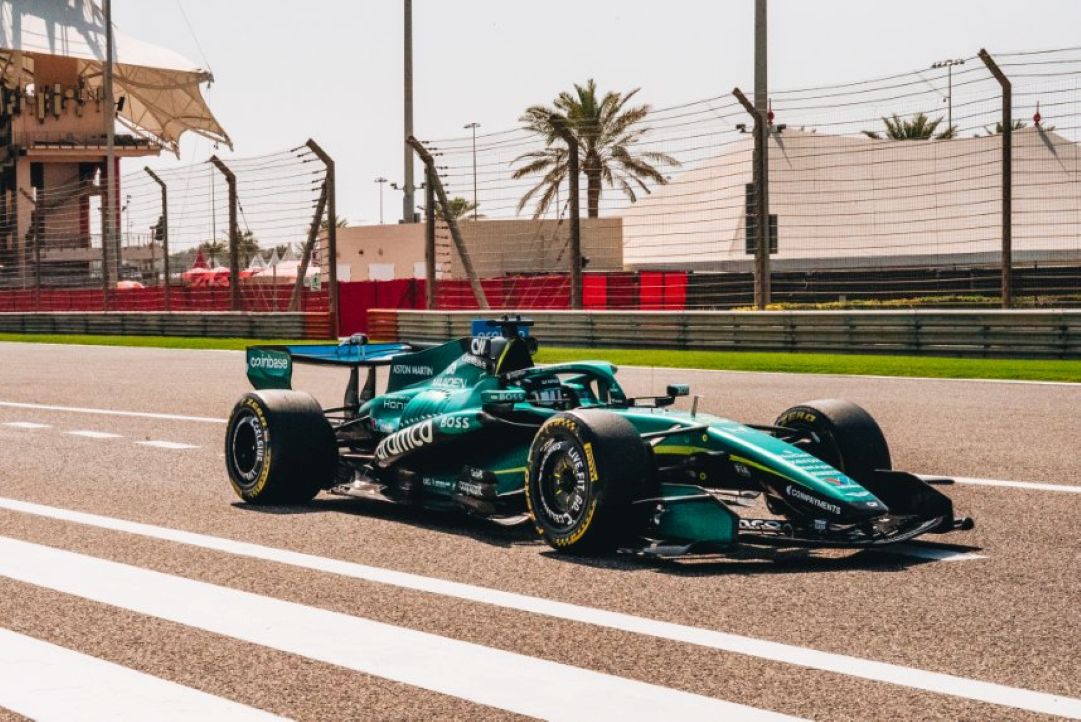
The Aston Martin faces a turbulent start to the regulatory cycle in the Circuito of The Canadian driver The British team, which began a strategic partnership with Honda to supply power units, seems far from the ideal pace set by top teams.
During the track sessions this Thursday, Stroll emphasized that the team’s competitive disadvantage is alarming, estimating a delay of approximately four seconds in relation to the grid leaders. Embora the driver recognizes that fuel loads and engine configurations vary between opponents, the internal feeling is that the current technical package lacks fundamental grip and balance. The scenario reflects the difficulties of adapting to the new technical rules of the category, which prioritize the efficiency of power units and completely reformulated aerodynamics.
The atmosphere in the team’s pits also shows signs of tension, especially with the below-expected performance of the two-time champion Fernando Alonso, who was among the last positions on the timesheet. Relatos behind-the-scenes footage indicates that the Spanish driver demonstrated severe irritation with the behavior of the single-seater, showing that the transition to the Honda engines has not yet delivered the promised competitiveness. The management of Adrian Newey, newly arrived at the technical command post, already anticipated a complex scenario due to significant delays in the original project’s development schedule.
Out again for the afternoon. ➡️#F1Testing #AMR26 pic.twitter.com/y7YRPaxcoo
—Aston Martin Aramco F1 Team (@AstonMartinF1)February 13, 2026
Development delays compromise the beginning of Adrian Newey’s journey
The arrival of Adrian Newey to Aston Martin was surrounded by expectations, but the renowned designer admitted that the physical structure of the Campus Tecnológico and its own wind tunnel only operated at full capacity late. Essa chronological lag resulted in a four-month disadvantage in aerodynamic research, allowing direct rivals to begin their simulator tests much earlier than the team based at Silverstone. Newey explained that the model taken to the wind tunnel only in April 2025 compromised the refinement necessary for the initial shakedown carried out recently.
The tight schedule forced the team to finish the car within the regulatory deadline, which prevented more detailed checks of integrated systems before the trip to Bahrein. Como A direct consequence, the AMR26 presents correlation failures between factory data and actual performance on the track, making it difficult for engineers and mechanics to fine-tune the setup. The expectation of the technical board is that the car will undergo profound changes up to Grande Prêmio from Austrália, seeking to mitigate the losses accumulated in this preparatory phase.
- Four month delay in using the new wind tunnel compared to competitors.
- Late start of aerodynamic design cycle due to technical leadership transition.
- Difficulty in fully integrating the Honda engine with the redesigned chassis.
- Urgent need for updates for the first stages of the season at Oceania.
Fernando Alonso’s frustration highlights balance problems in AMR26
Fernando The Spanish driver focused his statements on the need to understand the car’s behavior in the long term, suggesting that the first races of 2026 will only serve as a testing laboratory in real conditions. Alonso believes that the evolution of the championship will be decided by the development capacity in the second half of the year, minimizing immediate losses in Bahrein.
Despite the pragmatic speech, observers in the paddock noticed signs of impatience from the veteran, who seeks immediate results after the massive investments made by Lawrence Stroll. The AMR26 appears to suffer from chronic instability in high-speed corners, where the new active aerodynamics should provide greater control and efficiency. Sem a solid base of setup, Alonso and Stroll struggle to keep the car on the ideal trajectory, resulting in lap times that place them at the bottom of the leaderboard.
Integration with Honda engines creates unforeseen engineering challenges
The transition from the Mercedes to the Honda represented a radical change in the vehicle’s internal architecture, requiring the Aston Martin to redesign cooling and transmission systems. The Japanese engine, which dominated previous seasons with the Red Bull, requires specific integration that the British team has not yet managed to fully optimize within the new regulations. Stroll pointed out that the problems are multifactorial, involving not only power delivery, but also the way torque affects traction on corner exits.
- Adaptation to new sustainable fuels required by the 2026 regulation.
- Synchronization of the hybrid system with energy recovery during braking.
- Resizing the radiators to support the thermal demands of the Honda unit.
- Adjustment of weight distribution to compensate for the dimensions of the new propeller.
Honda engineers work closely with Silverstone technicians to map the software flaws that have limited maximum performance on the Sakhir straights. Existe growing pressure for short-term solutions to be implemented before the testing window closes, in order to avoid an embarrassment at the official opening of the championship. The complexity of the new engines requires a learning curve that Aston Martin, due to the delays mentioned by Newey, is going through under conditions of high stress.
Perspectives for the Grande Prêmio from the Austrália and chassis evolution
The technical team already projects that the car to be used in Melbourne will be substantially different from the prototype seen in pre-season testing at Oriente Médio. The immediate focus is on the production of new components for the suspension and floor, areas identified as critical for recovering lost aerodynamic load. Lance Stroll stated that the effort is total to get the most out of the current package, but highlighted that no one at Fórmula 1 remains static during the development process.
Aston Martin’s planning involves a steady stream of updates over the first six races in an attempt to reduce the four-second margin mentioned by Stroll. In the long term, the objective is to use the new campus’s cutting-edge infrastructure to accelerate the production of parts and aerodynamic corrections more quickly than mid-grid competitors. Entretanto, the initial disadvantage puts the team in a defensive position, where mechanical reliability will need to be the pillar to guarantee eventual points in the opening rounds.
Organizational structure seeks stability after changes in command
The transition led by Lawrence Stroll aims to turn Aston Martin into a frequent contender for the world title, but early results from 2026 test investors’ patience. Hiring Adrian Newey was the most ambitious move in the brand’s history, but the impact of its design philosophy requires time to be fully absorbed by the existing workforce. The delay in the wind tunnel was an external factor that limited the creative potential of the new leadership, generating the production bottleneck that is now reflected in the timer.
The team’s internal communications attempt to keep morale high by focusing on the growth potential enabled by the new state-of-the-art facilities. Enquanto rivals enjoy more mature projects, Aston Martin is betting on a technological boost in the middle of the season to compensate for the faltering start. Stroll’s speech about the “beautiful” paintwork serves as a public warning that the talent of the pilots and the excellence of the Honda engines cannot mask the flaws of a chassis that was born outside the ideal maturation time.
