
NASA’s Viking mission may have detected and eliminated traces of life on Mars due to perchlorate

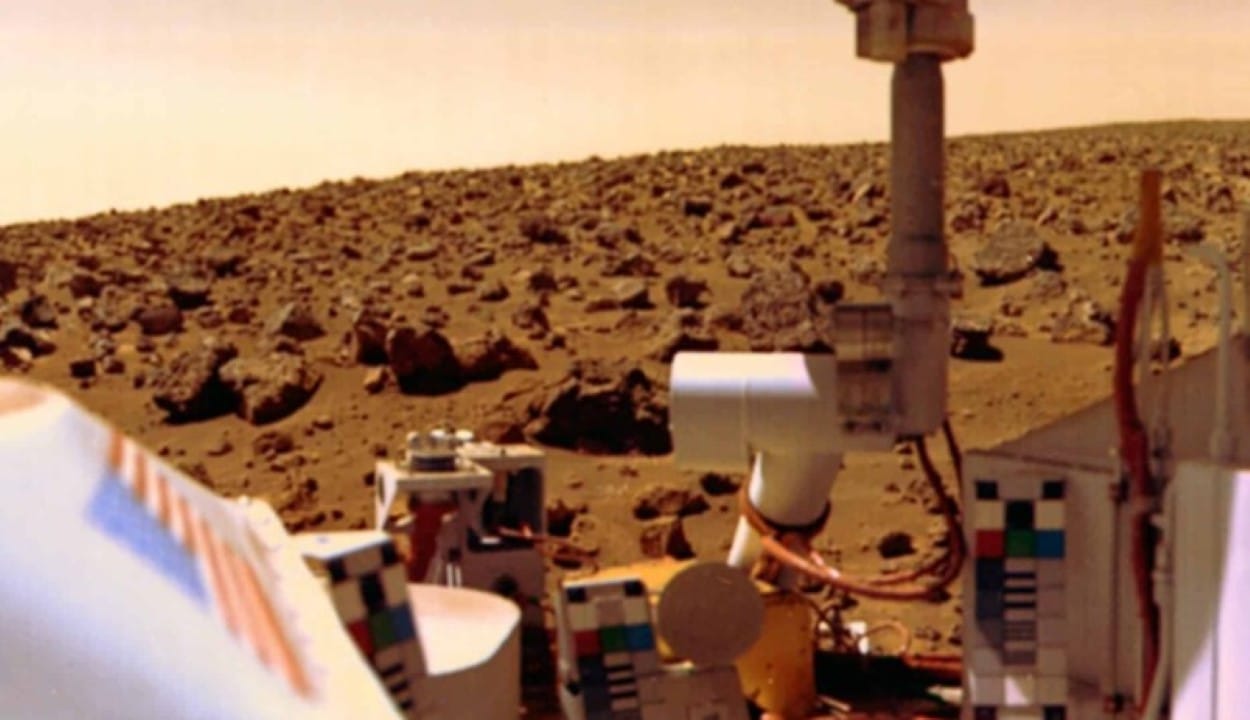
A new interpretation of data collected by NASA’s Viking mission in 1976 suggests that probes may have found signs of microbial life in the soil of Marte. The experiments carried out at the time, however, would have accidentally destroyed this evidence when heating the samples. Essa hypothesis gains strength with subsequent discoveries about the chemical composition of the planet.
Initial results of biological tests were considered inconclusive or negative 50 years ago. Agora, researchers argue that the presence of perchlorate in Martian soil explains the gases detected. Essa view challenges the traditional conclusion that Marte would be sterile at the surface.
The discussion reignites the debate about the search for extraterrestrial life. Current Missões, like the Perseverance rover, collect samples that could provide definitive answers in the future.
- The Viking 1 probe landed on Marte on July 20, 1976, in the region of Chryse Planitia.
- Viking 2 arrived in September of the same year, in Utopia Planitia.
- Both carried instruments to analyze the soil for biological activity.
- The tests included progressive heating of the samples to release compounds.
Experiments carried out by the Viking probes
The Viking probes 1 and 2 performed three main experiments designed to identify signals of microbial metabolism. A fourth instrument, the gas chromatograph-mass spectrometer (GC-MS), searched for organic molecules directly in the soil. Initial results from some tests showed release of gases that seemed to indicate biological activity.
However, GC-MS did not detect complex organic compounds, only carbon dioxide and traces of chlorides. Essa absence led the NASA team, at the time, to conclude that the planet did not harbor life on the surface. The dominant interpretation pointed to non-biological chemical reactions.
ANNIVERSARY OF THIS HISTORIC PHOTO!!
—Sacani (Space Today) – AKA Gordão Foguetes (@SpaceToday1)May 19, 2024
On May 18, 1979, the lander of the Viking 2 mission, which, together with its twin Viking 1, was sent by@NASAto search for life on Marte captured this image of water ice on the surface of Utopia Planitia.pic.twitter.com/LXY5JMzr2h
Discovery of perchlorate changes interpretation
The identification of perchlorate in Martian soil by the Phoenix probe in 2008 provided an alternative explanation. Esse chemical compound, when heated, reacts vigorously with organic matter, destroying it and releasing simple gases. Experimentos in the laboratory reproduced exactly the results observed by Viking.
Researchers demonstrated that low levels of perchlorate, around 0.1%, would be sufficient to degrade organics during heating. Assim, the chlorides detected would not be terrestrial contamination, but decomposition products. Essa evidence suggests that organic molecules were present, but were eliminated by the analysis process itself.
Perchlorate also explains the absence of more complex compounds in the vaporized samples. Testes later confirmed that the combination of organics with perchlorate generates the same gaseous patterns recorded in 1976.
Positive results in biological tests
One of the experiments, known as Liberação from Marcador, injected radioactive nutrients into the soil and mediate the release of gases. The results showed activity that resembled microbial metabolism. Outro test detected carbon fixation, a typical process in autotrophic organisms.
Gil Levin, the scientist responsible for one of these experiments, argued for decades that the data indicated life. Ele argued that no abiotic chemical explanation reproduced all the observed patterns. The perchlorate hypothesis reinforces this position by resolving previous contradictions.
Gas exchange tests also recorded oxygen variations compatible with biological respiration. Esses signals, previously attributed to unknown oxidants, gain a new reading with the current model.
BARSOOM model for Martian microorganisms
Chemist Steve Benner, from Fundação to Evolução Molecular Aplicada, developed the BARSOOM model to explain possible current life on Marte. The acronym stands for autotrophic bacteria that breathe oxygen stored on the planet. Esses hypothetical organisms would produce oxygen by processes similar to photosynthesis under ancient, wetter conditions.
They would store the gas for later use in a dry, oxidizing environment. The model predicts that such microbes would survive in underground or protected niches. The data from Viking would be compatible with the presence of these organisms in the samples collected.
Benner highlights that GC-MS detected degradation products, not the absence of organics. Essa approach avoids the need for exotic oxidants to explain the results.
Implications for current missions on Marte
The Perseverance rover, operating since 2021, collects samples in locations with high astrobiological potential. Essas rocks will be returned to Terra for more sensitive analysis. Current methods avoid aggressive heating that could destroy fragile evidence.
The Mars Sample Return mission plans to return Martian material by 2030. Laboratórios terrestrials will be able to detect naturally preserved organic traces. Essa strategy circumvents limitations faced by Viking half a century ago.
Historical context of mission Viking
The Viking probes represented the first successful extended landing on Marte. Elas transmitted the first color surface images and detailed atmospheric data. The search for life was the main objective, reflecting the scientific interest of the time.
Despite the initial negative conclusion, the instruments provided valuable information about geology and climate. The missions lasted years longer than planned, expanding knowledge about the planet.
Recent advances in Martian exploration
Later missions confirmed the presence of frozen water and habitable conditions in the past. Descobertas of variable atmospheric methane maintains the debate about biological processes. Orbitadores map mineral deposits associated with ancient aqueous environments.
The Curiosity rover has detected complex organic molecules in sedimentary rocks. Esses findings reinforce the possibility of primitive microbial life. The combination of evidence accumulates a favorable scenario for the reevaluation of old data.



